
Grey Fantail Identification Guide
A tiny, restless Australasian flycatcher recognized instantly by its constantly fanned and swished tail, grey-brown plumage, and habit of sallying for insects close to observers.
Read the full Grey Fantail encyclopedia entry →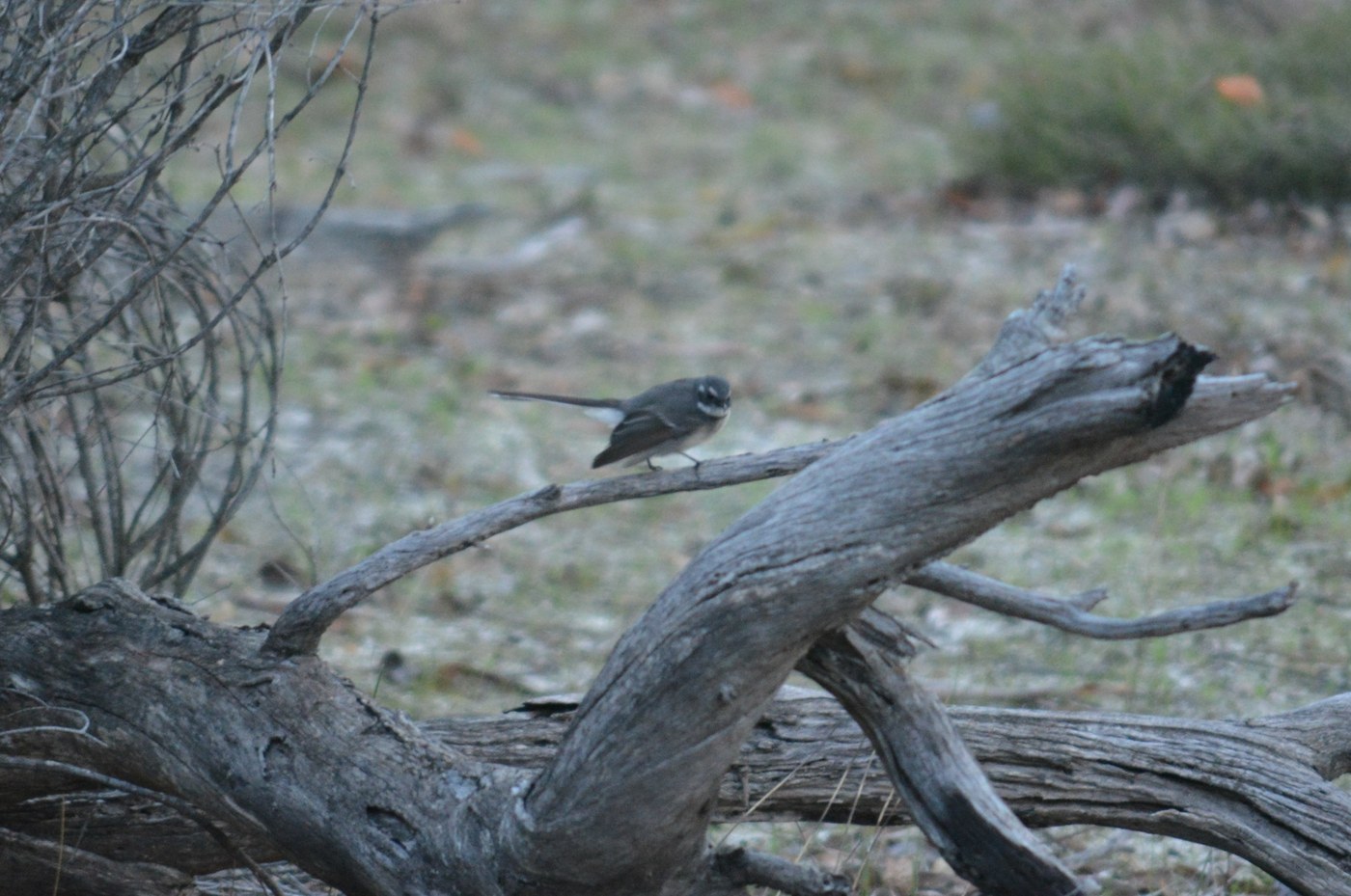
Key Field Marks
- Size & shape: Very small, around 14-16.5 cm (5.5-6.5 in) including a long, broad tail that makes up nearly half its length.
- Plumage: Grey-brown upperparts, a pale buff to whitish belly, and a dark breast band or mottled grey breast in most subspecies; a whitish or buff eyebrow (supercilium) and whitish throat.
- Tail: The long tail is edged with white outer feathers and is almost constantly fanned, cocked, and swished from side to side — the single best behavioral field mark for the species.
- Wings: Dark wings with pale buff or whitish wing bars/edging, giving a slightly scalloped look.
- Behavior: Highly active and confiding, flitting through the understory and low branches making short sallying flights to catch flying insects, often approaching people and dogs closely to catch flushed insects.
Similar Species
- Rufous Fantail: Has a bright rufous rump and tail base and rufous-washed crown, clearly warmer-toned than the grey-brown Grey Fantail.
- Willie Wagtail: Larger, with a bold black-and-white plumage pattern rather than the subtle grey-brown tones of the Grey Fantail, though both share tail-wagging behavior.
- Mangrove Grey Fantail / other fantail forms: Regional plumage variation exists (some races darker, some paler); habitat and range help narrow subspecies identification, but structure and fanning behavior remain constant.
Where & When to See It
- Range: Widespread across Australia, Tasmania, New Zealand, and New Guinea/nearby islands, with many recognized subspecies; New Zealand birds are sometimes treated as a separate species (New Zealand Fantail).
- Habitat: Forest, woodland, scrub, mangroves, and well-vegetated gardens and parks; adaptable and often the most conspicuous small bird in forest understory.
- Season: Mostly resident, but some inland and southern Australian populations move to milder coastal or northern areas in winter, so numbers can fluctuate seasonally in a given location.
Voice
- A high, thin, squeaky and scratchy song, often a rapid jumble of sharp notes; the contact call is a sharp "chick" or "sweet," frequently given as it flits about.
Quick Tips for Confident ID
- Watch for the constantly fanning, swishing tail — no similarly sized bird in the region does this as persistently.
- Note the grey-brown (not rufous or black-and-white) overall tone to rule out Rufous Fantail and Willie Wagtail.
- Expect very tame, close approach as the bird follows moving animals or people to catch disturbed insects.
Frequently asked questions
Why does the Grey Fantail constantly fan its tail?
The tail-fanning and swishing behavior is thought to help flush insects from foliage and may also play a role in balance during its acrobatic aerial sallies for prey.
Is the New Zealand Fantail the same bird as the Grey Fantail?
They are very closely related; New Zealand populations were traditionally treated as a subspecies of Grey Fantail but are now often split as the separate New Zealand Fantail (Piwakawaka) by many authorities.
How do I tell a Grey Fantail from a Rufous Fantail?
Look at the rump and tail base: Rufous Fantail shows bright rufous-orange there and on the crown, while Grey Fantail is uniformly grey-brown without rufous tones.
Do Grey Fantails migrate?
Most populations are sedentary, but some southern and inland Australian birds shift to warmer coastal or northern habitats during winter, leading to local seasonal changes in abundance.