
Grey Crowned-Crane Identification Guide
An unmistakable East and southern African crane with a spray of stiff golden bristle feathers forming a crown, a slate-grey body, and bold white wing patches.
Read the full Grey Crowned-Crane encyclopedia entry →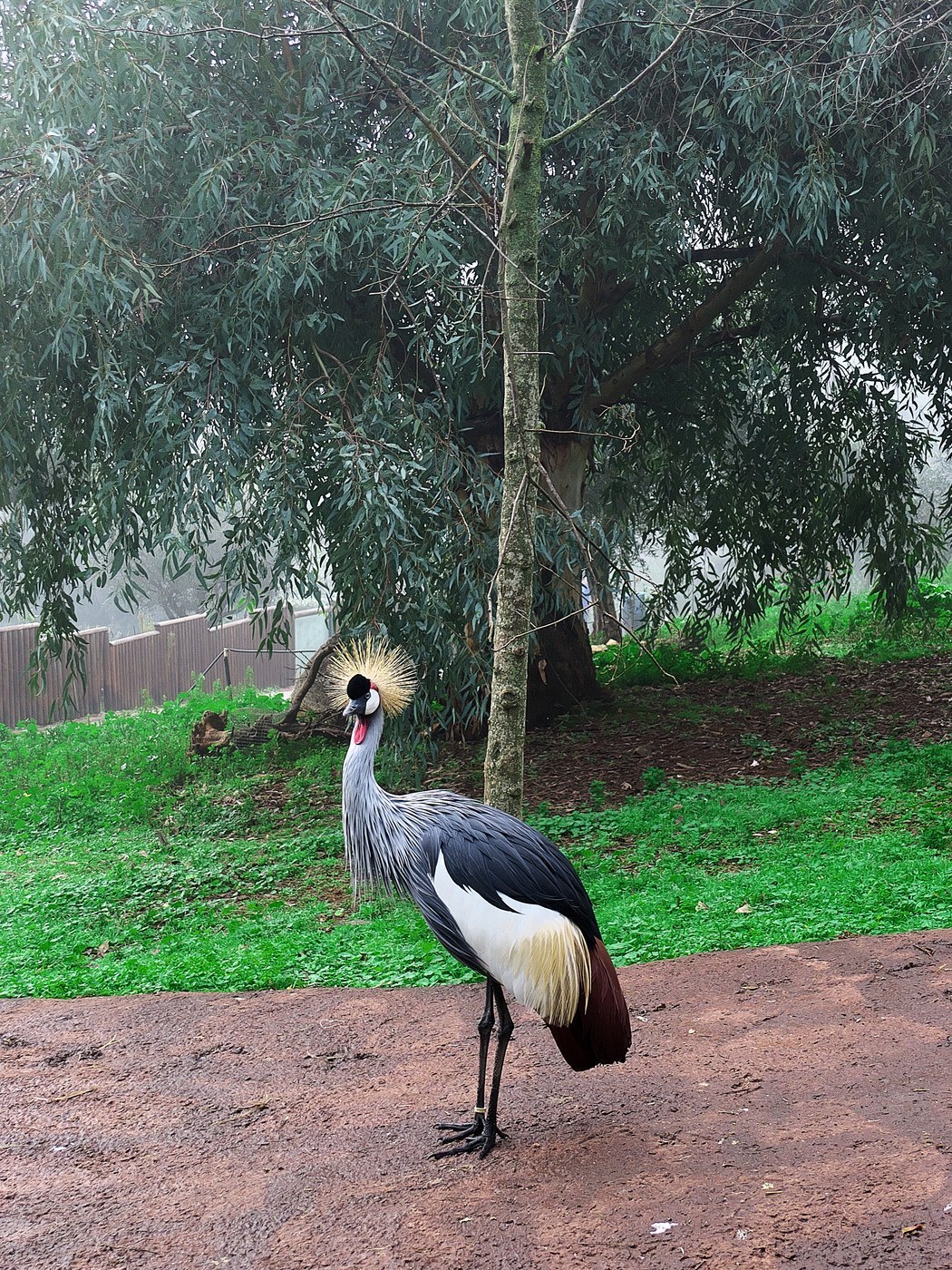
Key Field Marks
- Size & shape: A large crane standing about 1 m (3.3 ft) tall, with a slender neck, long legs, and a comparatively short bill for a crane.
- Crown: The signature feature — a stiff, radiating crown of golden-yellow bristly feathers atop the head, unlike any other crane species.
- Head pattern: Bare white and red cheek patches below the crown, with a small red throat wattle hanging beneath the chin.
- Plumage: Body mostly pale to slate grey; the wings are broad and boldly patterned with white, gold/buff, and chestnut-maroon, very conspicuous in flight and at rest when folded.
- Bill & legs: Short, dark grey bill; long black legs and long toes adapted for walking on marshy or grassy ground.
- Behavior: Forages by walking slowly through grassland and wetland edges, stamping feet to flush insects; performs elaborate bowing, jumping, and wing-flapping dance displays, especially during courtship, but also socially year-round.
Similar Species
- Black Crowned-Crane (mainly further north/west in Africa, limited range overlap in parts of East Africa): Very similar shape but has a mostly black body and neck versus the pale grey body of the Grey Crowned-Crane; ranges barely overlap and habitat/voice also differ.
- Wattled Crane: Much larger, lacks the golden crown, has a grey head with white foreneck wattles hanging low, and different overall grey-and-white plumage without the crane's gold crest.
- No other African bird combines a golden bristle crown with grey body plumage, so once the crown is seen the identification is certain.
Where & When to See It
- Range: East and southern Africa, from South Sudan and Kenya south through Uganda, Tanzania, Zambia, Zimbabwe, Botswana, and South Africa; the national bird of Uganda.
- Habitat: Open grassland, savanna, marshes, and the edges of lakes and rivers; also forages in cultivated fields and pastures, often near cattle.
- Season: Resident and largely non-migratory, though it makes local movements tied to rainfall and wetland conditions; visible year-round in suitable habitat, with breeding tied to the wet season.
Voice
- A far-carrying, honking, two-note call often rendered "ka-waan" or a trumpeting "mahem," given in flight and during display; also makes softer purring and booming sounds during courtship.
Quick Tips for Confident ID
- The golden bristle crown is diagnostic and visible at a distance.
- Look for grey body plumage (not black) to separate it from the Black Crowned-Crane where ranges approach.
- Listen for the loud honking flight call, useful for locating flocks moving between roosting wetlands and feeding grasslands.
Frequently asked questions
What is the golden 'crown' on a Grey Crowned-Crane made of?
It is a dense tuft of stiff, bristle-like golden-yellow feathers, not fur or plastic-like material, radiating from the top of the head.
How do you tell a Grey Crowned-Crane from a Black Crowned-Crane?
Grey Crowned-Cranes have pale grey body plumage, while Black Crowned-Cranes have mostly black body and neck feathers; their ranges only marginally overlap in parts of East Africa.
Do Grey Crowned-Cranes migrate?
They are largely resident, making only local and seasonal movements in response to rainfall and wetland water levels rather than long-distance migration.
Why do Grey Crowned-Cranes dance?
The bowing, jumping, and wing-flapping dance is used in courtship pair-bonding but also occurs outside the breeding season as social behavior between birds in a flock.