
Green-tailed Towhee Identification Guide
A shy, ground-loving sparrow relative of western sagebrush and mountain scrub, marked by an olive-green back, rusty crown, and a bold white throat framed in gray.
Read the full Green-tailed Towhee encyclopedia entry →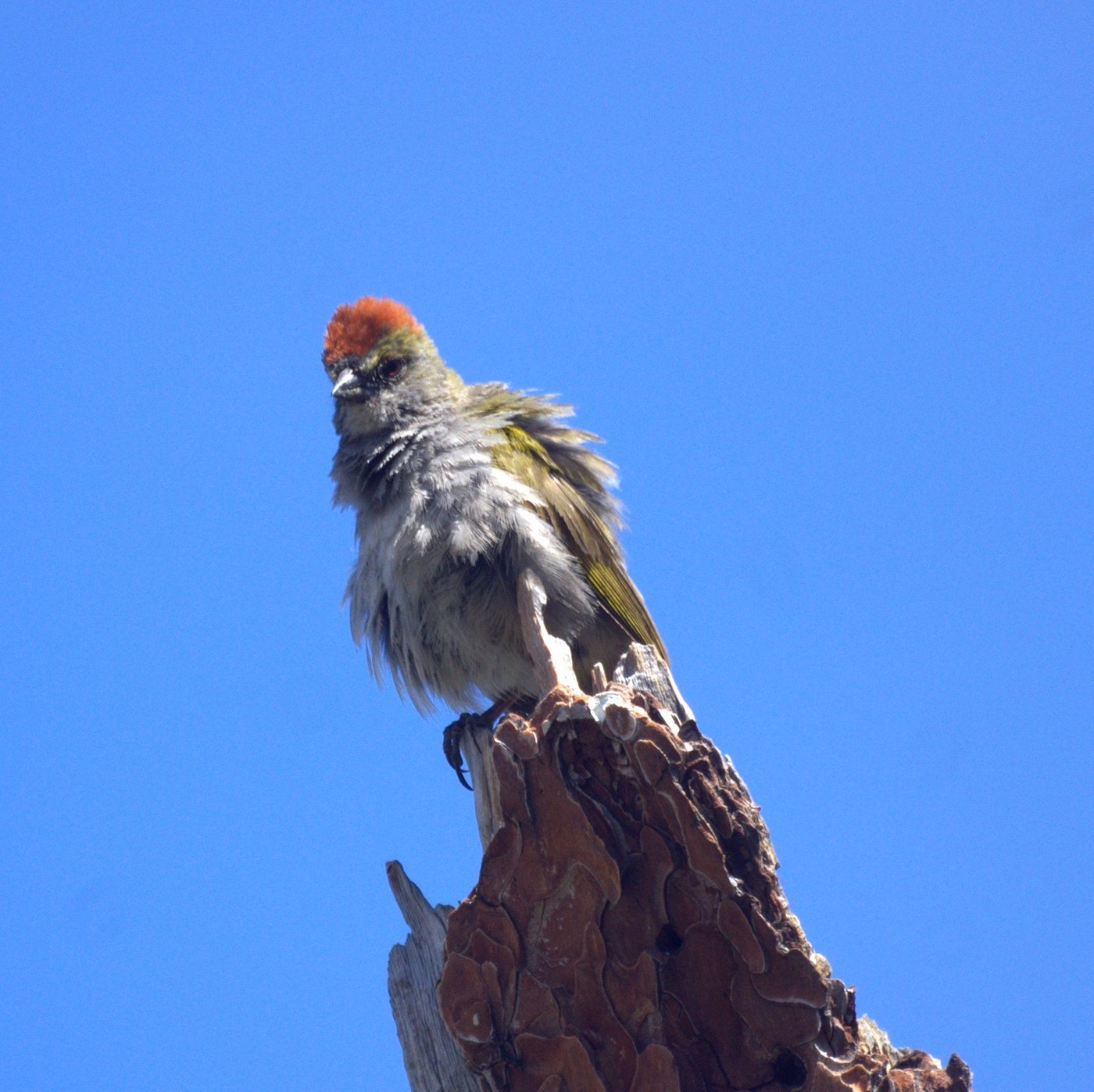
Key Field Marks
- Size and shape: A fairly large, long-tailed sparrow-like bird, about 7.25 inches long, with a plump body and a proportionally long tail often held cocked or slightly raised.
- Plumage: Olive-green back, wings, and tail contrast with a soft gray face and breast; a bright rufous-chestnut crown caps the head, and a crisp white throat is bordered by a dark malar stripe, creating a distinctive facial pattern.
- Bill and legs: Short, conical, grayish bill typical of sparrows; pinkish-brown legs.
- Behavior: Skulking and ground-dwelling, often heard before seen as it scratches through leaf litter beneath dense brush; when it does show itself, it may perch briefly atop a shrub to sing, then drop back into cover.
Separating It From Similar Species
- Other towhees (Spotted, Eastern, California, Canyon): None of these show the combination of an olive-green back and tail with a rufous cap; Green-tailed Towhee is unique in its genus for this plumage pattern.
- Female or immature warblers/sparrows with green tones: The larger size, long tail, distinct white throat framed by gray, and rufous crown quickly separate Green-tailed Towhee from any warbler or typical sparrow.
- Juveniles are streakier and duller but still typically show hints of the green wing edging and a paler version of the adult pattern.
Where and When to See It
- Habitat: Dense sagebrush, mountain chaparral, and shrubby thickets, typically at mid- to high elevations in summer; found in similar brushy desert and scrub habitats in winter.
- Range: Breeds through the interior mountain West of the United States, from the Rockies and Great Basin ranges into parts of the Southwest; winters mainly in the desert Southwest and northern and central Mexico.
- Season: A summer breeder at higher elevations, migrating to lower desert habitats for winter; most numerous on breeding grounds from late spring through summer.
Voice and Song Cues
- The song is a variable, sweet series of buzzy and whistled phrases, often beginning with a few clear introductory notes followed by trills, reminiscent of a mix between a towhee and a sparrow's song.
- The common call is a distinctive, cat-like or kitten-like "mew", quite different from the calls of other towhees and useful for locating the bird in dense cover.
Frequently asked questions
What is the most distinctive feature of the Green-tailed Towhee?
The combination of an olive-green back and tail, a bright rufous crown, and a white throat outlined in gray is unique among North American towhees.
What habitat should I search for this species?
Look in dense sagebrush and mountain chaparral at moderate to high elevations during the breeding season, and in brushy desert scrub in winter.
How can I locate a Green-tailed Towhee if it's hiding in brush?
Listen for its distinctive cat-like "mew" call, which often reveals its presence before the bird is visible in dense cover.
Does the Green-tailed Towhee migrate?
Yes, it breeds at higher elevations in the interior western U.S. and moves to lower desert habitats in the Southwest and Mexico for winter.
Is the Green-tailed Towhee closely related to sparrows?
Yes, towhees are part of the New World sparrow family, and this species shares many sparrow-like foraging habits, including scratching through leaf litter for food.