
Green-headed Tanager Identification Guide
One of the most dazzlingly multicolored birds of the Atlantic Forest, the Green-headed Tanager combines an iridescent green head, turquoise rump and underparts, and a black back patch broken by golden-yellow scaling.
Read the full Green-headed Tanager encyclopedia entry →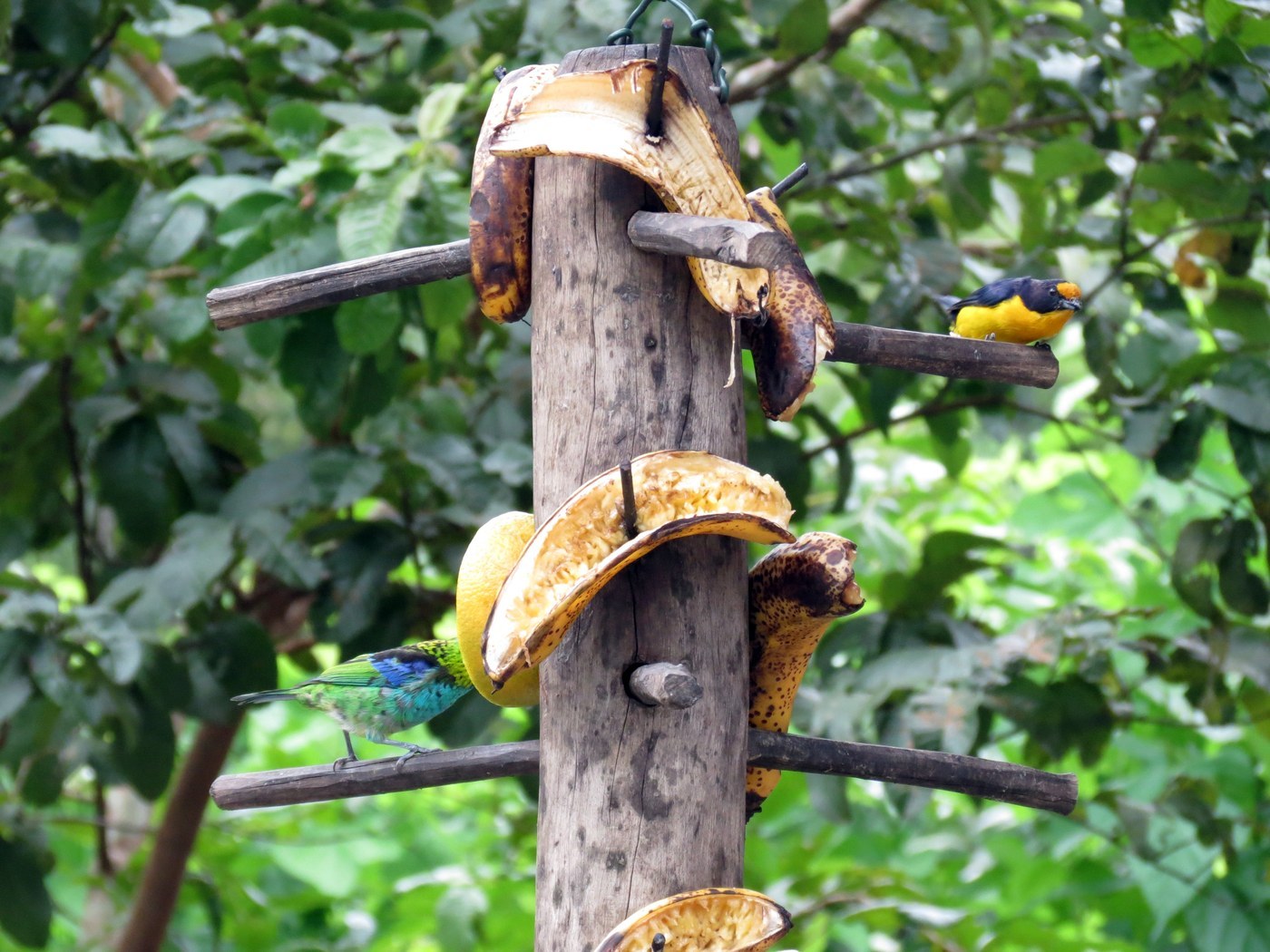
Key Field Marks
- Size & shape: A small, compact tanager about 5.5 inches (14 cm) long, with a short, thick-based, slightly conical bill typical of tanagers.
- Plumage: Extraordinarily colorful — a shining emerald-green head and nape, a black mantle patch scaled with golden-yellow to orange spangles, a turquoise-blue rump, and turquoise underparts; wings and tail are black edged with blue-green.
- Overall impression: Looks like a small jewel — no single feature stands alone, but the combination of green head, gold-scaled black back, and turquoise body is unmistakable when seen well.
- Bill: Short, black, and pointed — used for gleaning fruit and insects.
- Behavior: Forages actively in pairs or small groups, often joining mixed-species flocks in the mid- to upper canopy, gleaning insects and taking small fruit; frequently moves restlessly through foliage.
Separating It From Similar Species
- Its combination of colors is essentially unique within its Atlantic Forest range — no other tanager shares the same green head, gold-spangled black back, and turquoise body pattern, making confusion unlikely with a clear view.
- Could conceivably be confused at a glance with other multicolored tanagers such as Brassy-breasted Tanager or Gilt-edged Tanager, but those show yellow or brassy underparts rather than turquoise, and lack the same clean green-headed pattern.
- Poor lighting or brief glimpses of just the green head could suggest other green-headed tanagers, but the golden-scaled black back is a strong confirming mark once any part of the back is visible.
Where & When to See It
- Habitat: Humid Atlantic Forest (Mata Atlântica), including forest edge, secondary growth, and adjacent gardens or plantations at low to mid elevations.
- Range: Southeastern Brazil, extending into far northeastern Argentina and eastern Paraguay.
- Season: Resident year-round; most easily found by joining active mixed-species foraging flocks moving through the canopy at any time of year.
Voice
- Gives thin, high-pitched, sibilant tsit or sik contact notes while foraging, typical of many tanagers — not particularly loud or musical, so visual detection (often via its flashing colors) is usually easier than identification by ear.
Frequently asked questions
What colors make the Green-headed Tanager easy to identify?
A shining green head and nape, a black back patch scaled with gold, a turquoise-blue rump, and turquoise underparts together form a color combination unique among Atlantic Forest tanagers.
Where is the Green-headed Tanager found?
In humid Atlantic Forest of southeastern Brazil, with a smaller range extending into far northeastern Argentina and eastern Paraguay.
Does the Green-headed Tanager travel alone or in flocks?
It typically forages in pairs or small groups and often joins mixed-species canopy flocks alongside other tanagers and insectivorous birds.
Is the Green-headed Tanager's call useful for identification?
Not especially — its calls are thin, high, sibilant notes similar to many other tanagers, so the bird is usually identified visually by its striking, multicolored plumage rather than by voice.