
Greater Sage-Grouse Identification Guide
North America's largest grouse, the Greater Sage-Grouse is a chicken-sized, mottled gray-brown bird of sagebrush country best known for the male's elaborate strutting display with inflated yellow air sacs and spiky tail.
Read the full Greater Sage-Grouse encyclopedia entry →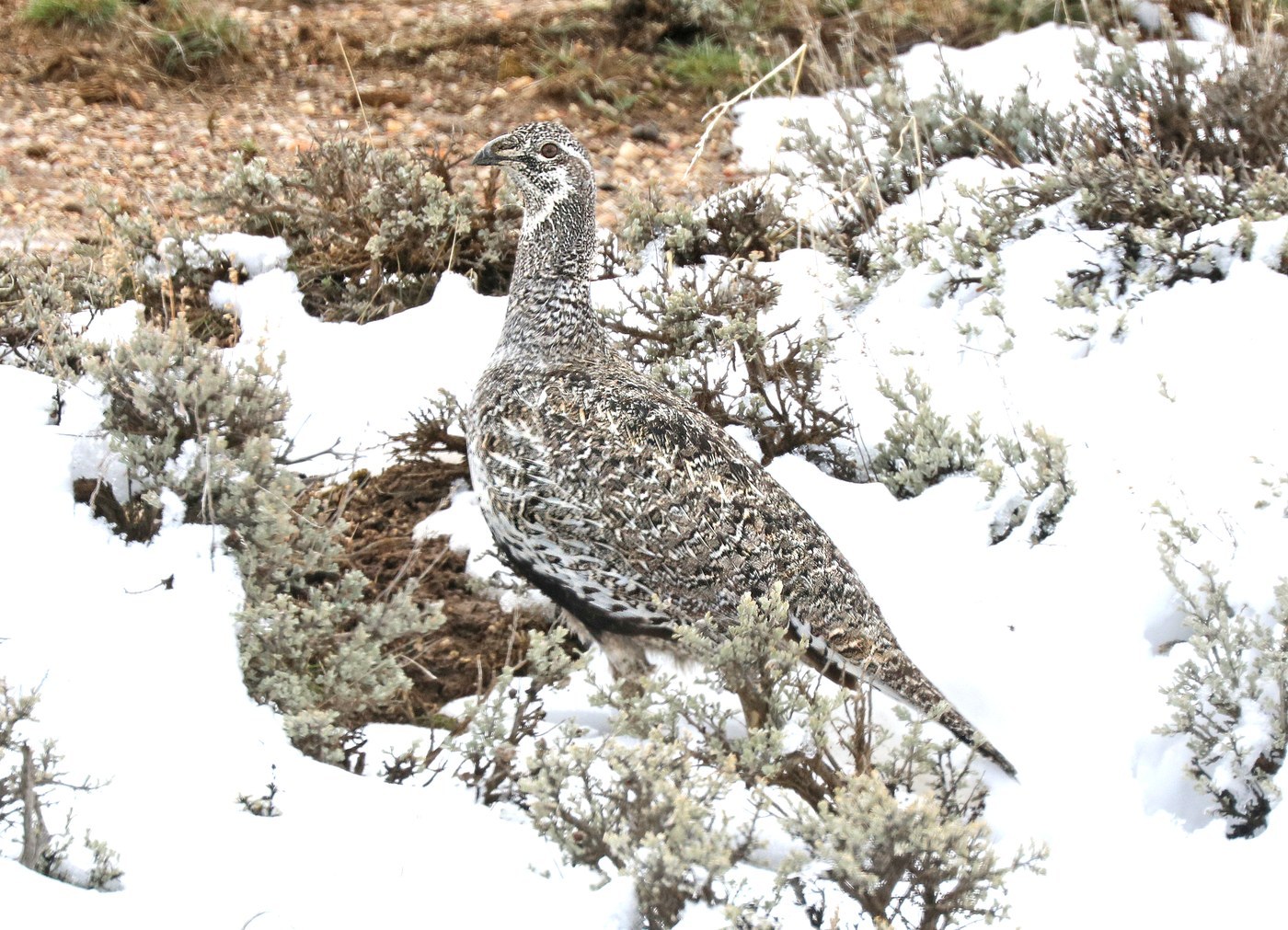
Key Field Marks
- Size & shape: A very large, plump grouse — males up to 30 inches (76 cm) long and 4–7 lbs, females noticeably smaller. Long, pointed, spiky tail feathers are distinctive in both sexes but most dramatic in displaying males.
- Plumage: Finely mottled gray, brown, and black overall (excellent camouflage in sagebrush), with a black belly patch and a black throat bordered by white on the breast.
- Head: Small head relative to body; males show a yellow comb over the eye and, during display, inflate two large yellow-olive air sacs on the chest surrounded by white filoplumes ("shoulder" feathers) that fan outward.
- Bill: Short, dark, and chicken-like.
- Behavior: Highly terrestrial, walking and running through sagebrush; flushes explosively with loud wingbeats when startled. Males gather at traditional communal display grounds called leks at dawn in spring to strut, fan their spiky tails, and produce popping sounds from their air sacs.
Separating It From Similar Species
- The similar but rarer Gunnison Sage-Grouse (restricted to southwestern Colorado and adjacent Utah) is smaller, with longer, denser filoplumes on the neck and a more banded tail pattern; the two are best separated by range and, in displaying males, by the longer plumes and different popping display sounds of Gunnison.
- Other grouse in sagebrush range (e.g., Sharp-tailed Grouse) are notably smaller, lack the black belly patch, and have shorter, pointed (not spiky-fringed) tails without the male's air-sac display.
- Female sage-grouse can look superficially like large female pheasants but are grayer overall, lack a long pointed tail, and always occur in sagebrush habitat.
Where & When to See It
- Habitat: Obligate sagebrush-steppe specialist — found only where big sagebrush (Artemisia) dominates the landscape; also uses adjacent grassland and wet meadows in summer.
- Range: Patchily distributed across the Intermountain West of the U.S. and southern Canada, including parts of Wyoming, Montana, Idaho, Nevada, Utah, Colorado, and the Dakotas.
- Season: Resident year-round. The best viewing window is at dawn in March–May, when males display on leks; birds disperse into surrounding sagebrush for the rest of the year and become much harder to find.
Voice
- Males produce a distinctive series of low, liquid "plopping" and popping sounds from their air sacs during lek display, audible at some distance in the quiet dawn air.
- Otherwise generally quiet; flushed birds give a low cackling note and loud whirring wingbeats.
Frequently asked questions
What is the best way to see Greater Sage-Grouse displaying?
Visit a known lek in sagebrush country before sunrise from March through May, when males gather to strut and inflate their yellow air sacs; many wildlife agencies offer guided lek viewing to minimize disturbance.
How do you tell a Greater Sage-Grouse from a Gunnison Sage-Grouse?
Range is the most reliable clue — Gunnison Sage-Grouse is restricted to a small area of southwestern Colorado and adjacent Utah. Displaying male Gunnison birds also show longer, denser neck filoplumes and a different popping sound than Greater Sage-Grouse.
Why are Greater Sage-Grouse only found in sagebrush?
They are a sagebrush obligate species, depending on sagebrush year-round for food (leaves are a major winter diet item), cover, and nesting/lekking habitat, so their range tightly tracks intact sagebrush-steppe.
Do female Greater Sage-Grouse display on leks?
No, only males strut and inflate their air sacs at leks; females visit the leks to observe and select mates, then nest and raise young alone away from the lek.