
Greater Coucal Identification Guide
A large, crow-sized, ground-loving cuckoo relative with glossy black body, chestnut wings, a long black tail, and red eyes, common in South and Southeast Asian scrub.
Read the full Greater Coucal encyclopedia entry →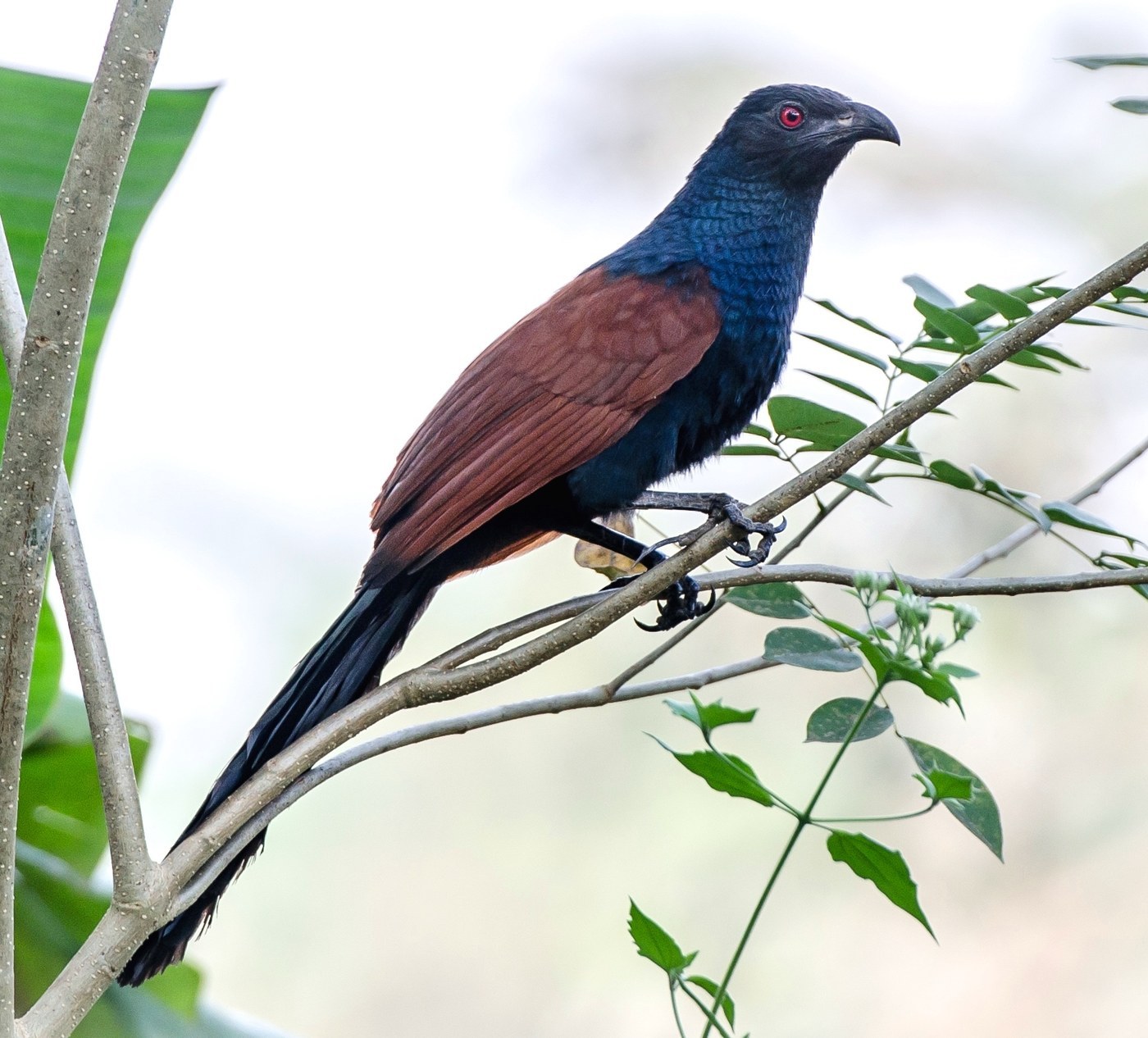
Key Field Marks
- Size & shape: Crow-sized and heavily built for a cuckoo relative, with a long, broad, graduated black tail and relatively short, rounded wings.
- Plumage: Glossy black head, body, and tail contrasting with rich chestnut (rufous) wings — a combination that is distinctive and hard to confuse once seen well.
- Eyes: Bright red, visible at close range and a useful confirming feature.
- Bill & legs: Heavy, downcurved black bill; strong black legs adapted for clambering through dense vegetation rather than fast flight.
- Behavior: Skulking and largely terrestrial, moving with a clumsy, heavy gait through scrub and low vegetation; flies in short, labored bursts between cover rather than sustained flight.
Separating It From Similar Species
- Lesser Coucal: Noticeably smaller, with a shorter tail and bill; non-breeding lesser coucals show a streaked brownish plumage quite different from the greater coucal's clean black-and-chestnut breeding look, though care is needed with juveniles of both species.
- Crows and other black birds: Ruled out by the coucal's contrasting chestnut wings, long loose tail, red eye, and skulking, low-to-the-ground behavior rather than open perching and soaring.
- Overall structure — heavy body, long floppy tail, chestnut wings against black body — is usually diagnostic with a reasonable view.
Where and When to See One
- Range: Widespread across the Indian subcontinent and much of Southeast Asia, including southern China.
- Habitat: Scrub, grassland edges, gardens, agricultural land, and secondary growth near forest edges; tolerant of human-modified habitats.
- Season: Resident year-round throughout its range, with no major migratory movements.
Voice Cues
- A deep, resonant, repeated "coop-coop-coop" or bubbling hoot, often likened to water being poured from a bottle, delivered in a descending or steady series.
- Calls are frequently given from cover and carry well, often the first clue to the bird's presence before it is seen moving through dense scrub.
Frequently asked questions
How do you identify a greater coucal?
Look for a crow-sized bird with a glossy black body and tail, contrasting chestnut wings, red eyes, and a heavy black downcurved bill, usually seen moving through scrub near the ground.
What is the difference between greater and lesser coucal?
Greater coucal is larger with a longer tail and clean black-and-chestnut plumage, while lesser coucal is smaller and, outside breeding season, shows streaky brown plumage rather than solid black and chestnut.
Is the greater coucal a type of cuckoo?
Yes, it belongs to the cuckoo family (Cuculidae) but, unlike many cuckoos, it builds its own nest and raises its own young rather than being a brood parasite.
What does a greater coucal sound like?
A deep, resonant, repeated "coop-coop-coop" hooting call, often compared to liquid being poured from a bottle.
Where is the best habitat to find a greater coucal?
Scrub, grassland edges, and garden or farmland vegetation near forest edges across South and Southeast Asia.