
Greater Blue-eared Starling Identification Guide
A glossy, iridescent African starling with a violet-blue ear patch, distinguished from close relatives by its larger size and orange-yellow eye.
Read the full Greater Blue-eared Starling encyclopedia entry →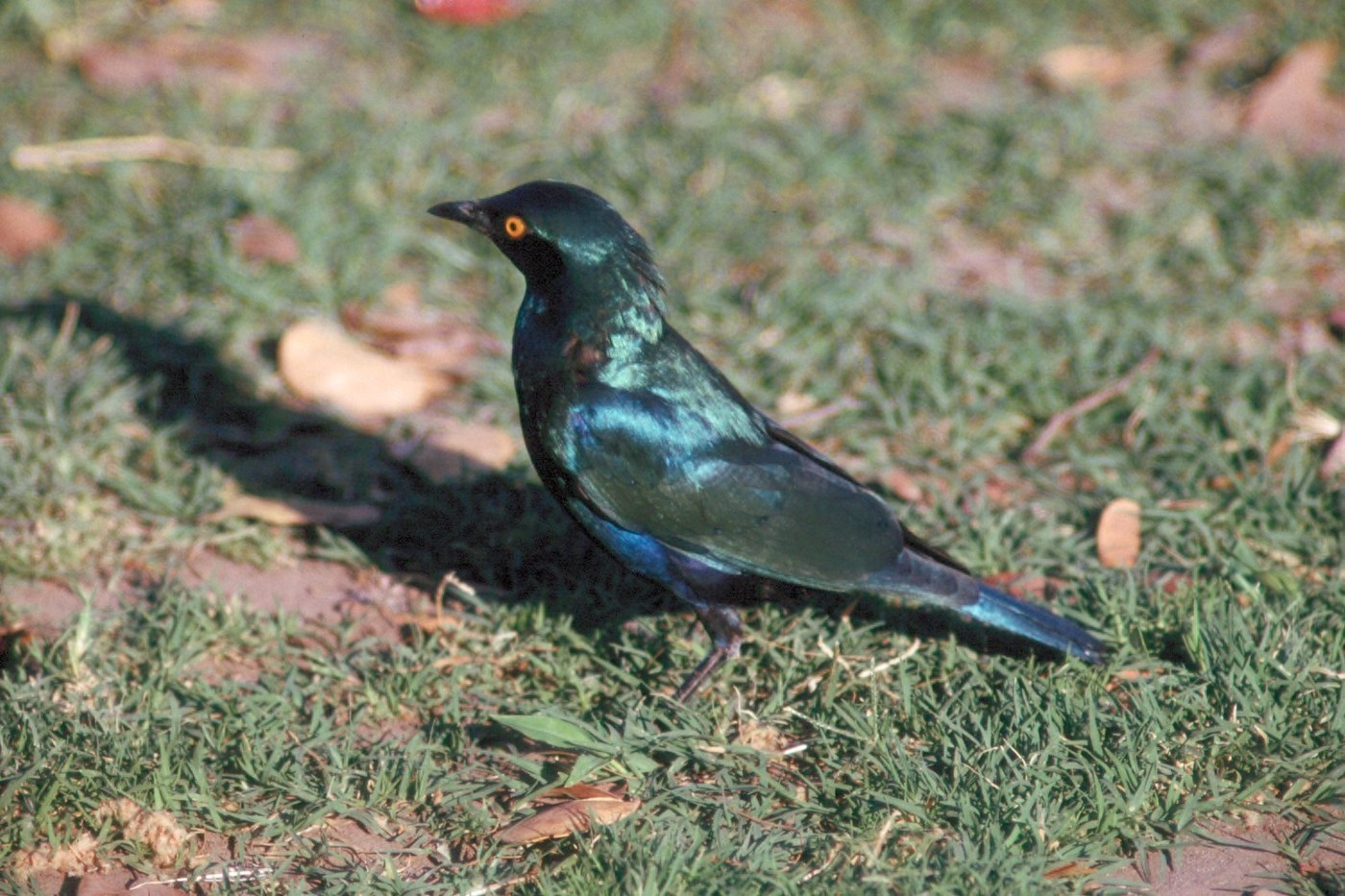
Key Field Marks
- Size & shape: A medium-sized glossy starling with a fairly short, square-ended tail relative to some longer-tailed African starlings.
- Plumage: Brilliant metallic blue-green overall, with a distinct violet-blue patch across the ear coverts that gives the species its name; belly and vent are also glossy blue-green (not contrastingly different, unlike some relatives).
- Eye color: Bright orange-yellow, a useful field mark when comparing to similar species.
- Bill & legs: Short black bill and blackish legs typical of glossy starlings.
- Behavior: Forms noisy flocks, often mixing with other starling species, and is frequently seen foraging on the ground or in low trees for insects and fruit.
Separating It From Similar Species
- Lesser Blue-eared Starling: Smaller, with a shorter tail and a duller, more purplish (less vivid blue) ear patch; the dark eye of the lesser blue-eared starling is a key difference from the orange-yellow eye of the greater.
- Cape Glossy Starling: Lacks a clearly defined ear patch, appearing more uniformly glossy blue-green on the head, and has a longer tail.
- Splendid Glossy Starling: Shows a more sharply demarcated white-ish or pale eye and different underpart gloss patterns; ranges overlap in parts of central Africa.
- Careful attention to eye color and the crispness of the ear patch is the best way to separate this trio of similar glossy starlings.
Where and When to See One
- Range: Widespread across sub-Saharan Africa, from Senegal east to Ethiopia and south to South Africa (with some regional gaps filled by the lesser blue-eared starling).
- Habitat: Open woodland, savanna, farmland edges, and gardens; adaptable to human-modified landscapes.
- Season: Resident year-round across most of its range, though some local movements track food and rainfall.
Voice Cues
- A varied mix of harsh chattering notes, squeaky whistles, and warbled phrases, often given in flight or from a perch.
- Flocks can be quite noisy at communal roosts, with calls overlapping into a constant chatter — useful for locating a mixed starling flock before identifying individual species by sight.
Frequently asked questions
How do you tell greater blue-eared starling from lesser blue-eared starling?
Greater blue-eared starling is larger with a longer tail, a more vivid blue ear patch, and an orange-yellow eye, while lesser blue-eared starling is smaller with a duller ear patch and a dark eye.
What color is a greater blue-eared starling's eye?
Bright orange-yellow, which is a key distinguishing feature from similar glossy starling species with dark eyes.
What habitat does the greater blue-eared starling prefer?
Open woodland, savanna, and farmland edges across sub-Saharan Africa, including gardens and human-altered landscapes.
Do greater blue-eared starlings flock with other starling species?
Yes, they commonly mix with other glossy starlings and species in foraging flocks, so careful comparison of eye color and ear patch is needed to separate them.
What does a greater blue-eared starling sound like?
A mix of harsh chattering calls, squeaky whistles, and warbled notes, often given from flocks in trees or in flight.