
Greater American Flamingo Identification Guide
The deepest-colored flamingo in the world, with vivid pink-orange plumage and pink legs, found around Caribbean lagoons, the Yucatan, and increasingly southern Florida.
Read the full Greater American Flamingo encyclopedia entry →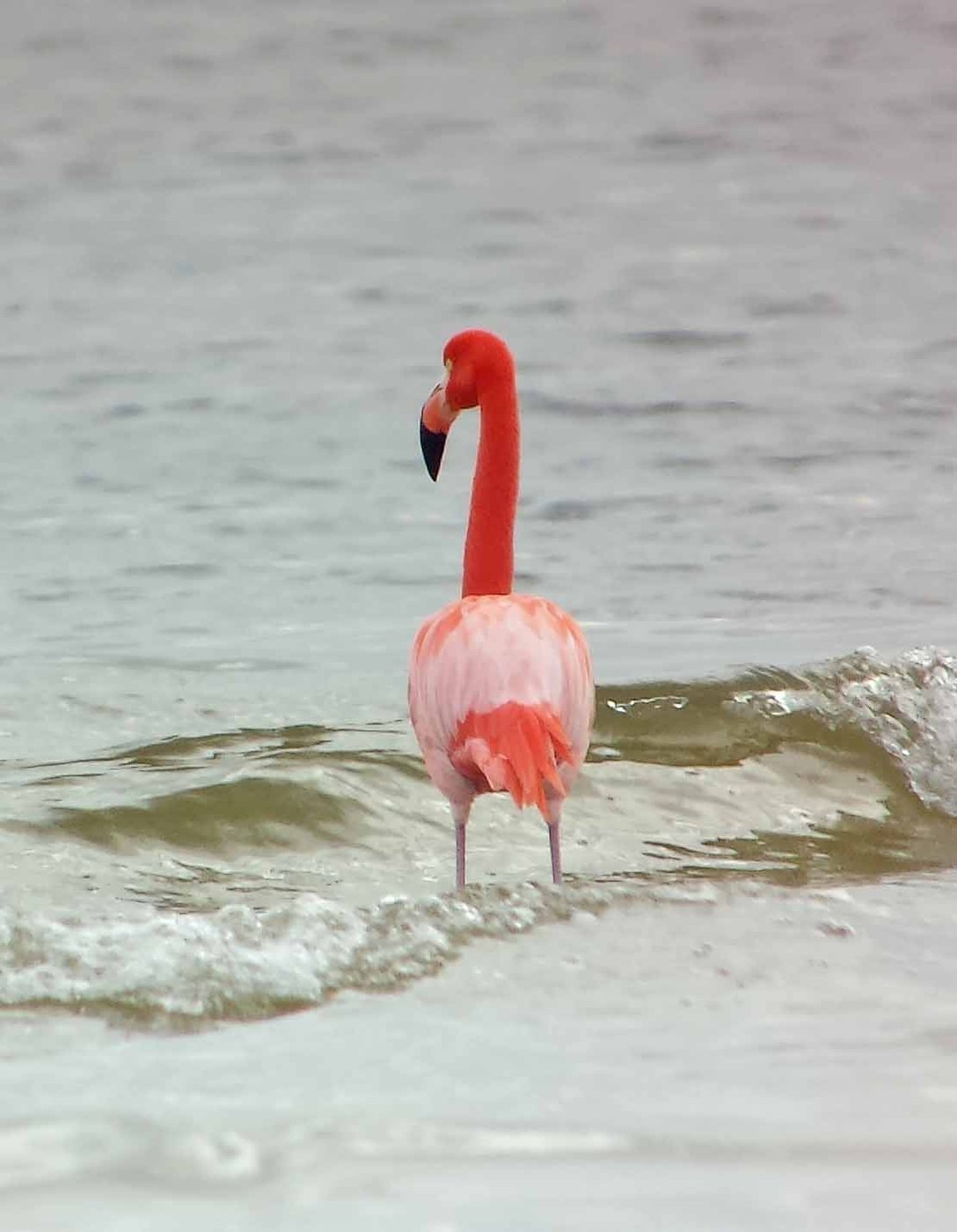
Key Field Marks
- Size & shape: A tall, long-necked, long-legged wading bird with the classic flamingo silhouette; among the larger flamingo species.
- Plumage: The most intensely colored flamingo, ranging from deep pink to vivid orange-red across the body, with black primary and secondary flight feathers visible mainly in flight.
- Bill: Strongly downward-kinked, pale pink at the base grading to a black tip.
- Legs: Bright pink from top to bottom, without the grayish tones seen in some other flamingo species.
- Behavior: Feeds with its head upside-down in shallow water, sweeping its bill side to side to filter small invertebrates and algae; often seen in large, tightly packed flocks.
Separating It From Similar Species
- Greater Flamingo (Old World): Paler, whitish-pink overall rather than deep orange-red, and found in Africa, southern Europe, and Asia rather than the Americas.
- Chilean Flamingo: Grayer-pink overall with gray legs showing pink "knee" joints and a bill with more gray at the base — a South American species that can occur in captivity or as an escapee outside its native range.
- Lesser Flamingo: Much smaller-bodied with a dark maroon, almost all-dark bill, and a deeper solid pink color concentrated on a smaller frame; native to Africa and India.
- Range is often the quickest clue: within the Americas, this is essentially the only wild flamingo likely to be encountered.
Where and When to See One
- Range: Caribbean islands, the Yucatan Peninsula, the Galapagos Islands, and coastal Venezuela/Colombia, with a growing resident and visiting presence in southern Florida (notably Florida Bay and the Everglades) following historical extirpation and recent natural recolonization.
- Habitat: Shallow saline lagoons, coastal mudflats, salt pans, and mangrove-fringed bays.
- Season: Present year-round in core range; Florida sightings can be more frequent after storms disperse birds from Caribbean colonies.
Voice Cues
- Loud, goose-like honking and nasal gabbling, especially from flocks in flight or at communal roosts.
- Contact calls help keep large flocks cohesive; louder, more urgent calls are given when flushed or alarmed.
Frequently asked questions
What is the difference between a greater American flamingo and a greater flamingo?
They are closely related but the American flamingo is much more deeply colored (orange-red versus pale pink) and occurs in the Americas, while the greater flamingo is paler and found in Africa, Europe, and Asia.
Are the pink flamingos seen in Florida wild?
Increasingly yes — after decades of only captive or escaped birds being reported, wild American flamingos have been naturally recolonizing southern Florida, especially Florida Bay and the Everglades.
How do you tell an American flamingo from a Chilean flamingo?
American flamingo is more vividly pink-orange with all-pink legs, while Chilean flamingo is grayer-pink with gray legs showing pink joints.
Why are American flamingos so brightly colored?
Their intense pink-orange color comes from carotenoid pigments in the small crustaceans and algae they filter-feed on.
What habitat should I search to find American flamingos?
Shallow saline lagoons, salt pans, and coastal mudflats throughout the Caribbean basin, Yucatan, and increasingly southern Florida wetlands.