
Great White Pelican Identification Guide
A massive white waterbird with black flight feathers and a huge pink-flushed bill and pouch, found on lakes and wetlands across Africa, southeastern Europe, and Asia.
Read the full Great White Pelican encyclopedia entry →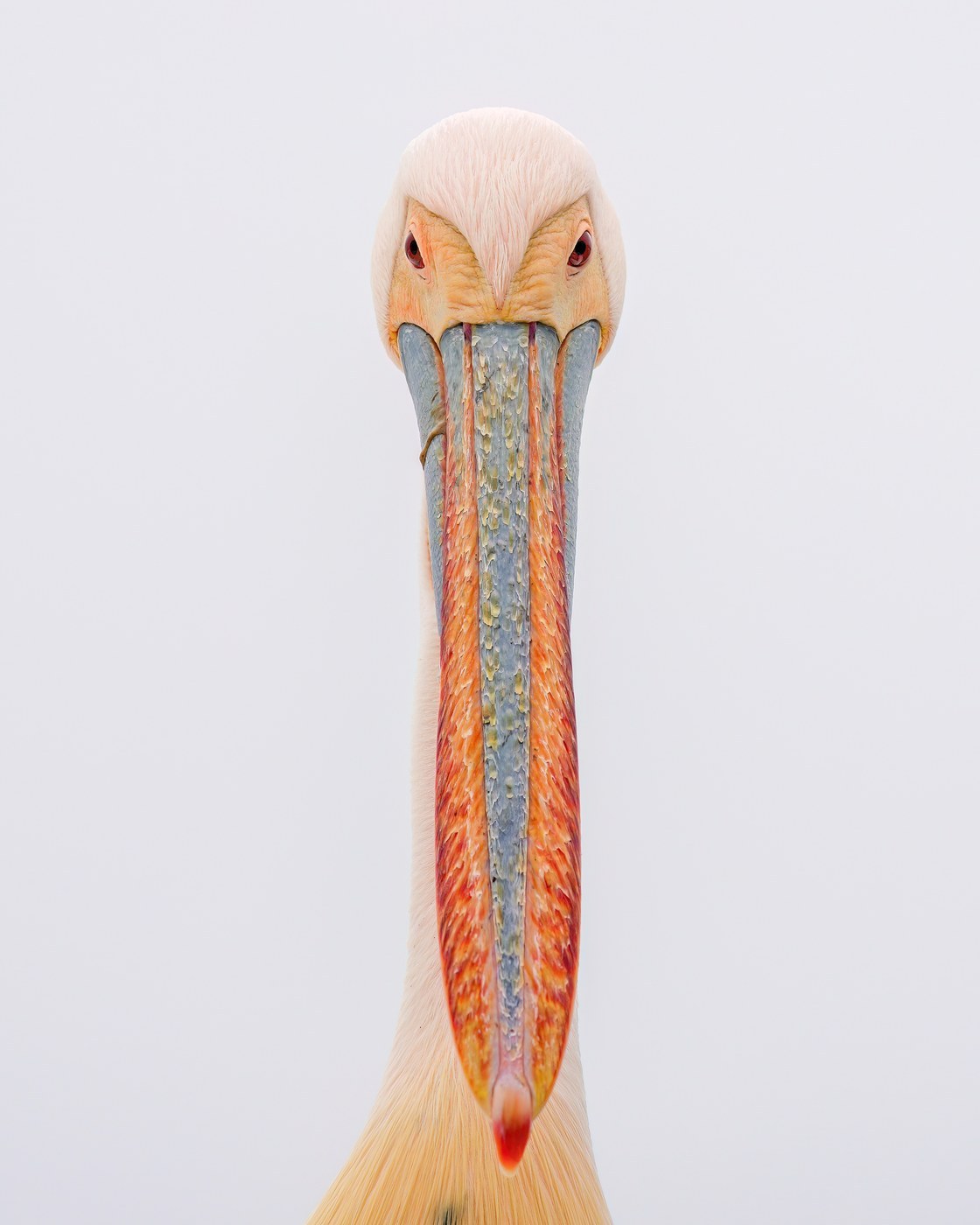
Key Field Marks
- Size & shape: One of the largest flying birds in the world, with a heavy body, long neck, and an enormous bill tipped with a large stretchy gular pouch.
- Plumage: Predominantly white with a faint pink tinge, especially in breeding season; black primary and secondary flight feathers create a striking contrast visible mainly in flight.
- Bare parts: Bill is pink-orange with a yellow-orange pouch that intensifies in color during the breeding season; facial skin is bare and pink, and legs are pinkish.
- Breeding features: Short shaggy crest on the nape and a yellowish patch on the breast during the breeding season.
- Flight: Soars on thermals in tight flocks, often in V-formation, with the neck held pulled back in an S-curve, unlike herons or storks which extend the neck.
Separating It From Similar Species
- Dalmatian Pelican: Larger and grayer-white overall, with a shaggy curled nape crest, gray (not pink) legs, and an orange (not yellow) lower mandible/pouch; ranges overlap in parts of southeastern Europe and Asia.
- American White Pelican: Only found in the New World, so range alone separates them; also develops a distinctive fibrous "horn" on the bill in breeding season, which great white pelican lacks.
- Pink-backed Pelican: Smaller and grayer overall, with a duller gray-yellow bill and less contrast between white body and black flight feathers.
Where and When to See One
- Range: Breeds locally across sub-Saharan and northeastern Africa, southeastern Europe (notably the Danube Delta), and parts of the Middle East and South/Central Asia; winters further south into Africa and the Indian subcontinent.
- Habitat: Large shallow freshwater lakes, wetlands, and coastal lagoons where it can cooperatively herd fish in groups.
- Season: Breeding colonies are most active in spring and early summer in temperate parts of the range; African populations may breed opportunistically depending on water levels.
Voice Cues
- Largely silent away from colonies; at breeding sites, adults give low grunting and growling calls, while chicks produce higher-pitched begging calls.
- Vocalizations are rarely useful for field identification compared to the bird's unmistakable size, shape, and plumage pattern.
Frequently asked questions
How do you tell a great white pelican from a Dalmatian pelican?
Great white pelican has pink legs and a bright yellow-orange pouch, while Dalmatian pelican is grayer overall with gray legs and a curly, shaggy nape crest.
Are great white pelicans found in North America?
No, they are Old World birds found across Africa, southeastern Europe, and Asia; the similar-looking American white pelican occupies North America instead.
What do great white pelicans eat and how do they hunt?
They eat fish, often cooperatively herding schools into shallow water in coordinated groups before scooping them up in their large pouches.
How can you identify a great white pelican in flight?
Look for the white body with sharply contrasting black flight feathers, a pulled-back S-curved neck, and soaring flight in loose flocks or V-formation.
Where is the best place to see great white pelicans?
Large wetland complexes such as the Danube Delta, East African Rift Valley lakes, and major South Asian wetlands during breeding or wintering season.