
Great Spotted Kiwi Identification Guide
The largest and grayest of New Zealand's kiwi species, identified mainly by its bold streaked plumage, huge probing bill, and shrill nighttime calls in northwest South Island forests.
Read the full Great Spotted Kiwi encyclopedia entry →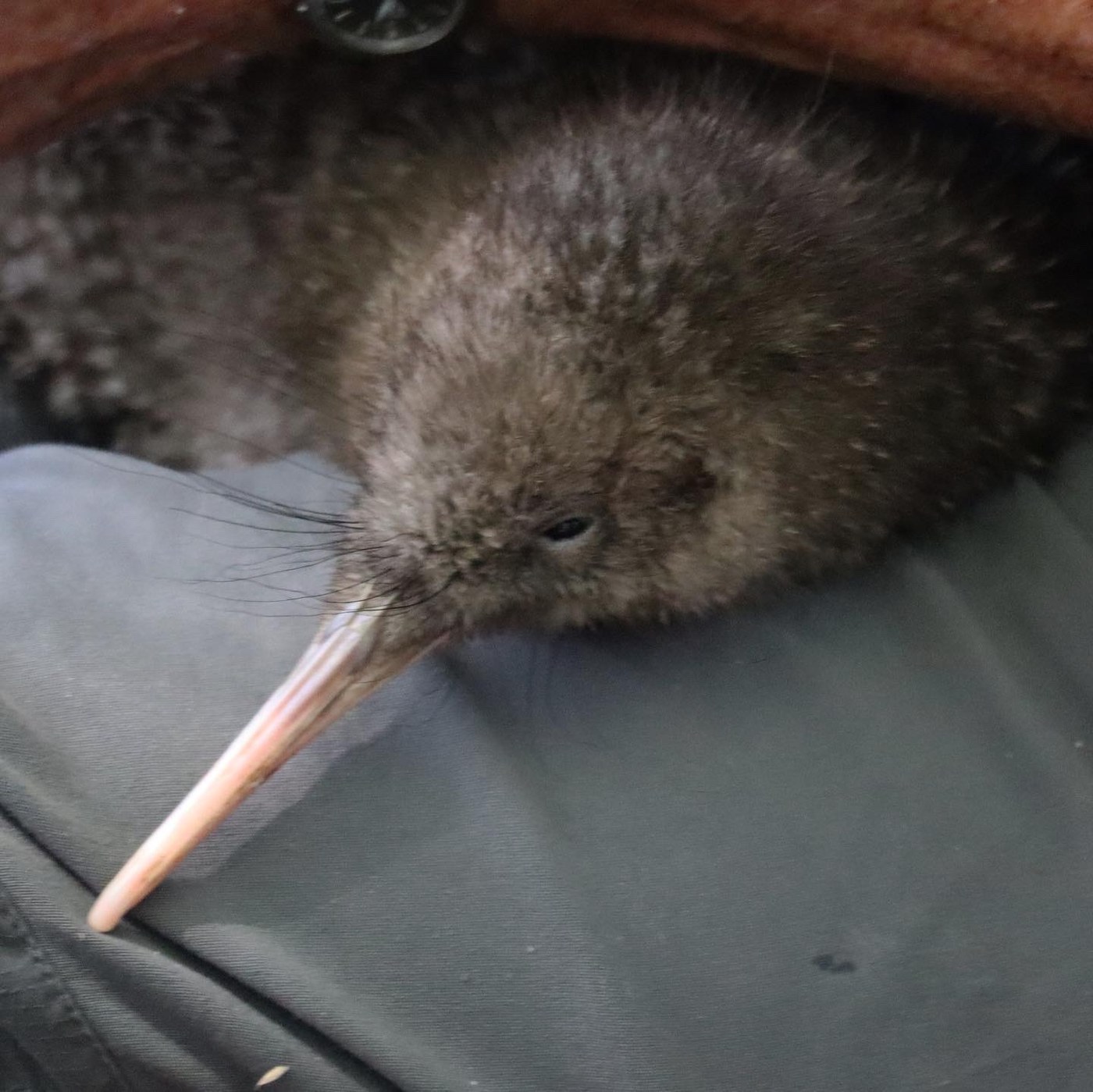
Key Field Marks
- Size & shape: The largest kiwi species, roughly the size of a domestic hen, with a stout, tailless, football-shaped body and no visible wings.
- Plumage: Grayish-brown, coarse hair-like feathers heavily streaked with pale gray and white, giving a distinctly "spotted" or frosted look compared to other kiwi.
- Bill: Very long, slightly downcurved, ivory-pale at the base, with nostrils at the very tip — used for probing soil and leaf litter for invertebrates.
- Face & legs: Long whisker-like bristles around the bill base; stout, powerful gray-pink legs built for digging and covering rough terrain.
- Behavior: Strictly nocturnal and flightless; forages by smell and touch, snuffling through leaf litter. Rarely seen by day except at some managed sanctuaries.
Separating It From Similar Kiwi
- North Island Brown Kiwi: Warmer, more uniform reddish-brown plumage lacking the great spotted's bold gray streaking; found only on the North Island.
- Okarito Kiwi (Rowi): Grayer overall with a whitish face, but noticeably smaller-bodied than great spotted kiwi and restricted to a tiny Okarito Forest population.
- Little Spotted Kiwi: Much smaller (about half the bulk), with finer, more uniform gray barring rather than coarse streaking; confined to predator-free islands and fenced sanctuaries.
- Overall, size plus the coarse, frosty streaking is the fastest way to separate great spotted kiwi from its relatives where ranges could otherwise cause confusion.
Where and When to See One
- Range: Endemic to the northwest and central mountains of New Zealand's South Island, including Kahurangi National Park, the Paparoa Range, and Arthur's Pass area.
- Habitat: Montane and subalpine forest, scrub, and tussock grassland, often at higher elevations than other kiwi species.
- Season: Present year-round; most active on calm, dark nights, especially in the hours after dusk.
- Best viewing: Guided night walks or predator-free sanctuaries (e.g., near Franz Josef or in the Nelson region) offer the most realistic chance of a sighting, since wild birds are extremely difficult to observe.
Voice Cues
- Males give a shrill, rising series of whistled notes, repeated rhythmically.
- Females answer with a slower, hoarser, more guttural call.
- Pairs sometimes duet at night, and calls carry well through forest, making voice the most reliable way to confirm presence even when the bird itself stays hidden.
Frequently asked questions
What is the easiest way to identify a great spotted kiwi?
Look for its large size, tailless rounded body, and coarse gray-and-white streaked plumage combined with a very long pale-based bill — the streaking is the clearest difference from other kiwi species.
Can you tell males and females apart by sight?
Not easily by plumage; females are simply larger-bodied with a proportionally longer bill, but this is hard to judge without direct comparison.
Where is the best place to see a great spotted kiwi in the wild?
Northwest South Island forests such as Kahurangi National Park and the Heaphy Track area, on a guided night walk, offer the best realistic chance.
How do you tell a great spotted kiwi from a little spotted kiwi?
Great spotted kiwi is much larger and has bolder, coarser streaking, while little spotted kiwi is small with fine, even gray barring and lives only on predator-free islands.
Is the great spotted kiwi active during the day?
No, it is almost entirely nocturnal, so daytime sightings are very rare outside of captive or closely managed sanctuary settings.