
Great Reed Warbler Identification Guide
The largest of the Old World reed warblers, this plain brown, heavy-billed skulker announces its presence with an explosively loud, raucous song from deep within reedbeds.
Read the full Great Reed Warbler encyclopedia entry →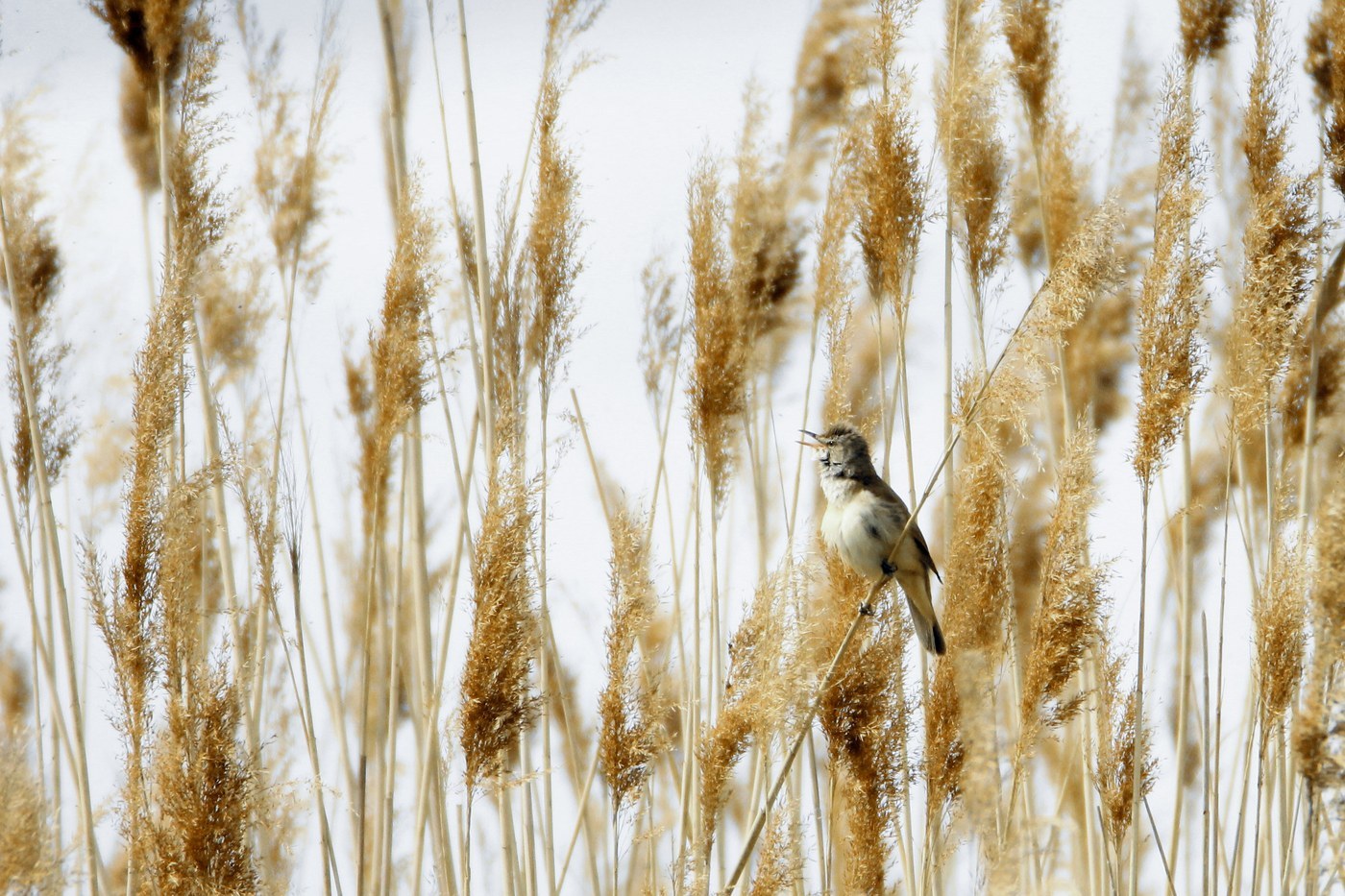
Key Field Marks
- Size & shape: About 19 cm (7.5 in), noticeably larger and bulkier than other Acrocephalus warblers, with a heavy, thrush-like build.
- Plumage: Plain warm brown upperparts with no streaking, buffy-white underparts, and a pale, fairly indistinct supercilium (eyebrow stripe) that is broader and shorter than in smaller relatives.
- Bill: Notably long, stout, and heavy for a warbler, well suited to its varied diet.
- Structure: Rounded tail, sturdy legs, and an overall robust, big-headed appearance that separates it from daintier reed and marsh warblers.
- Behavior: Typically skulks low in dense reedbeds but males sing from exposed perches atop reed stems, throat puffed out and bill wide open, making them relatively easy to spot by sound even when hard to see otherwise.
Separating Great Reed Warbler from Similar Species
- Eurasian Reed Warbler: Much smaller and slimmer with a thinner bill and a quieter, more even chattering song.
- Clamorous Reed Warbler: Very similar in size and shape (and once considered the same species in some treatments); best separated by range, as the two barely overlap, and by subtle differences in wing formula and voice.
- Sedge Warbler: Shows a clear dark-streaked crown and back and a bold pale supercilium, patterns absent in the plain-backed Great Reed Warbler.
Where & When to See One
Great Reed Warblers breed in extensive reedbeds and marshes with tall emergent vegetation across much of Europe and temperate Asia, arriving in spring and departing in late summer/early autumn to winter in sub-Saharan Africa. Look and especially listen for them in large reed stands around lakes, rivers, and wetlands throughout the breeding season.
Voice
An extremely loud, harsh, and repetitive song, often rendered as "karra-karra-kreee-kreee-krr-krr-kirri-kirri," delivered from an exposed reed stem and audible from a considerable distance — among the loudest songs of any European songbird.
Frequently asked questions
How do I tell a Great Reed Warbler from a Eurasian Reed Warbler?
Size is the key: Great Reed Warbler is noticeably larger and heavier-billed, and its song is far louder and harsher than the softer, more even chatter of the Eurasian Reed Warbler.
Why is the Great Reed Warbler easier to hear than to see?
It usually skulks low in dense reeds, but singing males climb to exposed perches atop reed stems, so its loud, distinctive song is often the first and best clue to its presence.
Where do Great Reed Warblers spend the winter?
They migrate to sub-Saharan Africa after the breeding season, returning to Europe and temperate Asia in spring.
What habitat does the Great Reed Warbler need?
Extensive reedbeds with tall, dense emergent vegetation around lakes, rivers, and marshes, which it needs for both nesting and foraging.