
Great Kiskadee Identification Guide
A loud, bold, and unmistakable flycatcher, the Great Kiskadee combines a bright yellow belly, a black-and-white striped head, and a rufous-edged brown back, and is named for its own emphatic call.
Read the full Great Kiskadee encyclopedia entry →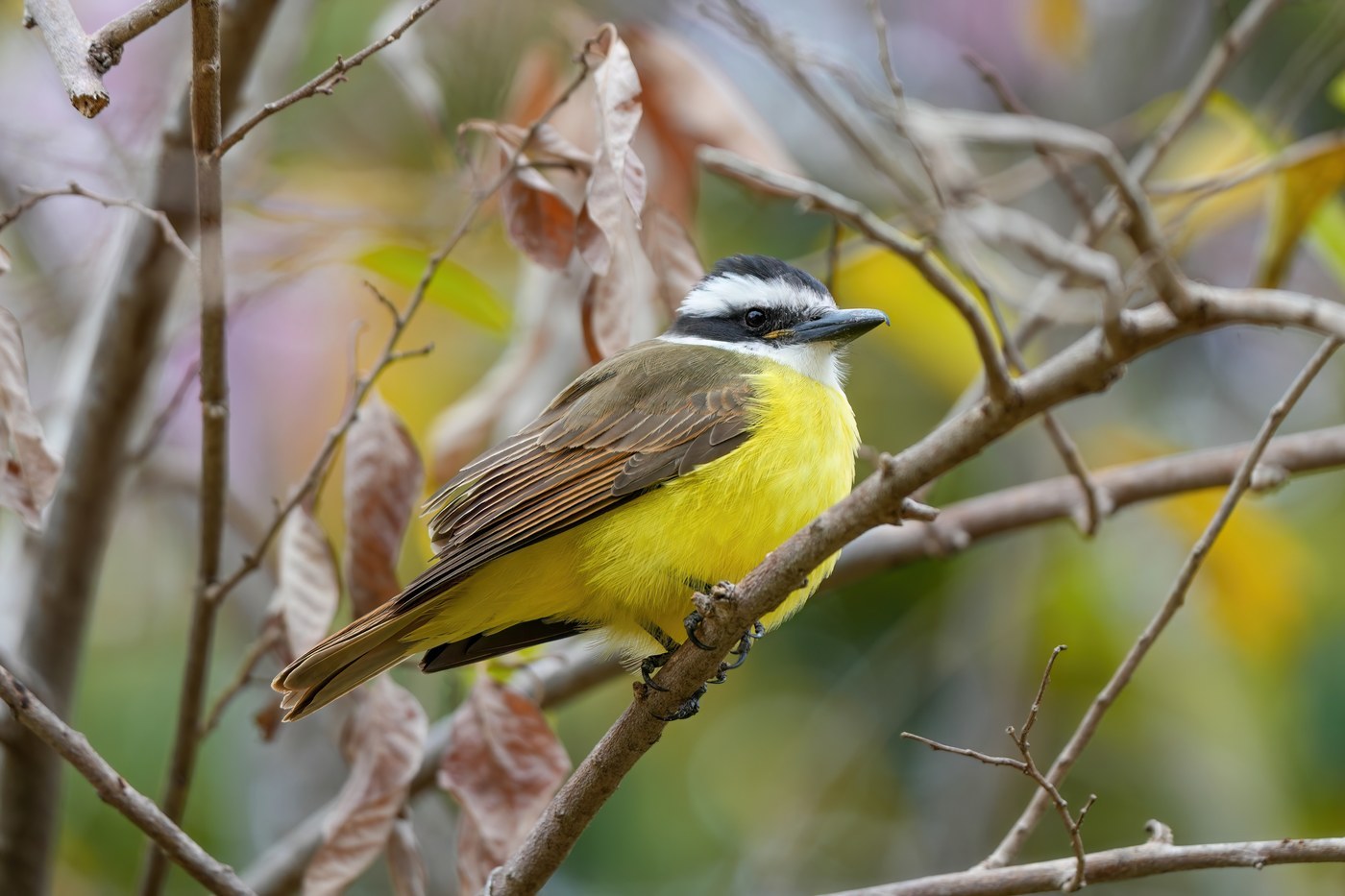
Key Field Marks
- Size & shape: About 22 cm (8.7 in), a large, robust flycatcher with a big head and a stout, black bill.
- Head pattern: Bold black mask through the eye bordered by white above (supercilium) and below, with a black crown that conceals a semi-hidden yellow crown patch, usually only visible when the bird is excited or displaying.
- Underparts: Bright, saturated yellow from throat to belly.
- Upperparts: Brown back and wings edged extensively with warm rufous, especially visible on the folded wing and tail.
- Behavior: Loud, conspicuous, and often perches in the open on wires, fence posts, or bare branches. Highly omnivorous — eats large insects, small lizards, fruit, and will even hover and dive to snatch small fish from the water's surface like a tiny osprey. Aggressively mobs hawks, owls, and other perceived threats.
Separating Great Kiskadee from Similar Species
- Boat-billed Flycatcher: Larger and heavier, with a much broader, deeper bill and a darker olive (less rufous) back; voice is a very different low, gurgling burst rather than a clear "kiskadee."
- Social Flycatcher: Noticeably smaller with a thinner, shorter bill and less rufous in the wings; often in more active mixed flocks.
- Streaked Flycatcher: Shows streaking on the breast, which kiskadees lack, and a less bold head pattern.
Where & When to See One
Great Kiskadees are year-round residents from the Rio Grande Valley of southern Texas south through Mexico, Central America, and much of South America to central Argentina. They favor open and semi-open habitats with scattered trees — woodland edges, riverbanks, parks, gardens, and even urban areas — almost always near water. Being so vocal and conspicuous, they are one of the easiest Neotropical flycatchers to find.
Voice
A loud, emphatic "KIS-ka-DEE" or "kis-ka-DEER," from which its name derives; also gives a variety of chattering and squabbling notes, especially when mobbing predators or interacting with other kiskadees.
Frequently asked questions
Why is it called a Kiskadee?
The name is onomatopoeic, mimicking its loud, distinctive "kis-ka-dee" call.
How do I tell Great Kiskadee from Boat-billed Flycatcher?
Boat-billed Flycatcher has a noticeably heavier, broader bill and a darker back with less rufous, and its call is a low gurgle rather than a clear "kiskadee"; it also tends to stay higher in the canopy.
Do Great Kiskadees really catch fish?
Yes, despite being a flycatcher, they will hover over water and dive to snatch small fish or tadpoles from the surface, in addition to eating insects and fruit.
What habitat is best for finding a Great Kiskadee?
Open areas with scattered trees near water — riverbanks, parks, gardens, and woodland edges — throughout its range from South Texas to Argentina.