
Great Jacamar Identification Guide
The largest of the jacamars, this glittering coppery-green rainforest bird sits motionless on mid-story perches before sallying out to snatch butterflies and other flying insects.
Read the full Great Jacamar encyclopedia entry →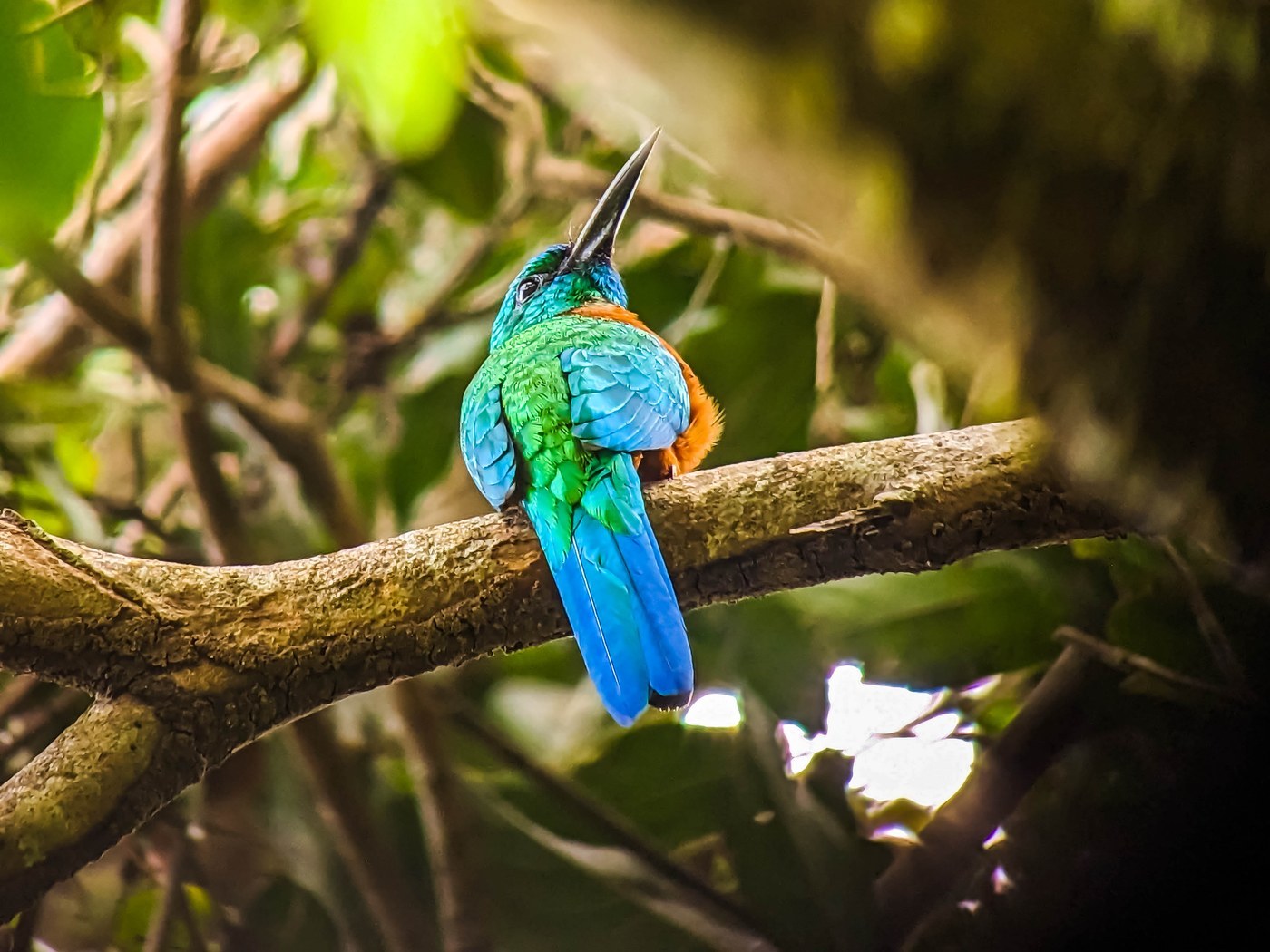
Key Field Marks
- Size & shape: About 30 cm (12 in), the largest jacamar species, with a long, straight to slightly decurved black bill and a fairly long tail.
- Plumage: Iridescent coppery-bronze to golden-green upperparts that can look almost metallic in good light; rich rufous-orange underparts.
- Face/throat: Males show a clean white throat patch; females have a buffy or pale rufous throat instead of white, the most reliable way to sex the species in the field.
- Bill: Notably longer and heavier than in most other jacamars, black and slightly decurved.
- Behavior: A sit-and-wait predator that perches quietly, often at mid-canopy height, watching for passing insects, then sallies out in a swift flight to snatch prey (especially large butterflies and other showy insects) before returning to the same or a nearby perch, where it beats the prey against the branch to remove wings and stingers before swallowing it.
Separating Great Jacamar from Similar Species
- Rufous-tailed Jacamar: Smaller, with a thinner, straighter bill and green (not coppery-bronze) upperparts; much more frequently encountered at forest edges and clearings.
- Bronzy Jacamar: Smaller-billed and lacks the rufous underparts of Great Jacamar, appearing more uniformly bronze-green.
- Paradise Jacamar: Has a very long, graduated tail and mostly dark underparts, quite different in shape from the shorter-tailed Great Jacamar.
Where & When to See One
Great Jacamars inhabit the interior and edges of lowland tropical rainforest across the Amazon Basin and parts of Central America (from Nicaragua/Costa Rica south through northern South America), typically in the mid-story rather than in the canopy or understory. They are resident year-round and, being quiet, sedentary birds, are often located first by their thin, high-pitched call notes rather than by sight.
Voice
A sharp, penetrating, high-pitched whistle, often a single note or a short series, given from a hidden perch; also gives softer contact calls between members of a pair.
Frequently asked questions
How is the Great Jacamar different from other jacamars?
It is the largest jacamar species, with a notably heavier, longer bill and rich rufous-orange underparts rather than the more common green-and-white pattern of smaller jacamars.
How can I tell a male from a female Great Jacamar?
Males have a clean white throat patch, while females show a buffy or pale rufous throat instead.
What does the Great Jacamar eat?
It specializes in large flying insects, especially butterflies, which it catches in short sallying flights from a perch and then beats against a branch before swallowing.
Where in the forest should I look for a Great Jacamar?
Check quiet mid-story perches in the interior or at the edge of lowland tropical forest, rather than the high canopy or dense understory.