
Great Crested Grebe Identification Guide
An elegant, slender-necked waterbird identified by its long white neck, chestnut-and-black double head plumes, and dagger-like pink bill, often seen performing elaborate mirrored courtship dances.
Read the full Great Crested Grebe encyclopedia entry →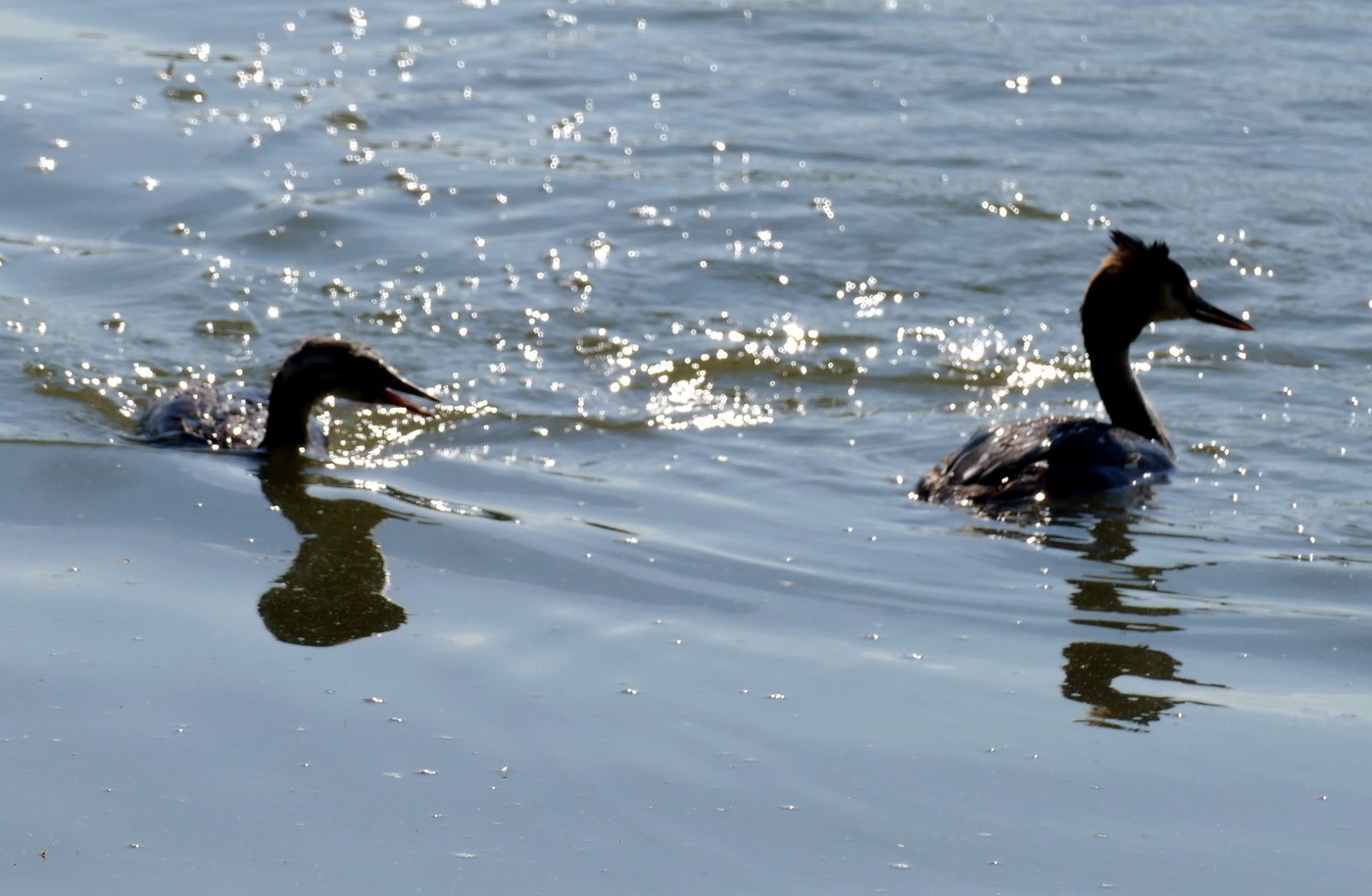
Key Field Marks
- Size & shape: A large grebe, about 18-21 inches (46-53 cm) long, with a long, slender neck, flat crown, and a low-riding, streamlined body on the water.
- Breeding plumage: Striking head pattern with a dark double crest (blackish "ear tufts") atop the crown and a rufous-chestnut and black frill/ruff around the face and throat that can be raised in display. Neck and foreneck white, back and flanks warm brown, underparts silky white.
- Non-breeding plumage: Much plainer — crests and ruff reduced or absent, with a clean white face, foreneck, and underside contrasting with a dark cap and grayish-brown upperparts; can suggest a smaller grebe but note the size and long neck.
- Bill & eyes: Long, straight, dagger-like pink-to-pale bill; red eyes.
- Behavior: Dives frequently for fish; performs an elaborate mutual courtship "weed dance," rising breast-to-breast on the water while shaking heads and presenting weed. Often seen carrying downy striped chicks on its back.
Similar Species
- Red-necked Grebe: Smaller with a shorter, thicker yellow-based dark bill and a rounder head lacking the long crests, plus a chestnut (not white) neck in breeding plumage.
- Horned Grebe / Black-necked Grebe (smaller grebes): Much smaller and stockier with shorter necks, lacking the Great Crested Grebe's elongated profile and prominent head plumes.
- Common Loon (non-breeding): Larger, heavier-bodied with a thicker neck and straighter, heavier bill; loons ride lower and lack the grebe's fine-pointed bill shape.
Habitat & Range
Breeds on lowland freshwater lakes, reservoirs, and large ponds with fringing vegetation across much of Europe, Asia, and Australasia and parts of Africa. Winters more broadly on lakes, reservoirs, estuaries, and sheltered coastal waters, including in regions where it does not breed.
Season
Partially migratory: many northern and continental populations move to milder open water in winter, while birds in temperate maritime climates (e.g., western Europe) may remain resident year-round on larger lakes and coastal waters.
Voice
A range of harsh, barking and growling calls, including a loud, far-carrying rah-rah or barking korr used in territorial and courtship contexts; generally quieter outside the breeding season.
Frequently asked questions
What is the Great Crested Grebe's courtship 'weed dance'?
It is an elaborate mutual display in which paired birds rise up breast-to-breast on the water, shaking their heads side to side while sometimes holding weed in their bills, used to strengthen the pair bond before nesting.
How do I tell Great Crested Grebe from Red-necked Grebe?
Great Crested Grebe has a longer, more slender neck, a long straight pink bill, and (in breeding plumage) black double crests with a chestnut ruff, whereas Red-necked Grebe is stockier with a shorter thick yellow-based bill and a chestnut neck rather than white.
What does non-breeding Great Crested Grebe look like?
It loses its head plumes and ruff, showing a clean white face and foreneck against a dark cap and brownish-gray upperparts, appearing much plainer than in breeding season but still recognizable by its size and long neck.
Do Great Crested Grebe chicks ride on their parents' backs?
Yes, downy striped chicks commonly ride tucked into the feathers on an adult's back, both on the water and even while the parent dives, a behavior widely observed and photographed.