
Great Black-backed Gull Identification Guide
The world's largest gull, identified by its massive size, jet-black upperwings and back, pink legs, and heavy yellow bill with a red gonydeal spot.
Read the full Great Black-backed Gull encyclopedia entry →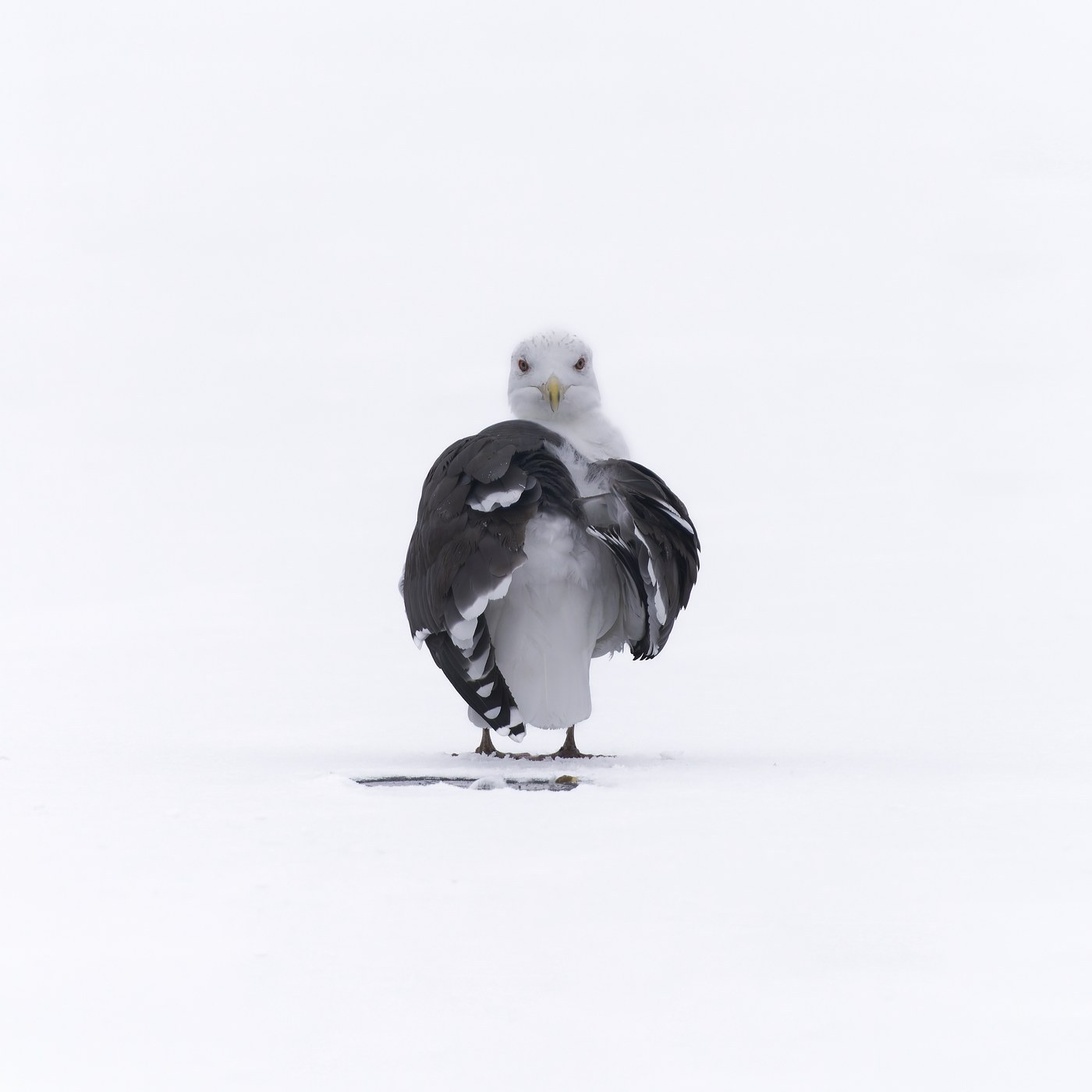
Key Field Marks
- Size & shape: Enormous — the largest gull in the world, 28-31 inches (71-79 cm) long with a wingspan up to 5.5-6 feet. Bulky body, broad wings, and a massive, deep-based bill give it a powerful, almost eagle-like presence next to other gulls.
- Adult plumage: Solid blackish-slate (near-black) back and upperwings contrasting sharply with a pure white head, neck, underparts, and tail. White trailing edge and small white "mirrors" near the wingtips.
- Bill & legs: Thick yellow bill with a prominent red spot on the lower mandible (gonys); legs are dull pink (not yellow), a key difference from similarly dark-backed gulls.
- Immatures: Take four years to reach adult plumage; first-winter birds are a checkered blackish-and-white pattern overall with a mostly black bill, becoming progressively grayer/blacker on the back with each molt cycle.
Similar Species
- Lesser Black-backed Gull: Noticeably smaller and slimmer, with dark slate-gray (not blackish) upperparts and bright yellow legs (not pink).
- Herring Gull: Much paler gray back, pink legs like Great Black-backed but far smaller and less bulky overall, with a proportionally smaller bill.
- Kelp Gull (rare in some regions): Very similar dark-backed pattern but has yellow-green (not pink) legs and a stockier, shorter-winged shape; range mostly separate.
Habitat & Range
Found along coasts, harbors, large lakes, and increasingly landfills across the North Atlantic — breeding from northeastern North America (Maine to eastern Canada, Greenland) and northwestern Europe. Highly opportunistic, frequenting fishing docks, beaches, garbage dumps, and open water, and known to prey on smaller seabirds, chicks, and carrion.
Season
Largely resident to short-distance migrant; northern breeders move south along the coast in winter, with birds regularly wintering south to the mid-Atlantic and occasionally the Gulf Coast of the U.S.
Voice
Deep, guttural calls, notably a low, resonant ow-ow-ow or keow series, lower-pitched and hoarser than the higher, more musical calls of Herring Gull.
Frequently asked questions
How do I tell Great Black-backed Gull from Lesser Black-backed Gull?
Great Black-backed is much larger and bulkier with truly blackish upperparts and pink legs, while Lesser Black-backed is smaller and slimmer with dark slate-gray (not black) upperparts and yellow legs.
What color are a Great Black-backed Gull's legs?
Dull pink, which helps separate it from other dark-backed gulls like Lesser Black-backed Gull that have yellow legs.
How long does it take a Great Black-backed Gull to reach adult plumage?
About four years, progressing through mottled brown-and-white immature plumages before attaining the clean black-and-white adult pattern.
Where and when is Great Black-backed Gull most easily seen in North America?
It is common year-round along the northeastern Atlantic coast from Maine northward, and ranges south along the coast in winter, often seen at harbors, beaches, and landfills.