
Gray Partridge Identification Guide
A plump, orange-faced game bird of open farmland, best identified by its gray-brown body, chestnut face patch, and explosive covey flushes.
Read the full Gray Partridge encyclopedia entry →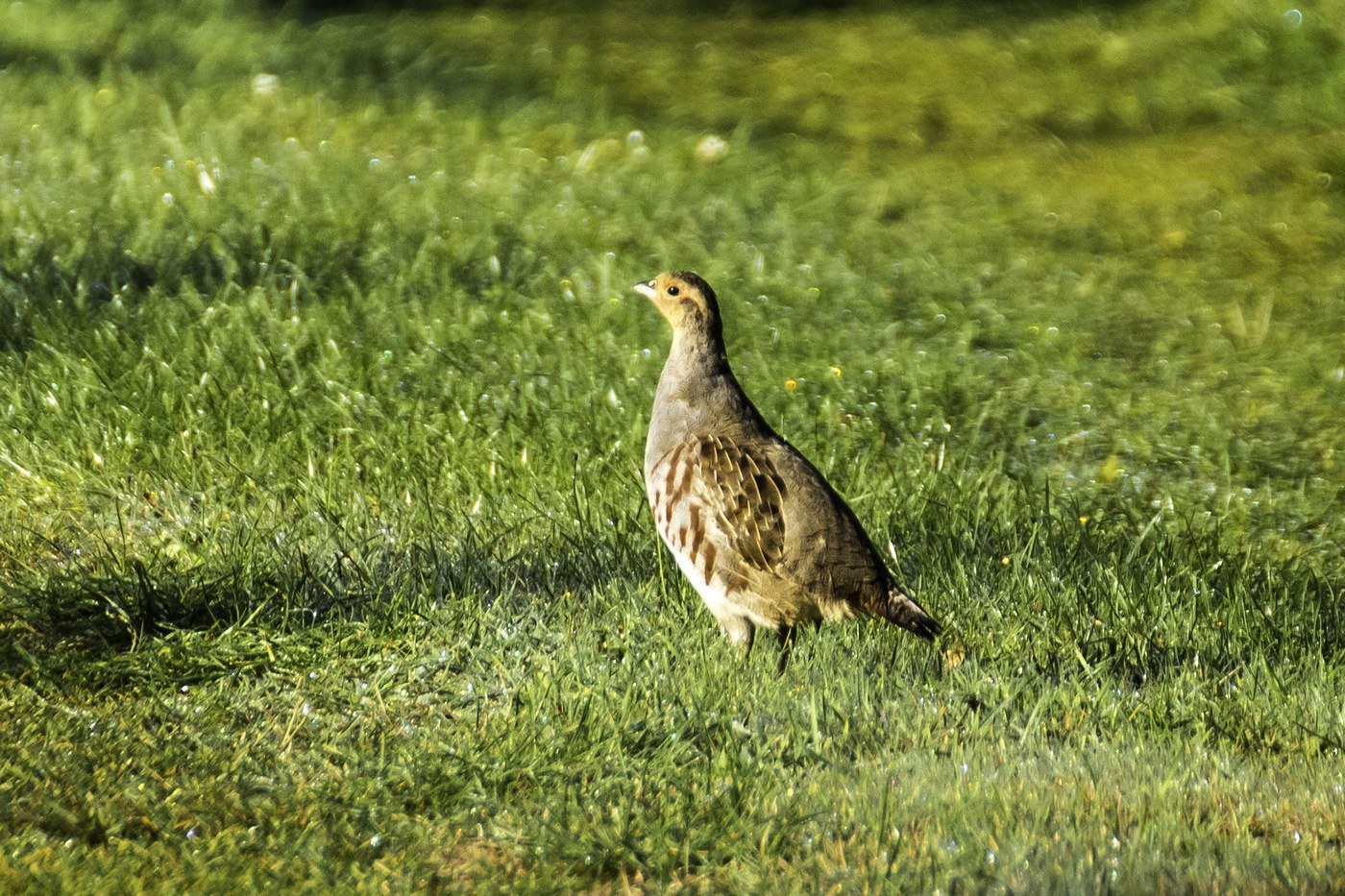
Key Field Marks
- Size & shape: A chunky, round-bodied gamebird about 12-13 inches (30-32 cm) long, smaller than a pheasant, with a short neck, small head, and short reddish-brown tail often held slightly cocked.
- Plumage: Overall gray-brown with fine vermiculated (wavy) barring on the back and flanks, chestnut-orange barring along the flanks, and a distinctive brick-orange face and throat patch. Males typically show a dark chestnut horseshoe-shaped patch on the lower breast/belly; females show a smaller or fainter patch.
- In flight: Rounded wings, rusty-orange outer tail feathers flash conspicuously, and coveys flush explosively with rapid whirring wingbeats followed by short glides low over fields.
- Bill & legs: Short stubby gray bill; grayish-pink legs.
Similar Species
- Ring-necked Pheasant (female/young): Much larger and longer-tailed with a plainer buffy-brown body lacking the orange face and belly patch.
- Northern Bobwhite: Smaller, more patterned with bold white/black head stripes (male) and lacks the chestnut face patch; found more in brushy/woodland edge vs. open cropland.
- Chukar: Has bold black flank barring and a black necklace/mask, found in arid rocky western terrain rather than farm fields.
Habitat & Range
Native to Eurasia, introduced and now established across the northern Great Plains and portions of the Pacific Northwest, Great Lakes states, and southern Canada. Prefers open agricultural land — grain fields, hedgerows, pastures, and grassy field edges — avoiding woodlands.
Season
Non-migratory resident; coveys stay in the same general area year-round, roosting in tight circles in fields for warmth, especially in winter.
Voice
A harsh, grating kier-ric or kee-ah alarm/contact call, often given at dusk or dawn and when flushed. Coveys keep in touch with soft clucking notes while foraging.
Frequently asked questions
What is the best field mark for Gray Partridge?
The combination of an overall gray-brown, finely barred body with a bright chestnut-orange face and throat patch, plus rusty outer tail feathers visible in flight, is diagnostic.
How can I tell a male from a female Gray Partridge?
Males usually show a bold, solid chestnut horseshoe-shaped patch on the lower breast, while females typically have a smaller, fainter, or broken belly patch, though some overlap exists.
Where are Gray Partridges most likely to be found in North America?
They favor open cropland and grassy field edges across the northern Great Plains, southern Canadian prairies, and scattered introduced populations in the Great Lakes region and Pacific Northwest.
What does a covey of Gray Partridge look and sound like when flushed?
A tight group bursts up suddenly on whirring wings with an alarmed cackling call, flying low and fast before setting their wings to glide, then dropping back into cover a short distance away.