
Gray Flycatcher Identification Guide
A pale, long-tailed Empidonax flycatcher of arid western scrub, most reliably identified by its habit of slowly dipping its tail downward rather than flicking it upward.
Read the full Gray Flycatcher encyclopedia entry →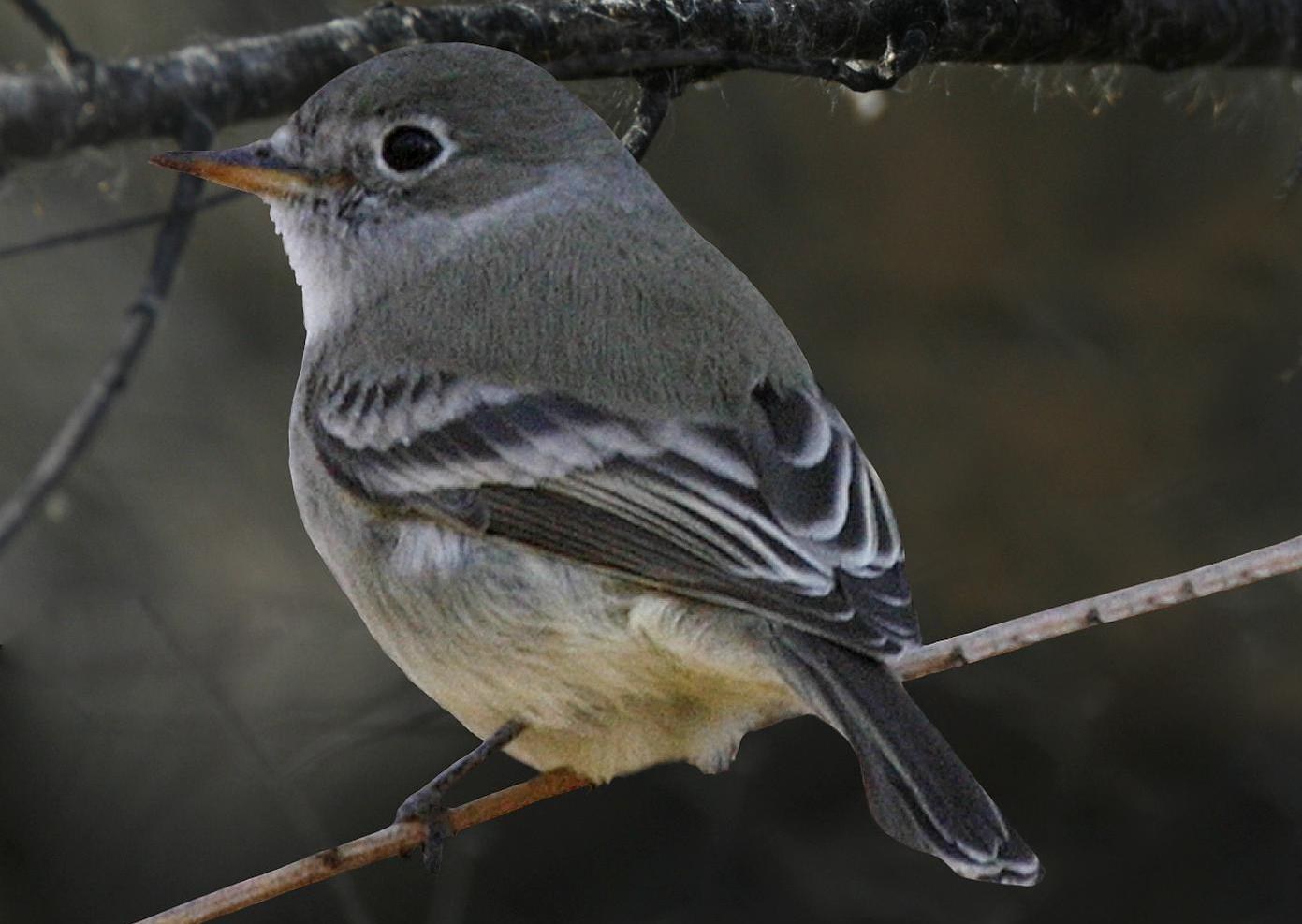
Key Field Marks
- Medium-sized, pale Empidonax flycatcher with light gray upperparts and whitish underparts, giving an overall washed-out, sandy appearance.
- Relatively long tail for an Empidonax, often held distinctly below the wingtips at rest.
- Long, thin bill with a pale to orange-based lower mandible, longer and narrower than in most similar species.
- Faint, thin whitish eye-ring and two crisp whitish wingbars.
- Overall paler and grayer than most other Empidonax flycatchers, lacking any strong olive or yellow wash.
Separating It From Similar Species
- Dusky Flycatcher: very similar in plumage but has a shorter tail and a key behavioral difference — Dusky Flycatcher flicks its tail upward, while Gray Flycatcher slowly dips its tail downward, a diagnostic behavior in the field.
- Willow Flycatcher: browner-olive overall with a less distinct eye-ring and a shorter, less contrasting bill pattern.
- Hammond's Flycatcher: darker overall with a shorter tail and different call notes, plus it prefers denser coniferous forest rather than open arid scrub.
- Habitat is also a strong clue: Gray Flycatcher favors open, arid habitats that most other Empidonax species avoid.
Habitat, Range & Season
- Breeds in arid sagebrush flats, pinyon-juniper woodland, and open ponderosa pine with sparse understory across the Great Basin and interior western United States.
- Winters primarily in Mexico and the southwestern U.S., often in similarly open, brushy habitat.
- Present on breeding territory roughly April through August, arriving somewhat earlier in spring than many other Empidonax species.
Behavior & Voice
- Perches low in open shrubs and sallies out to catch flying insects, frequently returning to the same or a nearby perch.
- The slow, deliberate downward tail-dip is its most distinctive behavioral field mark and is a reliable way to separate it from Dusky Flycatcher even when plumage looks identical.
- Song is a repeated "chiwip" or a two-part "chiwip...chibit" phrase; call note is a sharp, dry "wit."
Frequently asked questions
What is the best way to identify a Gray Flycatcher in the field?
Watch its tail: Gray Flycatcher slowly dips its tail downward, unlike most other Empidonax flycatchers, which flick their tails upward — this behavior is often more reliable than plumage alone.
How do I tell Gray Flycatcher from Dusky Flycatcher?
They look very similar, but Gray Flycatcher has a longer tail and dips it downward slowly, while Dusky Flycatcher has a shorter tail and flicks it upward.
What habitat does the Gray Flycatcher prefer?
Open, arid habitat such as sagebrush flats, pinyon-juniper woodland, and open pine with sparse understory in the interior American West.
What does the Gray Flycatcher's call sound like?
A sharp, dry "wit" call, with a song often rendered as a repeated "chiwip" or a two-part "chiwip...chibit."
Where does the Gray Flycatcher spend the winter?
Mostly in Mexico and parts of the southwestern United States, typically in open, brushy habitat similar to its breeding range.