
Gray Catbird Identification Guide
A slate-gray songbird with a black cap and rusty undertail patch, named for its distinctive cat-like mewing call and jumbled, non-repeating song.
Read the full Gray Catbird encyclopedia entry →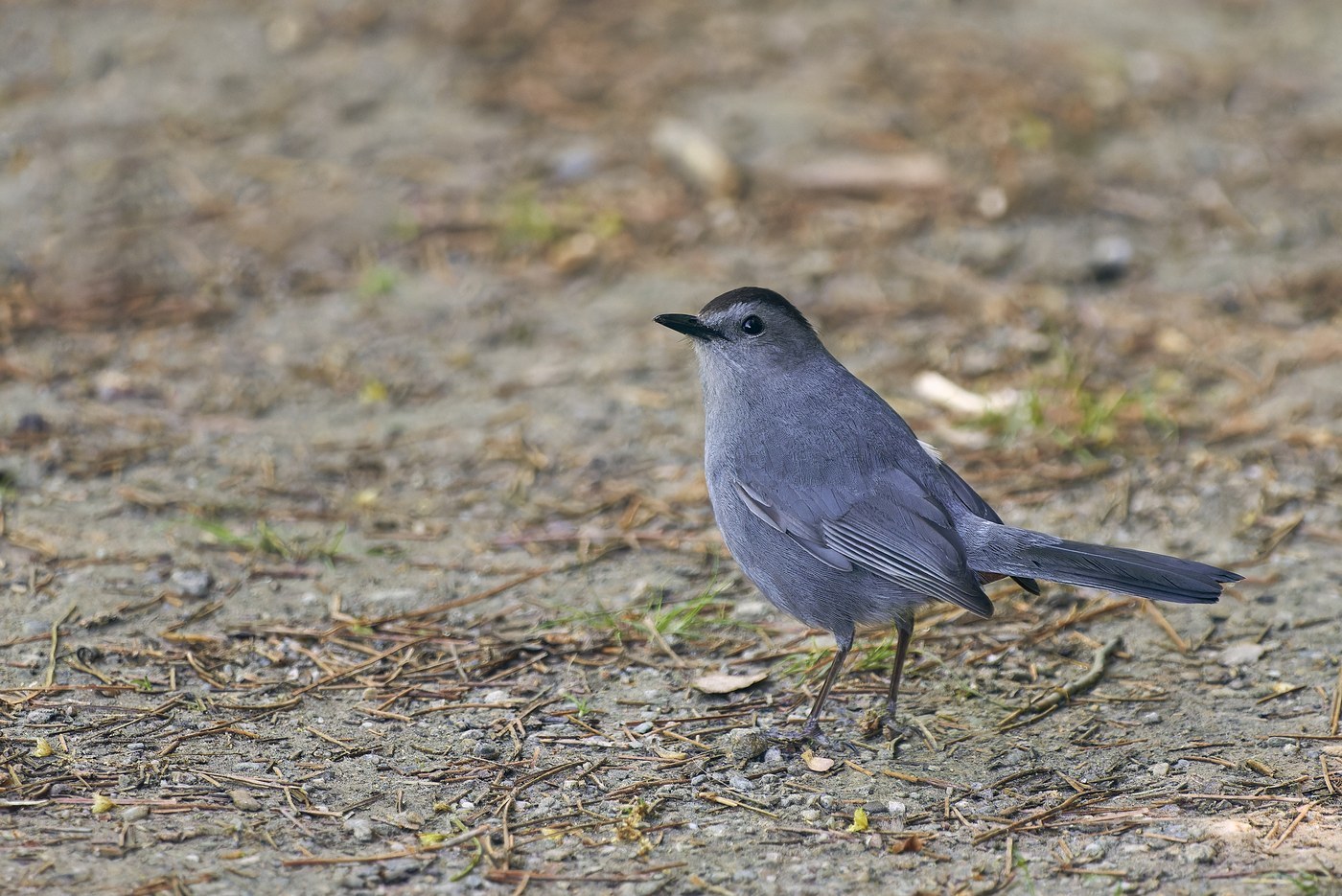
Key Field Marks
- Medium-sized songbird, slightly smaller and slimmer than an American Robin, with uniform slate-gray plumage overall.
- Neat black cap covering the crown down to the eye.
- Chestnut-rust patch under the tail (undertail coverts), often the best confirming mark when the bird is seen from below or as it flicks its tail.
- Long black tail, frequently held cocked upward and flicked or twitched, especially when alert.
- No white wing patches, no white outer tail feathers, and no wingbars — the plumage is essentially unmarked gray apart from the cap and undertail patch.
Separating It From Similar Species
- Northern Mockingbird: paler gray overall, with bold white wing patches visible in flight and white outer tail feathers; lacks the black cap and chestnut undertail of the catbird.
- Brown Thrasher: rufous-brown above with heavily streaked underparts and yellow eyes, quite different in color pattern from the uniform gray catbird.
- Silhouette and habitat also help: catbirds stay low and skulk in dense shrubbery rather than perching in the open like mockingbirds often do.
Habitat, Range & Season
- Breeds in dense shrubby thickets, forest edges, hedgerows, overgrown fields, and suburban gardens across most of the U.S. and southern Canada.
- Highly adaptable to human-altered landscapes, readily nesting in backyard shrubs and thickets.
- A medium- to long-distance migrant; most northern breeders winter in the southeastern U.S., Mexico, Central America, and the Caribbean, with breeding birds present roughly April through September in northern areas.
Behavior & Voice
- Forages low and stays hidden within dense cover, though it is often quite vocal and will approach observers who make squeaking or "pishing" sounds.
- Named for its distinctive call: a nasal, cat-like "mew," given year-round and unmistakable once learned.
- Song is a long, rambling series of varied notes and phrases, including mimicry of other birds, but unlike a Mockingbird or Thrasher, catbirds rarely repeat phrases, giving the song a scratchy, improvised, non-repetitive quality.
Frequently asked questions
Why is it called a Catbird?
It gives a distinctive nasal, cat-like "mew" call that is unmistakable once learned and is the source of its common name.
How do I tell a Gray Catbird from a Northern Mockingbird?
Gray Catbird has a black cap and rusty undertail patch with no white in the wings or tail, while Northern Mockingbird is paler gray with bold white wing patches and white outer tail feathers.
Does the Gray Catbird mimic other birds like a Mockingbird?
Yes, its song includes mimicry, but unlike a Mockingbird it rarely repeats phrases, giving its song a more jumbled, scratchy, non-repetitive quality.
What habitat does the Gray Catbird prefer?
Dense shrubby thickets, forest edges, hedgerows, and overgrown gardens, where it stays low and hidden most of the time.
Where do Gray Catbirds go in winter?
Most northern-breeding birds migrate to the southeastern United States, Mexico, Central America, or the Caribbean for the winter.