
Golden-crowned Sparrow Identification Guide
A chunky western North American sparrow with a bold black-bordered yellow crown stripe in breeding plumage and a plainer, streaky-crowned look in winter.
Read the full Golden-crowned Sparrow encyclopedia entry →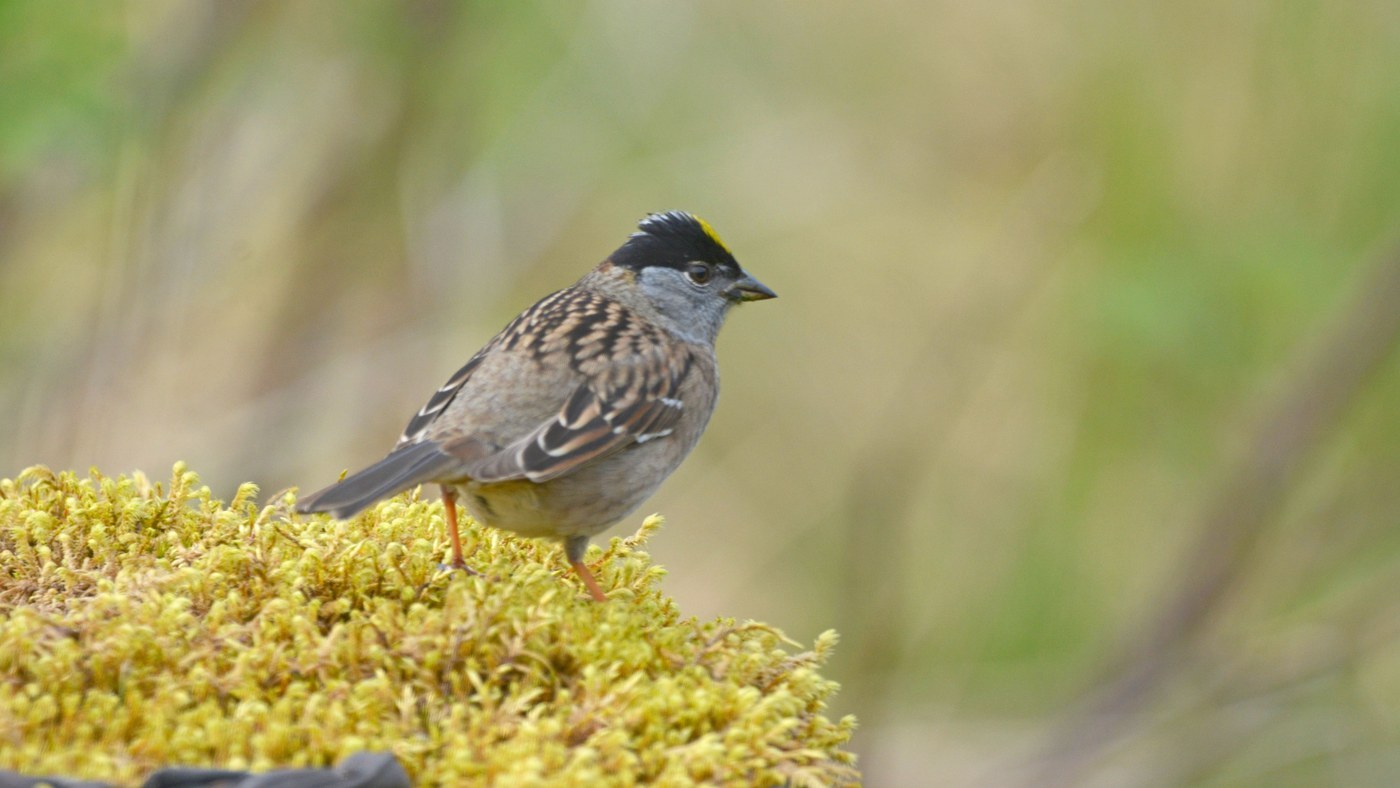
Key Field Marks
- Size & shape: A large, plump sparrow, about 15-18 cm, with a fairly long tail, rounded head, and stout, conical pinkish-brown bill typical of Zonotrichia sparrows.
- Breeding plumage: Bright yellow crown patch bordered by broad black lateral stripes running from the bill back over the crown — the boldest and cleanest version of this pattern, giving a striking "golden helmet" look.
- Nonbreeding/immature plumage: Much duller — the crown shows a dull yellowish or buffy wash bordered by brown rather than black, and can be subtle; overall plumage is grayish-brown above with fine streaking, plain grayish underparts, and a plain grayish-brown face lacking strong markings.
- Bill & structure: Dusky-pink conical bill; overall bulkier and larger than most sparrows, with a hunched, ground-feeding posture.
- Behavior: Forages on the ground, often kicking through leaf litter double-footed like a towhee, usually in flocks, especially in winter; frequently associates with White-crowned Sparrows in mixed flocks along the Pacific coast.
Similar Species
- White-crowned Sparrow: Similar size, shape, and flocking habits, but shows bold black-and-white (not yellow) head stripes and a plain gray face without the yellow crown patch; immature White-crowneds have brown-and-tan head stripes rather than any yellow.
- White-throated Sparrow: Shows a distinct white throat patch and yellow lores (spot in front of the eye) rather than a yellow crown stripe, and has different range (mostly eastern).
- Nonbreeding Golden-crowned vs. immature White-crowned: Dull winter Golden-crowned Sparrows can be told by a hint of dull yellow at the front of the crown and lack of crisp black-and-white head stripes.
Where & When to See It
Breeds in stunted conifer and shrub habitat near treeline and in scrubby taiga/tundra edge of Alaska and northwestern Canada. Winters along the Pacific coast from southern British Columbia south through California, in chaparral, brushy edges, gardens, and parks, often in mixed flocks with White-crowned Sparrows. It is a classic western migrant, mostly absent from the interior and eastern U.S. except as a rare vagrant.
Voice & Song Cues
The song is a clear, plaintive, descending three- or four-note whistle, often rendered as "oh-dear-me" or "three-blind-mice," frequently heard from wintering flocks in the Pacific states even outside the breeding season, making it a reliable identification cue. Calls include a sharp "tsick" or "chink" contact note.
Frequently asked questions
How can you tell a Golden-crowned Sparrow from a White-crowned Sparrow?
Golden-crowned Sparrow shows a yellow crown patch (bold and black-bordered in breeding plumage, duller in winter), while White-crowned Sparrow has bold black-and-white head stripes with no yellow at all.
What does the Golden-crowned Sparrow's song sound like?
A clear, descending, plaintive whistle often described as 'oh-dear-me,' frequently sung even in winter flocks, which makes it a useful identification cue.
Where does the Golden-crowned Sparrow spend the winter?
Along the Pacific coast from southern British Columbia to California, in brushy, scrubby habitat, gardens, and parks, often mixed with White-crowned Sparrows.
Is the yellow crown patch always obvious?
No — it is bold and black-bordered in breeding adults but can be dull, buffy, and subtle in nonbreeding and immature birds, requiring a closer look to confirm.