
Glaucous-winged Gull Identification Guide
A common large gull of the Pacific Northwest coast, the Glaucous-winged Gull is best known for wingtips that are gray rather than black, closely matching its pale gray mantle.
Read the full Glaucous-winged Gull encyclopedia entry →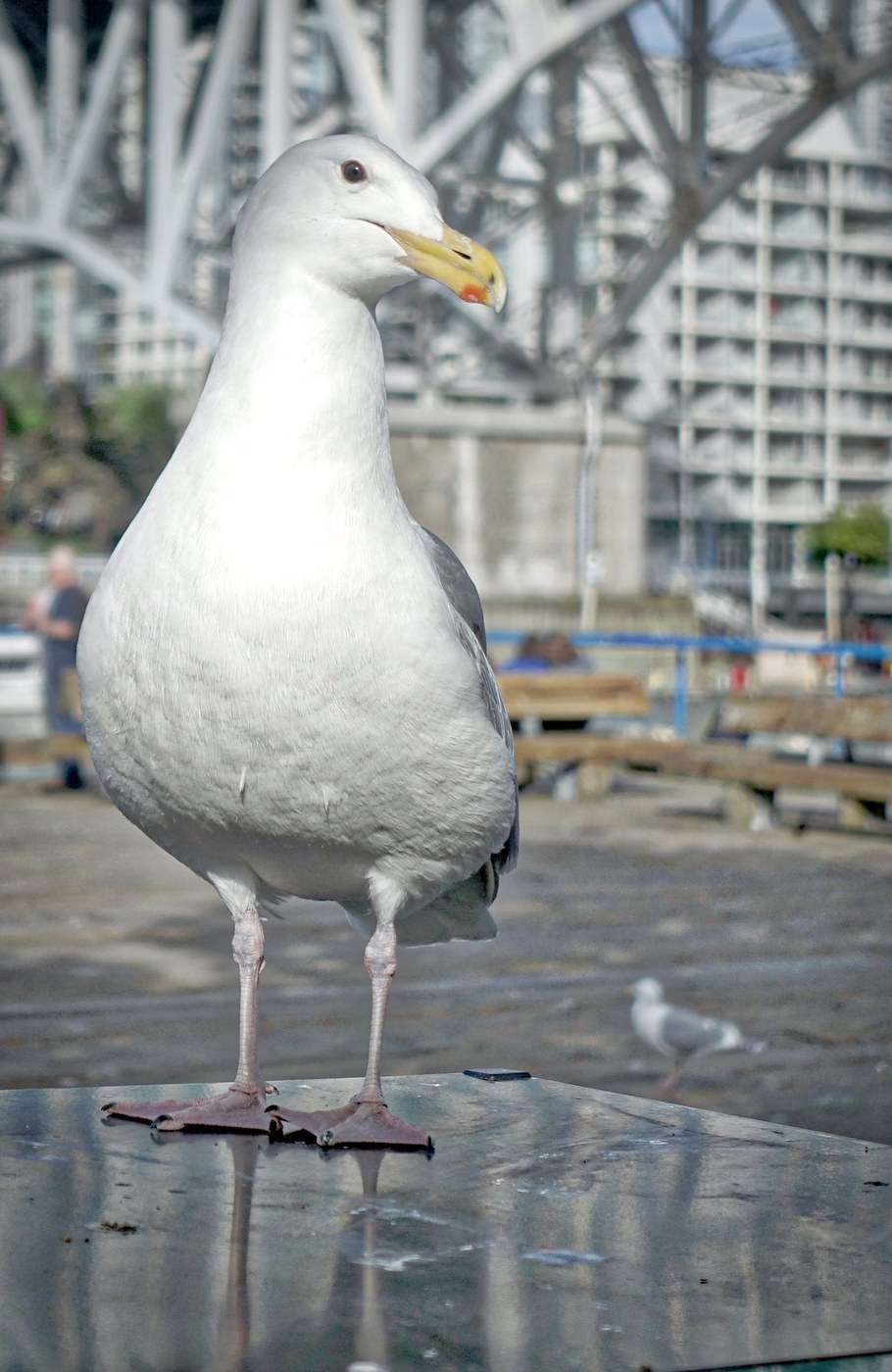
Key Field Marks
- Size: A large, heavy-bodied gull typical of North Pacific coastlines.
- Adult plumage: Pale to medium gray mantle and wings, with wingtips gray rather than black — usually the same shade as the mantle or only slightly darker, never sharply contrasting black-and-white.
- Bare parts: Yellow bill with a red gonydeal spot, pink legs, and a dark eye.
- Head: White, sometimes lightly streaked with gray in non-breeding plumage.
Separating It From Similar Species
- Glaucous Gull shows entirely white wingtips rather than gray, and is more of a circumpolar Arctic/high-latitude species compared to Glaucous-winged Gull's more temperate Pacific coast range.
- Western Gull has a much darker gray mantle and solid black wingtips with sharp contrast — quite different from the muted, low-contrast wingtips of Glaucous-winged Gull.
- Complicating identification, Glaucous-winged Gull hybridizes extensively with Western Gull (producing birds nicknamed "Olympic Gulls") and, further north, with Herring Gull, so many individuals along the Pacific coast show intermediate mantle shades and wingtip patterns that don't fit either parent species cleanly.
Where and When to Find It
- Habitat: Rocky coastlines, harbors, beaches, piers, and landfills; breeds colonially on coastal islands and cliffs.
- Range: Pacific coast from Alaska south through British Columbia, Washington, Oregon, and into California; largely resident to short-distance migrant, with many birds present year-round throughout much of the range.
- Very common and conspicuous around fishing harbors, waterfronts, and urban areas along its range, often the default "seagull" of Pacific Northwest cities.
Voice
- Gives the typical repertoire of large gull calls, including a long call (a series of rising, then falling notes with the head thrown back) and softer mewing and clucking notes.
Frequently asked questions
What is the key field mark of the Glaucous-winged Gull?
Its wingtips are gray, not black, usually matching or only slightly darker than the gray mantle — unlike most large gulls, which show crisp black wingtips.
Why are Glaucous-winged Gulls hard to identify along the Pacific coast?
They hybridize extensively with Western Gull and Herring Gull, producing birds with intermediate mantle color and wingtip pattern that can be difficult to assign to a single species.
How do you separate Glaucous-winged Gull from Glaucous Gull?
Glaucous Gull has entirely white wingtips, while Glaucous-winged Gull has gray wingtips; their ranges also differ, with Glaucous-winged being a Pacific coast bird and Glaucous a circumpolar Arctic species.
Where are Glaucous-winged Gulls most common?
They are abundant along the Pacific coast from Alaska to California, especially around harbors, waterfronts, and coastal cities, where they are often the default large gull seen.