
Garden Warbler Identification Guide
Famous among birders as Europe's most nondescript warbler, the Garden Warbler is a plain olive-brown skulker best identified by its stocky shape and rich, mellow song.
Read the full Garden Warbler encyclopedia entry →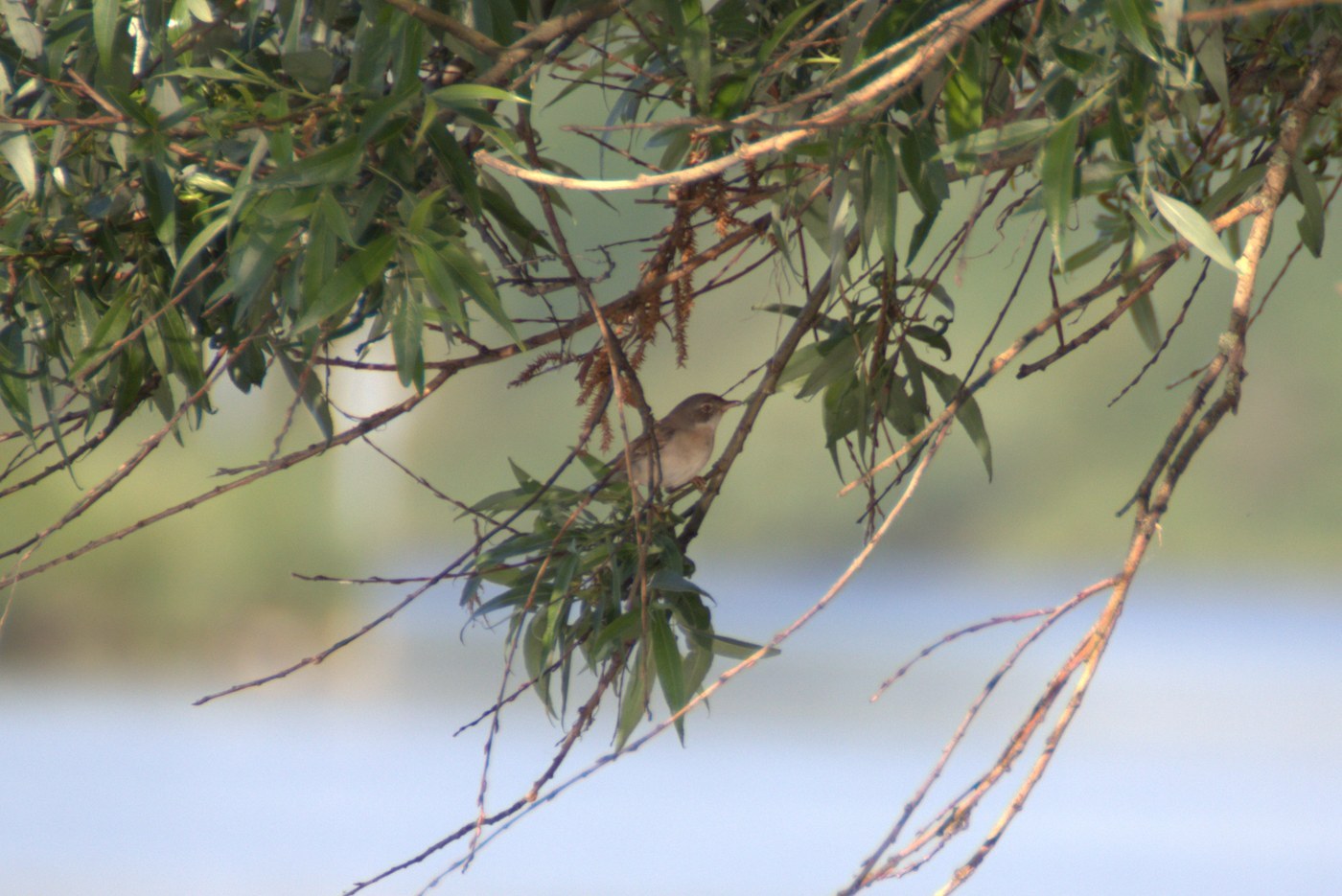
Key Field Marks
- Size: A chunky, thick-necked warbler about 13–14.5 cm (5–5.7 in) long, slightly bulkier and shorter-tailed than a Blackcap.
- Plumage: Deliberately plain — uniform olive-brown above and pale buffy-gray below, with no wing bars, no obvious eye ring, and no bright cap or facial pattern.
- Bill: Short, stubby, and grayish, giving the head a rounded, blunt-faced look.
- Overall impression: Often described as "the warbler with no field marks" — its very featurelessness, combined with its stocky build, is itself a useful clue.
Separating It From Similar Species
- The main confusion species is the Blackcap. Female and juvenile Blackcaps show a rufous-brown cap that Garden Warbler entirely lacks; Garden Warbler's head is plain and unmarked, blending smoothly into the back color.
- Structurally, Garden Warbler is stockier and thicker-necked with a shorter tail than the more elegant, longer-tailed Blackcap.
- Song is often the most reliable separator in dense cover: Garden Warbler's song is an even, sustained, mellow warble without the bright, fluty crescendo that typically caps a Blackcap's phrase.
Where and When to Find It
- Habitat: Dense scrub, woodland edge, overgrown hedgerows, and thickets with heavy undergrowth — it is a skulker that stays low and hidden rather than singing from exposed perches.
- Range: Breeds widely across Europe and into western Siberia.
- Season: A long-distance migrant, wintering in sub-Saharan Africa; look for it on breeding territories from late April through August, with passage migrants noted in spring and autumn.
Voice
- Song is a rich, sustained, musical warble delivered in long unbroken phrases with an even, mellow tone throughout — lacking the harsh or scratchy notes found in some other Sylvia warblers.
- Compared to Blackcap's song, Garden Warbler's is generally more monotone and lacks a rising, fluty finish.
- The call is a soft, low "tack" or churring note, given when alarmed.
Frequently asked questions
Why is the Garden Warbler considered hard to identify?
It has almost no distinguishing plumage features — no wing bars, cap, or strong facial pattern — so birders often identify it by elimination, shape, and especially its distinctive song.
How do you tell a Garden Warbler from a Blackcap?
Blackcaps show a black (male) or rufous-brown (female/juvenile) cap that Garden Warbler entirely lacks; Garden Warbler is also stockier with a shorter tail and thicker neck.
What does a Garden Warbler sound like?
Its song is a rich, mellow, sustained warble delivered in even, unbroken phrases, generally more monotone than the brighter, crescendo-ending song of the Blackcap.
Where does the Garden Warbler spend the winter?
It migrates long distances to winter in sub-Saharan Africa, returning to European and western Siberian breeding grounds each spring.