
Galah Identification Guide
A common and conspicuous Australian cockatoo instantly recognizable by its rose-pink head, chest, and underparts contrasting with pale gray wings and back, and its habit of forming large, noisy flocks.
Read the full Galah encyclopedia entry →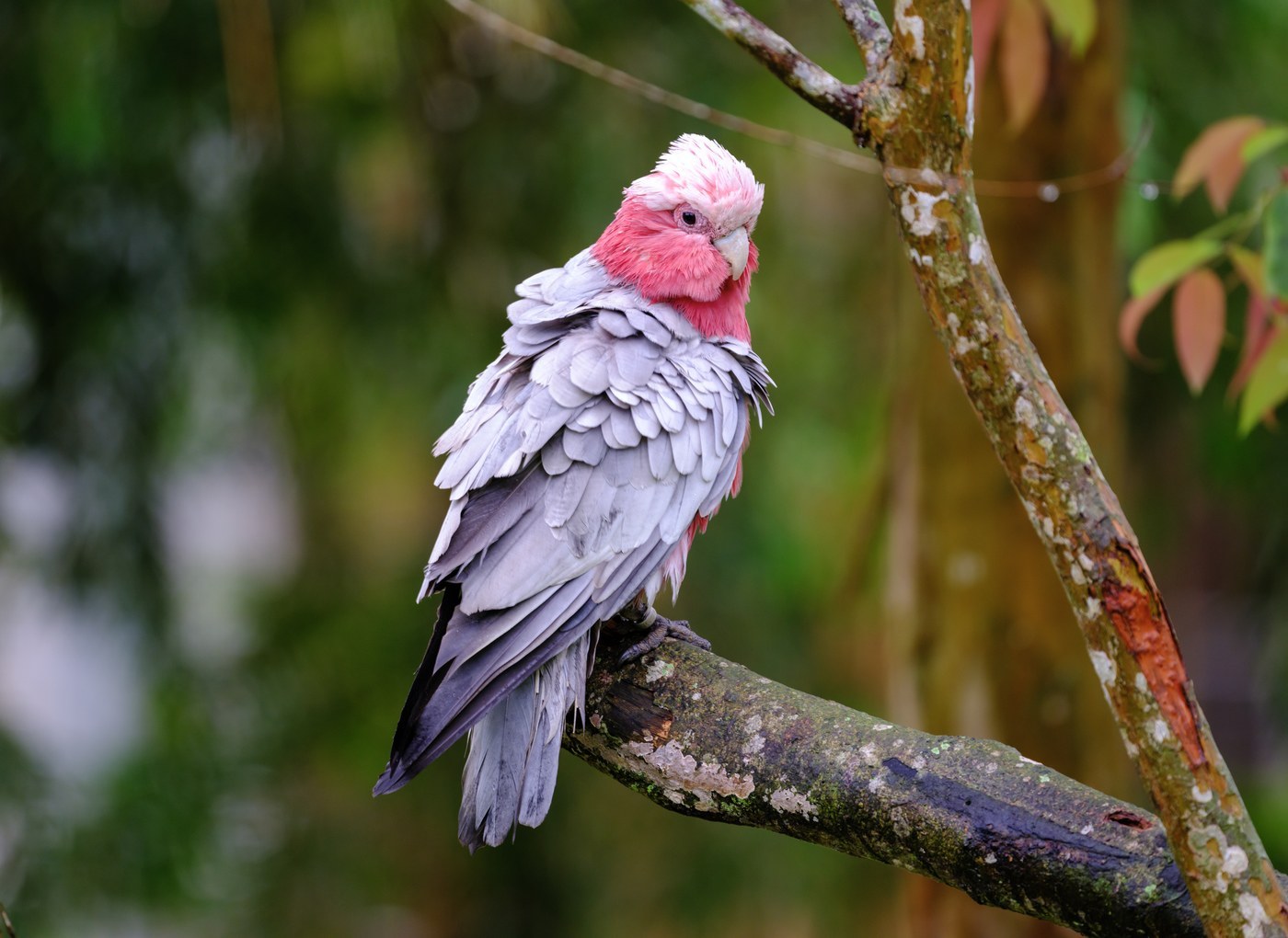
Key Field Marks
- Size & shape: A medium-sized cockatoo, about 35 cm long, with the typical stocky cockatoo build, broad rounded wings, and a short, backward-curling crest that is usually held flat and inconspicuous.
- Plumage: Unmistakable two-toned pattern — bright rose-pink head, neck, breast, and underparts contrast sharply with pale silver-gray wings, back, and rump. The crest, when raised, is pale pinkish-white.
- Bare parts: Whitish-gray bill, short and hooked like other cockatoos; eye-ring color and iris differ slightly between sexes (adult females typically show a pinkish-red iris, males a dark brown/black iris) — a useful mark for sexing at close range.
- In flight: Shows extensive pink underwing coverts against paler flight feathers, with steady, somewhat floppy wingbeats typical of cockatoos, often in tight, swirling flocks.
- Behavior: Highly gregarious, forming flocks from dozens to thousands of birds, especially at communal roosts and feeding areas; frequently seen feeding on the ground on seeds and grains in open paddocks.
Similar Species
- Major Mitchell's Cockatoo shares pink tones but has a much more elaborate red-and-yellow banded crest and lacks the Galah's contrasting gray wings and back — overall paler and more delicately patterned.
- Pink Cockatoo (another name sometimes used regionally) refers to Major Mitchell's, reinforcing the need to focus on the crest pattern and wing color to separate the two.
- No other Australian cockatoo combines a solid rose-pink head/underparts with plain pale gray wings and back, making the Galah essentially unmistakable once seen clearly.
Where & When to See It
- Range: Widespread and abundant across mainland Australia, one of the most common and familiar cockatoos in the country; introduced/established in parts of Tasmania.
- Habitat: Highly adaptable — open woodland, farmland, grasslands, parks, and urban areas; often seen feeding in flocks on lawns, roadside verges, and agricultural fields.
- Season: Non-migratory resident throughout its range, though some local seasonal movements occur in response to food and water availability, particularly in arid interior regions.
Voice & Behavior Cues
- Calls are loud, harsh, and far-carrying — a screeching "chi-chi" or grating scream typical of cockatoos, frequently given in flight and at communal roosts.
- Large, noisy flocks wheeling and calling together, especially at dawn and dusk near roost trees, are a classic and easily recognized behavioral signature of this species.
Frequently asked questions
What is the single best field mark for identifying a Galah?
The combination of a rose-pink head, chest, and underparts contrasting sharply with pale silver-gray wings and back is unique among Australian cockatoos.
How can I tell a male from a female Galah?
Adult females typically show a pinkish-red iris while males have a dark brown to black iris, a subtle but useful mark visible at close range or with binoculars.
How do I distinguish a Galah from Major Mitchell's Cockatoo?
Major Mitchell's Cockatoo has an elaborate red-and-yellow banded crest and much paler, less contrasting plumage overall, while the Galah has a plain crest and bold pink-versus-gray contrast.
Where in Australia are Galahs commonly found?
They are widespread and abundant across nearly all of mainland Australia in open woodland, farmland, and urban areas, and are also established in Tasmania.
Are Galahs typically seen alone or in groups?
They are highly social and usually encountered in flocks, sometimes numbering in the thousands at communal roosts and feeding sites.