
Five-striped Sparrow Identification Guide
A large, dark, secretive sparrow of steep desert-scrub canyons along the U.S.-Mexico border, identified by its bold black-and-white striped face and dark unstreaked underparts with a central breast spot.
Read the full Five-striped Sparrow encyclopedia entry →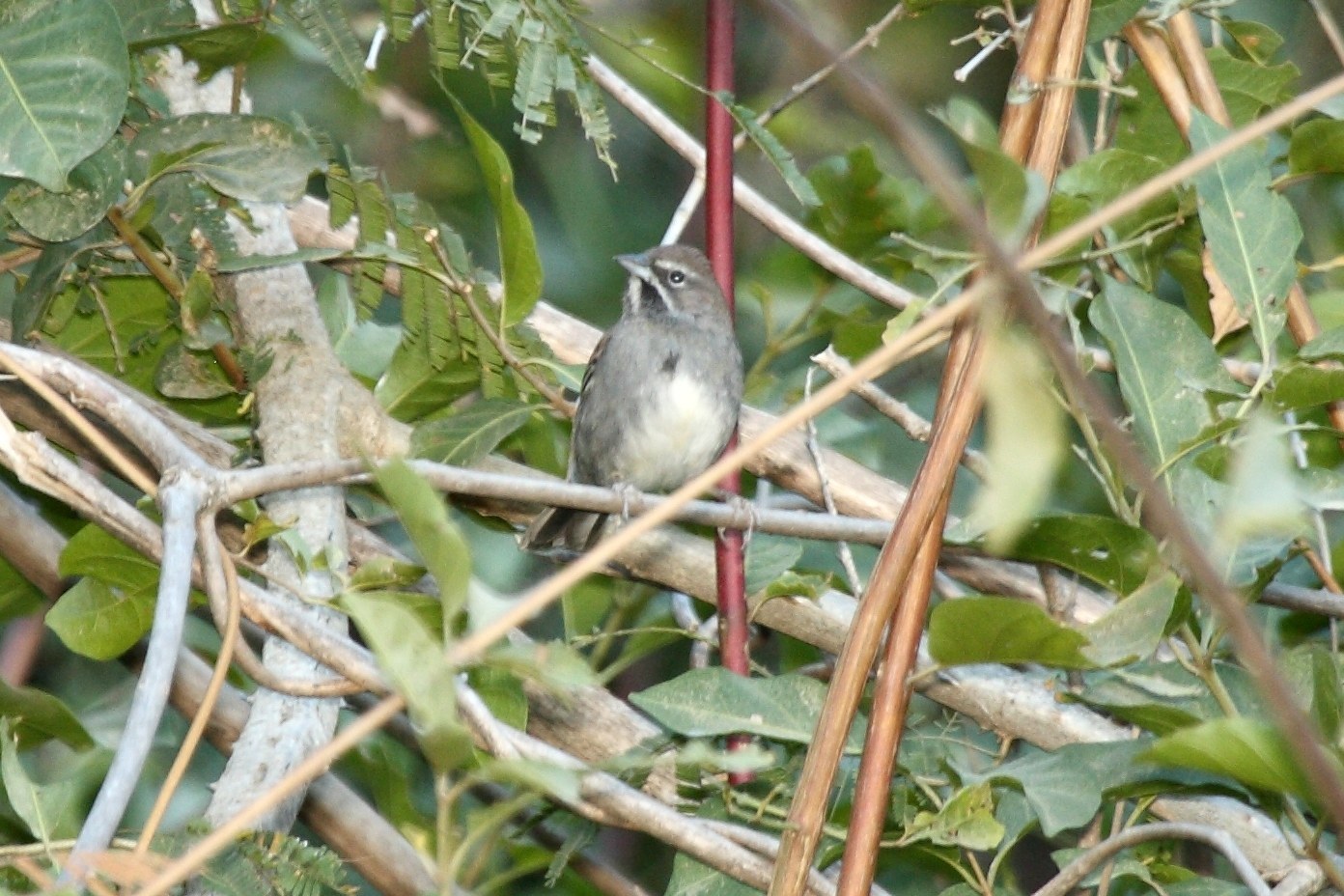
Key Field Marks
- Size & shape: A large, long-tailed sparrow (about 15–16 cm), noticeably bulkier than most other sweep-net sparrows, with a fairly heavy bill.
- Face pattern: The namesake feature — five bold facial stripes formed by a white throat bordered by black malar (mustache) stripes, a white submoustachial stripe, and a dark crown/eye-stripe, creating a striking striped-face pattern unlike most other sparrows.
- Underparts: Dark, plain gray breast and flanks (unstreaked) with a small dark central breast spot, contrasting with the white throat.
- Upperparts: Grayish-brown to olive-brown back, plain and relatively unmarked compared to the bold face.
- Tail: Long and dark, often held cocked; the bird frequently perches in the open atop shrubs to sing, then drops back into dense cover.
Behavior
Secretive and often hard to see well, staying low in dense, thorny desert scrub on steep hillsides, though singing males will perch conspicuously in the open, especially after summer rains trigger breeding activity.
Similar Species
- Black-throated Sparrow: Also shows bold black-and-white facial pattern, but has a solid black throat/bib rather than the striped throat pattern of Five-striped Sparrow, and lacks the central breast spot.
- Rufous-winged Sparrow: Smaller, with rufous in the wing and a different, less boldly striped face pattern; occurs in similar desert habitat but is less range-restricted.
- Botteri's/Cassin's Sparrow: Plainer-faced, streakier-backed grassland sparrows lacking the bold striped face and dark unstreaked underparts of Five-striped Sparrow.
Where & When to Find One
In the U.S., found only very locally in a handful of steep, brushy canyons in extreme southeastern Arizona (most famously areas like California Gulch), at the northern edge of a range centered on the Pacific slope of western Mexico. Habitat is steep, rocky hillsides with dense thornscrub, often near washes. Most reliably present and vocal during the summer rainy season (roughly July through September) when breeding activity peaks; birds are much quieter and harder to detect outside this window, and some populations may withdraw southward in winter.
Voice
Song is a variable jumble of chips, buzzes, and short trills, often introduced by a few sharp "chip" notes; delivery is somewhat erratic and lacks a fixed rhythmic pattern compared to many other sparrows, and is most often heard from an exposed perch during the summer breeding season.
Frequently asked questions
What gives the Five-striped Sparrow its name?
Its bold facial pattern of five stripes — formed by a white throat, black malar stripes, a white submoustachial stripe, and dark crown/eye markings — gives the species its descriptive name.
Where in the United States can I find a Five-striped Sparrow?
It occurs very locally in a few steep, brushy desert canyons in extreme southeastern Arizona, right at the northern edge of its main range in western Mexico.
When is the best time to look for Five-striped Sparrows?
The summer monsoon rainy season, roughly July through September, is best, since singing males become far more conspicuous and vocal during peak breeding activity.
How is it different from a Black-throated Sparrow?
Five-striped Sparrow has a striped white-and-black throat and a dark central breast spot, while Black-throated Sparrow has a solid black throat/bib and lacks the breast spot.
What habitat does this sparrow prefer?
Steep, rocky hillsides and canyons with dense, thorny desert scrub, often near washes, rather than open grassland or flat desert floor habitats.