Field Sparrow Identification Guide
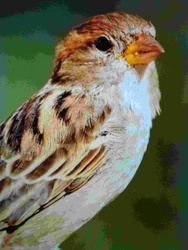
A small, soft-plumaged sparrow of overgrown fields, identified by its bright pink bill, plain buffy face with a white eye-ring, and an accelerating, bouncing-ball trill.
Read the full Field Sparrow encyclopedia entry →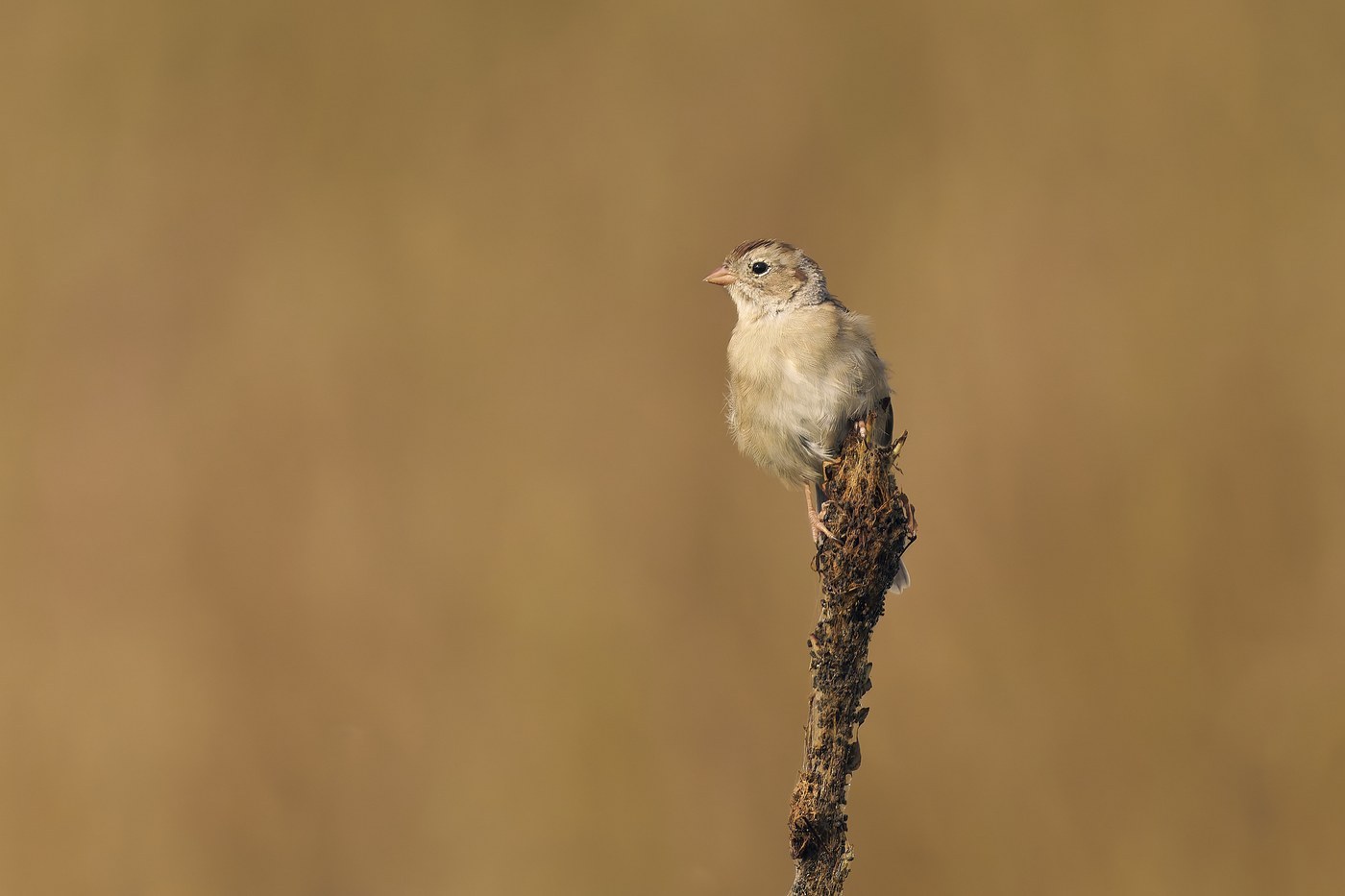
Key Field Marks
- Bill: Bright pink to orange-pink and conical, standing out clearly against the face — one of the best marks for this species.
- Face: Plain, unstreaked buffy-gray face with a whitish eye-ring and a rusty crown, giving a soft, clean-faced appearance without the bold facial stripes of many sparrows.
- Underparts: Warm buffy breast and flanks fading to white on the belly, unstreaked below (unlike many young/streaky sparrows).
- Upperparts: Rufous-streaked back and wings with two whitish wingbars; overall a warm, rusty-toned bird.
- Tail: Fairly long and notched, often pumped or flicked while perched.
- Size: Small (about 14 cm), slim, and long-tailed compared to bulkier sparrows.
Behavior
Forages on or near the ground and in low shrubs in old fields and brushy edges, often perching up on weed stalks or shrub tops to sing, especially in breeding season. Frequently occurs in loose flocks in winter, sometimes with other sparrow species.
Similar Species
- American Tree Sparrow: Also has a bicolored bill and rusty cap, but shows a dark central breast spot and a grayer face with a rustier eye-line; ranges overlap mainly in winter across the East.
- Chipping Sparrow: Has a black (not pink) bill in breeding plumage, a bolder black eye-line, and grayer underparts; juveniles can be streaky below, unlike Field Sparrow.
- Swamp Sparrow: Bulkier with grayer face, rustier wings, and a darker, less uniformly pink bill; favors wetter habitats.
Where & When to Find One
Breeds across the eastern and central United States and adjacent southern Canada in old fields, pastures, brushy edges, and other early-successional habitat with scattered shrubs — not dense forest or clean-cut lawns. Northern populations migrate south for winter, while birds in the southeastern and south-central U.S. are largely year-round residents. Look and listen in overgrown fields, power-line cuts, and shrubby field edges from spring through fall for singing males, and in weedy fields and hedgerows in winter across the southern part of the range.
Voice
Song is a series of clear, sweet whistled notes that accelerate into a rapid trill, often likened to a bouncing ping-pong ball coming to rest — a distinctive and diagnostic pattern among sparrows. Call is a soft, high "tsee" or thin chip note.
Frequently asked questions
What is the single best mark to identify a Field Sparrow?
Its bright pink conical bill combined with a plain, unstreaked buffy face and white eye-ring is the most reliable combination, since few other sparrows share such an unmarked, soft-looking face.
How can you recognize a Field Sparrow by ear?
Its song is a series of clear whistles that speed up into a trill, often compared to the sound of a bouncing ball coming to a stop, which is quite distinctive among sparrow songs.
What habitat should I search for Field Sparrows?
Overgrown fields, pastures with scattered shrubs, and brushy edges — early-successional habitat rather than mature forest, dense wetlands, or manicured lawns.
How is a Field Sparrow different from a Chipping Sparrow?
Field Sparrow has a pink bill and lacks a strong black eye-line, while breeding Chipping Sparrow has a black bill and a bold black eye-stripe, plus a grayer overall appearance.
Are Field Sparrows present year-round?
In the southeastern and south-central United States they are year-round residents, but northern breeding populations migrate south in winter, so seasonal presence varies by region.
Field Sparrow identified by the community
Recent Field Sparrow sightings identified with Bird Identifier.