
Fantail Pigeon Identification Guide
A domesticated fancy pigeon breed instantly recognizable by its dramatically fanned, upright tail of 30-plus feathers and puffed-out chest.
Read the full Fantail Pigeon encyclopedia entry →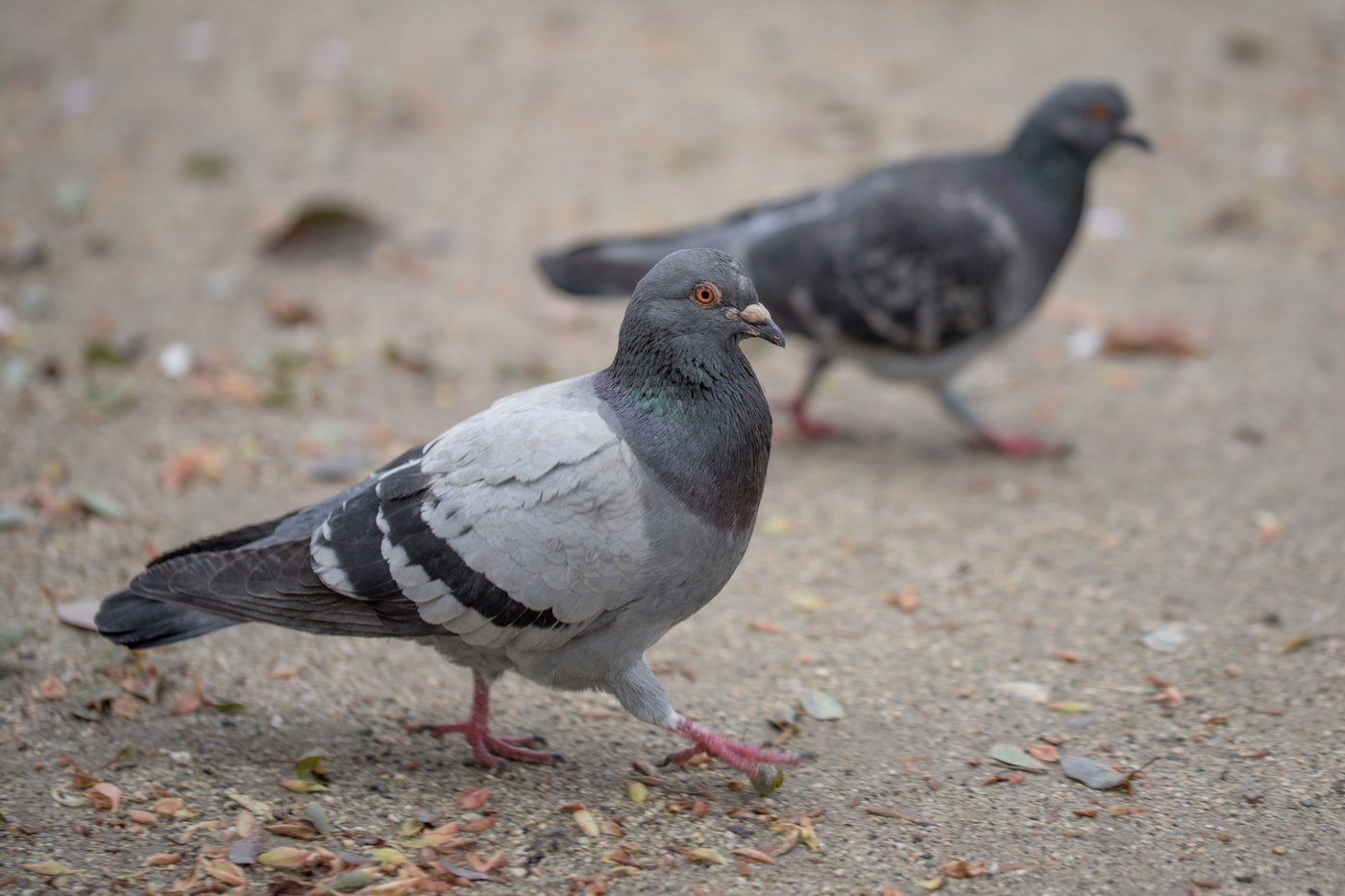
Key Field Marks
- Tail: The defining feature — an exaggerated, upright, fan-shaped tail carried erect over the back, typically containing far more feathers (often 20–32) than the 12 found in a normal pigeon's tail.
- Posture: Stands with chest thrust forward and head drawn back, often resting almost against the tail, giving a distinctive "strutting" silhouette quite unlike wild pigeons.
- Body: Compact and rounded, with a short neck and small head; size and body shape vary somewhat by strain (e.g., Indian Fantail vs. English/Show Fantail), but the fan tail and erect carriage are constant.
- Plumage: Highly variable — bred in white, black, blue, red, yellow, and pied combinations; color is not diagnostic, the tail shape is.
- Walking gait: Fantails often walk with a distinctive shivering or trembling motion, sometimes described as "dancing," especially when displaying.
Behavior
As a domestic/fancy breed, Fantails are typically found in dovecotes, lofts, parks, and urban squares where domestic pigeons are kept or have gone feral, rather than in natural wild habitats. They are far less agile fliers than wild Rock Pigeons because the oversized tail interferes with normal flight.
Similar Species
- Rock Pigeon (feral): Normal fan-shaped but flat, 12-feathered tail carried low or level, not raised in a full circular fan; more streamlined body and typical pigeon walk.
- Other fancy pigeon breeds (e.g., Pouter, Jacobin): Pouters show an inflated crop rather than a fanned tail; Jacobins have a feathered hood/mane around the neck instead of a fanned tail. The full, upright tail fan is unique to Fantail-type breeds.
Where & When to Find One
Fantail Pigeons are a fancy breed kept by pigeon hobbyists and are commonly seen in show settings, dovecotes, farms, and urban parks/plazas where park pigeons are provisioned, worldwide. They are not a wild species with a defined range or season — look for them wherever domestic or ornamental pigeons are kept or have escaped into local feral flocks.
Voice
Voice is the same soft, throaty cooing typical of domestic pigeons (a rolling "coo-roo-coo"), not diagnostic for identification; rely on the tail shape and posture instead.
Frequently asked questions
What is the single most reliable way to identify a Fantail Pigeon?
Look at the tail: a Fantail carries an upright, semicircular fan of feathers over its back, far more feathers than a normal pigeon's flat 12-feather tail.
Is the Fantail Pigeon a wild species?
No, it is a domesticated fancy breed developed through selective breeding from the wild Rock Pigeon; it is not found as a naturally occurring wild population.
Can Fantail Pigeons fly well?
Their oversized, upright tail reduces flight efficiency compared to normal pigeons, so many Fantail strains are kept as ornamental birds in lofts and dovecotes rather than as strong flyers.
Does color help identify a Fantail Pigeon?
No, Fantails come in many colors and patterns (white, black, blue, red, pied); the tail shape and upright, chest-forward posture are what set the breed apart, not plumage color.
How is a Fantail different from a Pouter pigeon?
A Pouter is identified by an inflated, ball-like crop pushed out on the chest, while a Fantail's hallmark is its raised, fan-shaped tail; the two features belong to different fancy breeds.