
European Turtle Dove Identification Guide
A small, elegant migratory dove with a scaly chestnut-and-black back pattern and a distinctive soft purring song, now a species of high conservation concern across much of Europe.
Read the full European Turtle Dove encyclopedia entry →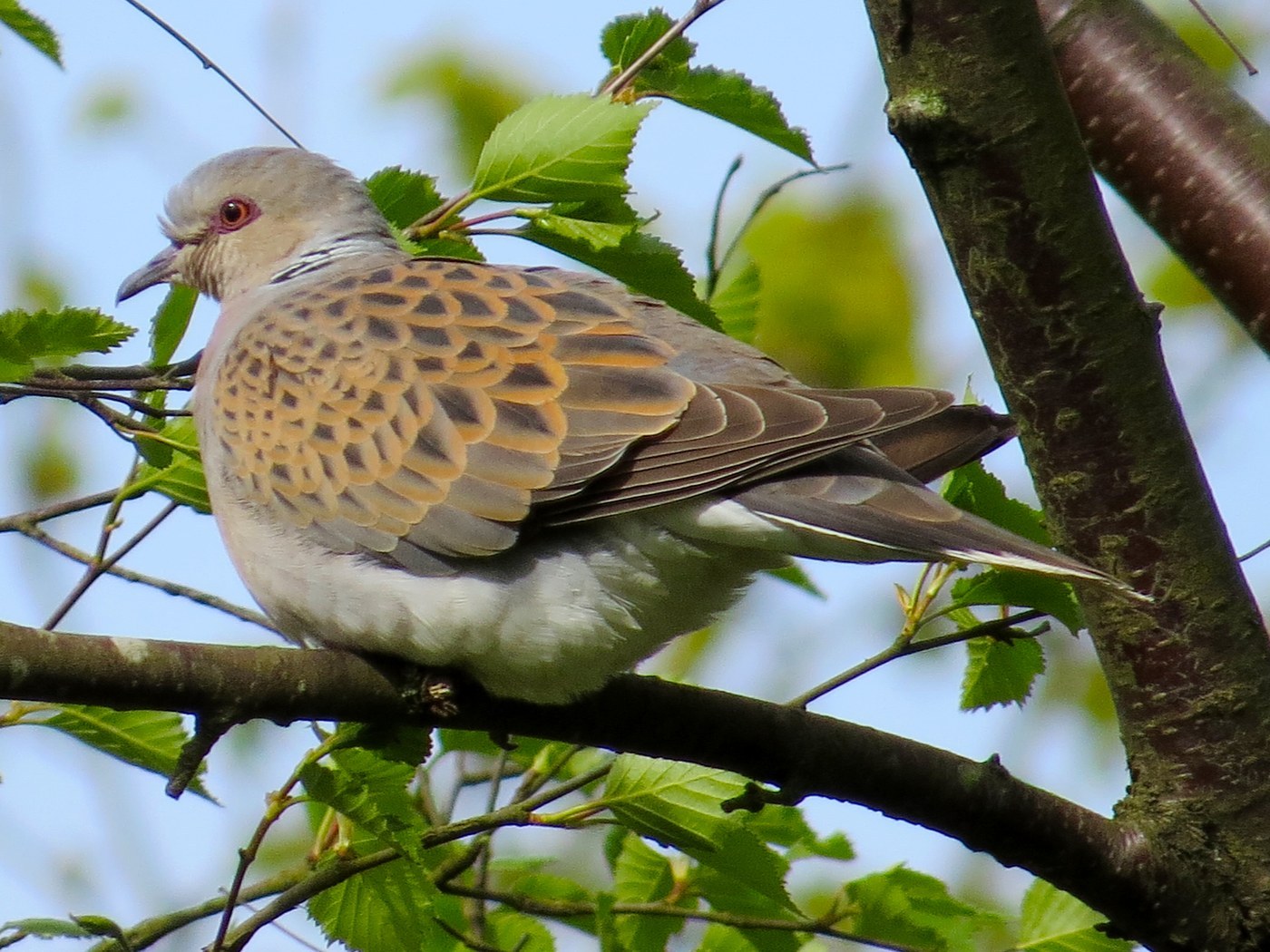
Key Field Marks
- Size & shape: Smaller and slimmer than the familiar Eurasian Collared-Dove, about 26–28 cm, with a small head, relatively long pointed wings, and a longish, graduated tail that shows a white terminal band from below and a dark center in flight.
- Plumage: Upperparts show a distinctive scaly pattern of chestnut-orange feathers broadly edged black on the wing coverts, unique among European doves. Underparts are soft pinkish-grey, with a striking black-and-white striped patch on the neck sides.
- Bill & legs: Small dark bill; legs pinkish-red.
- Behavior: Shy and often keeps low, feeding quietly on the ground on seeds in stubble fields, farmland edges, and open scrub; flight is fast and direct with clipped wingbeats, often flushing suddenly from cover. Frequently perches on overhead wires or bare branches, particularly singing males in spring/summer.
Separating from Similar Species
- Eurasian Collared-Dove: Larger, paler sandy-grey overall, lacking the chestnut-and-black scaly back pattern, and shows a plain thin black half-collar rather than the Turtle Dove's bold black-and-white striped neck patch. Collared-Dove's tail shows less contrast, with a more uniform pale grey underside compared to Turtle Dove's darker, white-tipped tail.
- Oriental Turtle Dove (rare vagrant): Larger and bulkier with a more blue-grey rump and less contrasting underparts; a much rarer bird in Europe than European Turtle Dove.
- The rich scaly chestnut-black back pattern is the single best mark separating European Turtle Dove from all other European doves at rest.
Where & When to See It
- Breeds in farmland with hedgerows, scrubby woodland edges, orchards, and open country with dense thorny cover for nesting, across much of Europe, though it has undergone severe population declines in recent decades, particularly in western Europe.
- A long-distance migrant, wintering in the Sahel region of Africa; present on European breeding grounds roughly late April through September.
- Now considered scarce to rare in many former strongholds (including much of Britain and western Europe) due to agricultural intensification, loss of nesting/feeding habitat, and hunting pressure along migration routes — best looked for in remaining traditional farmland and scrub habitat during the breeding season.
Voice
- A soft, rhythmic, purring "turrr-turrr-turrr" song, repeated in a gentle rolling rhythm, typically given from a perch in dense cover or on wires — the origin of the bird's name and a once-familiar sound of summer farmland now much reduced in range.
Frequently asked questions
How do you tell European Turtle Dove from Eurasian Collared-Dove?
Turtle Dove is smaller with a scaly chestnut-and-black back pattern and a bold black-and-white striped neck patch, while Collared-Dove is larger, plain sandy-grey, and shows only a thin plain black half-collar.
Why has the European Turtle Dove declined so much?
Population declines are linked to agricultural intensification reducing seed-rich weedy habitat and nesting cover, along with hunting pressure on migration routes through southern Europe.
What does the European Turtle Dove sound like?
A soft, purring, rolling 'turrr-turrr-turrr' song, repeated gently and typically given from a hidden perch in dense cover — the source of its name.
When and where can European Turtle Doves be seen?
They are present only during the breeding season, roughly late April to September, favoring farmland with hedgerows, orchards, and scrubby edges with dense thorny cover, before migrating to winter in the Sahel region of Africa.