
European Stonechat Identification Guide
A small, plump chat of open heath and scrub, with males showing a striking black head, white neck patches, and orange breast, often seen perched prominently and calling.
Read the full European Stonechat encyclopedia entry →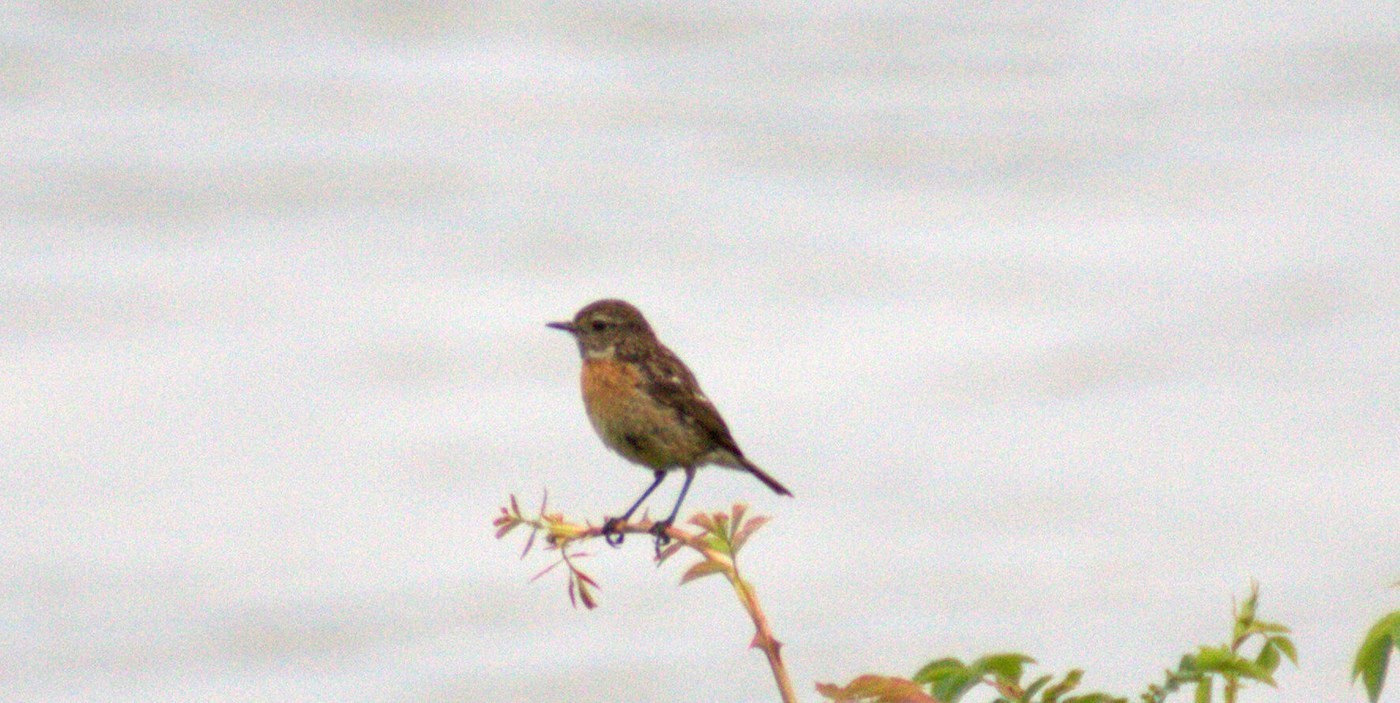
Key Field Marks
- Size & shape: Small and compact, about 11.5–13 cm, round-bodied with a relatively large head, short thin bill, and fairly long dark legs; often perches upright on the very top of a low bush or fence post.
- Male breeding plumage: Black head and throat, a bold white half-collar on the neck sides, an orange-red breast, and a mottled dark brown back with a white rump patch and white wing patch visible in flight.
- Female & non-breeding male: Duller and browner overall, with a streaked brown head lacking solid black, a paler orange-buff breast wash, and a pale, mottled throat, but often retaining a hint of the pale neck-side patch and white wing patch.
- Behavior: Very active and conspicuous, constantly flicking wings and tail while perched prominently atop gorse, heather, or low shrubs; often perches in pairs or small family groups, dropping to the ground to catch insects and returning to the same or nearby perch.
Separating from Similar Species
- European Whinchat: Shows a bold pale supercilium (eyebrow stripe) and white patches at the base of the tail, favoring taller grassland/meadow habitat and present only as a summer migrant; Stonechat lacks the strong eyebrow stripe and is present year-round in many areas, favoring heath/gorse.
- Male Stonechat's solid black head (no eyebrow) versus Whinchat's clear white supercilium is the single best distinguishing mark between the two similar chats.
- Female/juvenile birds are trickier but habitat (heathland/coastal scrub for Stonechat vs. open grassy meadows for Whinchat) and the less bold supercilium on Stonechat help narrow identification.
Where & When to See It
- Found on heathland, coastal scrub, gorse-covered commons, and rough grassland with scattered bushes across much of western, southern, and central Europe; many populations, especially in milder maritime climates, are resident year-round.
- Northern and continental populations are more migratory, wintering in southern Europe and North Africa, with birds returning to breed from March.
- Easily located by scanning the tops of gorse or heather clumps, where it habitually perches in the open.
Voice
- Call is a hard, scolding "tsak-tsak," likened to two stones being knocked together (the source of its name); song is a scratchy, high-pitched warbling, often delivered from a perch or brief song-flight.
Frequently asked questions
How do I tell male European Stonechat from Whinchat?
Male Stonechat has a solid black head with no eyebrow stripe, a white neck patch, and an orange breast, while Whinchat shows a bold pale supercilium (eyebrow stripe) above a more buff-orange breast and prefers open grassy meadows rather than heath/gorse.
Why is it called 'Stonechat'?
Its hard, scolding call note sounds like two stones being knocked together, giving rise to the common name.
Is the European Stonechat present year-round?
In milder, maritime parts of its range (such as western Europe and coastal areas) it is often resident year-round, while northern and continental populations migrate south for winter.
Where should I look for European Stonechats?
Scan the tops of gorse bushes, heather clumps, and low scrub on heathland, coastal cliffs, and rough grassland, where they habitually perch in the open.