
European Starling Identification Guide
A stocky, glossy black bird with iridescent sheen and pale spotting, an adaptable and gregarious species famous for its huge murmuration flocks and mimicked song.
Read the full European Starling encyclopedia entry →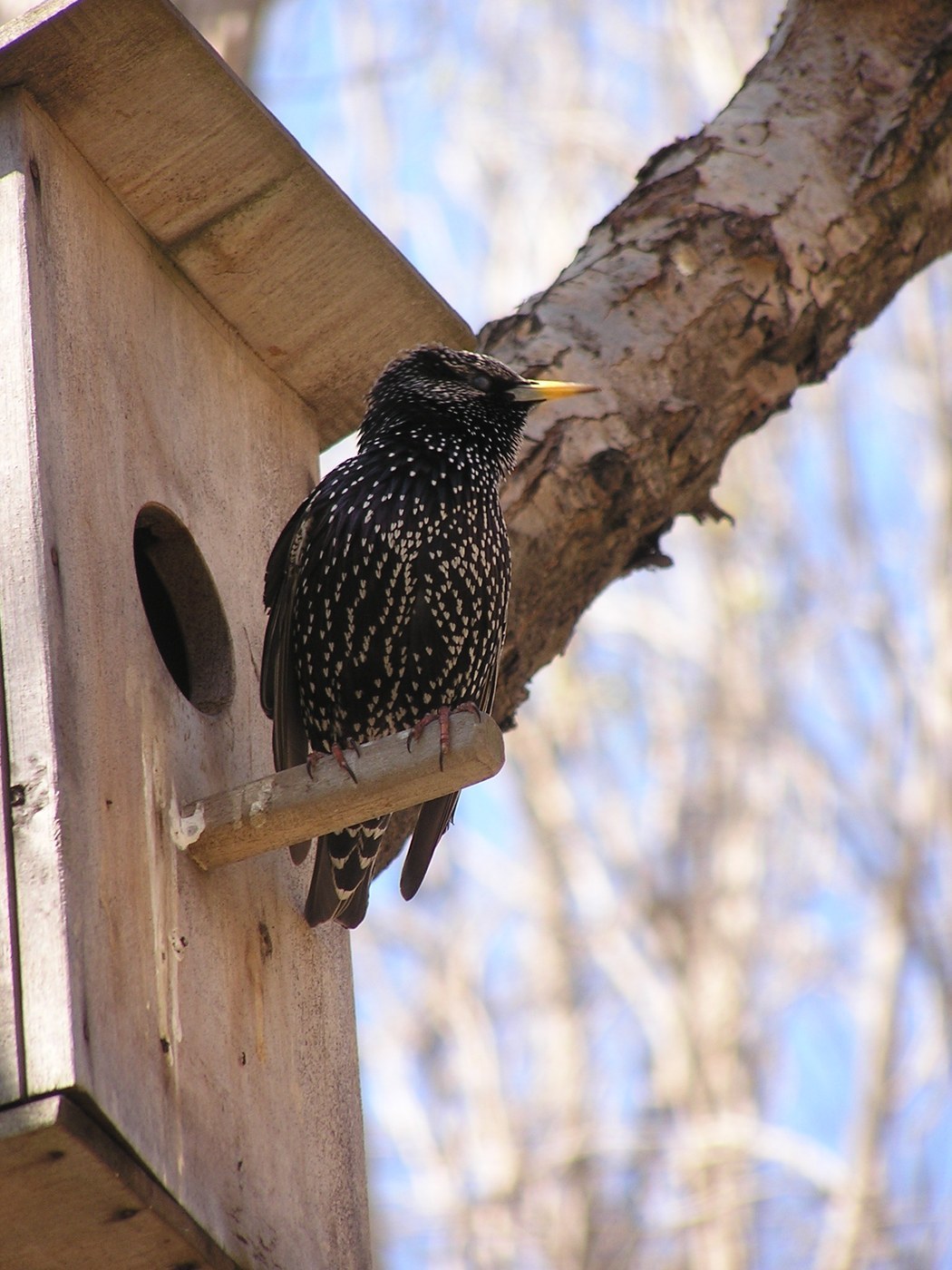
Key Field Marks
- Size & shape: Medium-sized, stocky songbird about 20–23 cm, with a short tail, triangular pointed wings, and a long, sharp bill; overall silhouette in flight is distinctive — short-tailed with fast, direct wingbeats, quite unlike a thrush or blackbird.
- Breeding plumage: Glossy black with strong iridescent green and purple sheen, especially on the head and breast, and reduced pale spotting; bill turns bright yellow in breeding condition.
- Non-breeding/winter plumage: Heavily marked with bold white/buff spots over the entire body, giving a "starry" speckled look, and the bill turns dark grey-black.
- Juveniles: Plain grey-brown overall, lacking spots or gloss, with a pale throat, often looking quite different from adults until they molt in autumn.
- Behavior: Highly gregarious, forming enormous, tightly coordinated flocks (murmurations) especially at dusk roosts in autumn and winter; walks/struts on the ground rather than hopping, probing the soil with its bill for invertebrates.
Separating from Similar Species
- Common Blackbird: Blackbird is a true thrush with a longer tail, more languid flight, and hopping gait, entirely lacking the starling's iridescent sheen or spotting; male Blackbird is glossy black but with an orange-yellow bill and eye-ring, no spots.
- Starling's short tail, pointed triangular wings, and fast direct flight are diagnostic in silhouette, especially useful for picking it out from blackbirds or thrushes at range or in flocks.
- Juvenile starlings' plain grey-brown look can suggest a small thrush, but the short tail, pointed wings, and characteristic starling gait/behavior (and often mixed flocking with adults) confirm identity.
Where & When to See It
- Extremely widespread and adaptable, found in farmland, urban areas, gardens, parks, and woodland edges across virtually all of Europe, year-round in most of its range.
- Northern and eastern breeding populations are migratory, moving south and west in winter, when numbers swell dramatically and huge communal roosts and murmurations form, especially over reedbeds, city centers, and piers at dusk.
- One of the most familiar and numerous birds across European towns, cities, and farmland.
Voice
- An extraordinarily varied and complex song incorporating whistles, clicks, rattles, and mimicry of other birds (and even mechanical sounds), often delivered from a rooftop or treetop perch with wing-flicking; calls include harsh chattering and a sharp "tchack.
Frequently asked questions
What causes the huge flocking displays of European Starlings?
These 'murmurations' occur at communal winter roosts, especially in autumn and winter, when thousands to millions of starlings gather and perform coordinated aerial maneuvers before settling to roost, most spectacular at dusk.
How do you tell a European Starling from a Common Blackbird?
Starling has a short tail, pointed triangular wings, fast direct flight, and iridescent or spotted plumage, while Blackbird has a longer tail, rounder wings, a hopping gait, and plain glossy black plumage with an orange bill in males.
Can European Starlings mimic other sounds?
Yes, their song is highly varied and includes mimicry of other bird species and even mechanical or environmental sounds, mixed with whistles, clicks, and rattles.
What does a juvenile European Starling look like?
Plain grey-brown overall with a pale throat, lacking the iridescent sheen and pale spotting of adults, and can initially resemble a small thrush before molting into adult-type plumage in autumn.