European Robin Identification Guide
A small, plump, red-breasted songbird famous for its tameness, year-round song, and territorial behavior in gardens and woodland across Europe.
Read the full European Robin encyclopedia entry →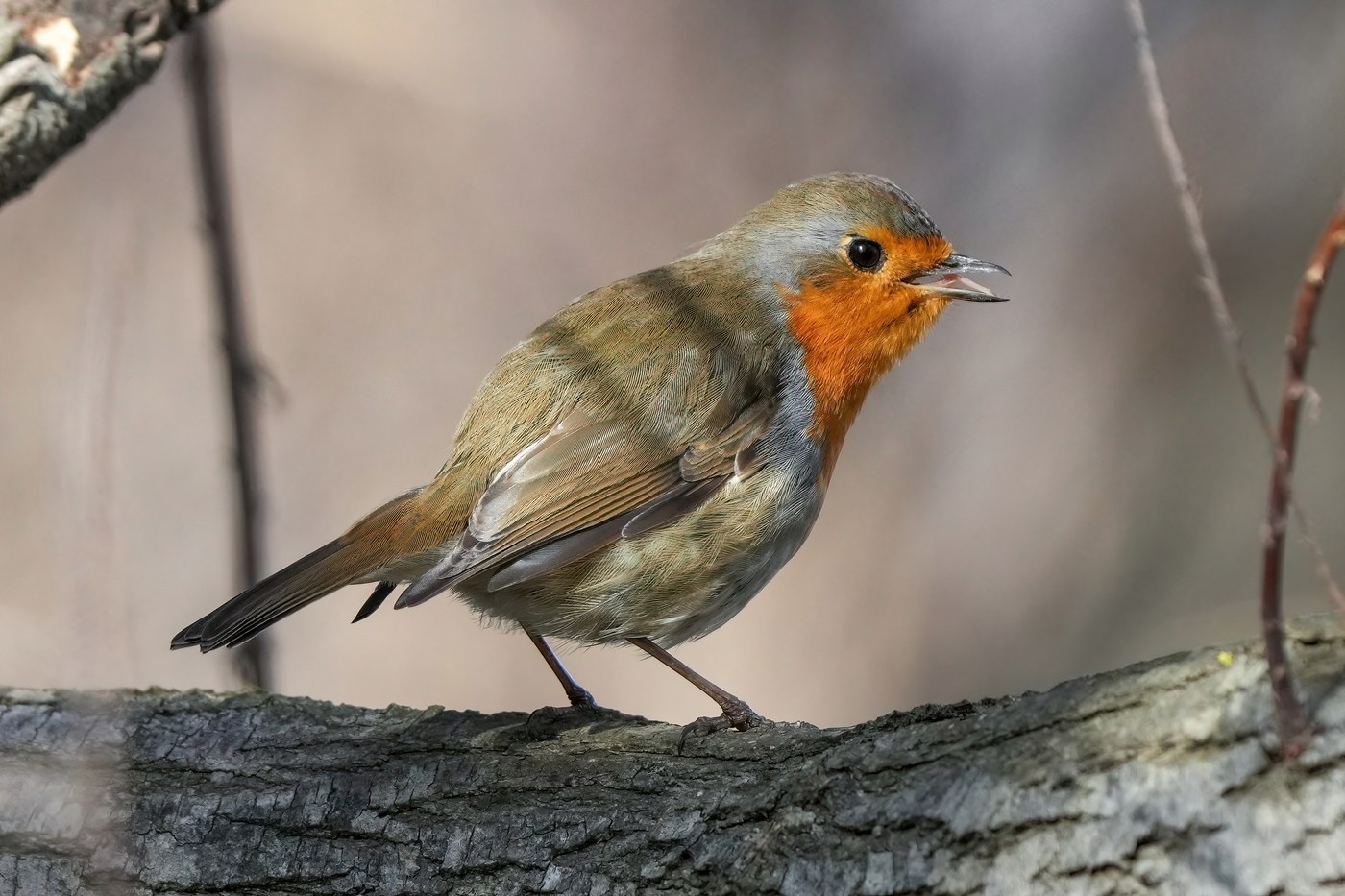
Key Field Marks
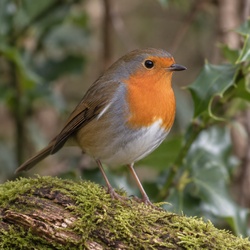
- Size & shape: Small and rounded, about 12.5–14 cm, with a large dark eye, thin dark bill, relatively long thin legs, and an upright, alert posture; often perches with a slightly hunched, round-bodied look.
- Plumage: Adults show a bright orange-red face, throat, and breast bordered by a blue-grey band separating it from the olive-brown upperparts and buffy-white belly. The orange-red patch extends up onto the forehead but does not meet across the crown.
- Juveniles: Lack any red; instead show an entirely spotted/scaled golden-brown and buff plumage without the adult's orange breast, which can cause confusion with young thrushes but the small size, thin bill, and shape are distinctive.
- Behavior: Bold and confiding, especially in gardens, often following gardeners to catch disturbed invertebrates; perches low and upright, bobs and flicks its tail, and holds territory year-round with frequent song from both sexes in winter (unusual among European songbirds).
Separating from Similar Species
- No other common European garden bird shows the same combination of a rounded shape, orange-red face/breast, and blue-grey border — the European Robin is essentially unmistakable once the red breast is seen.
- Juveniles lacking red are best identified by their small, robin-like shape, thin bill, upright stance, and typical robin behavior (tail-flicking, low perching), distinguishing them from young thrushes, which are notably larger.
Where & When to See It
- Resident and common year-round across most of Europe, found in gardens, parks, woodland edges, hedgerows, and scrub; one of the most familiar and widespread garden birds.
- Northern and eastern populations are partial migrants, with some individuals moving south or west for winter, supplementing resident numbers in milder regions.
- Highly visible year-round due to bold behavior and willingness to forage close to humans, especially when soil is disturbed.
Voice
- A rich, warbling, wistful song with clear and slightly melancholic phrases, sung by both sexes and heard in nearly every month of the year, including into autumn and winter when most other songbirds are silent. Call is a sharp, ticking "tic-tic-tic," often given as an alarm.
Frequently asked questions
How can I identify a juvenile European Robin without a red breast?
Look for the robin's characteristic small rounded shape, thin bill, and upright posture combined with an all-over spotted golden-brown and buff plumage lacking any red, which appears only after the first molt.
Why do European Robins sing in winter?
Unlike most European songbirds, both male and female robins hold individual winter territories and sing year-round to defend food resources, not just for breeding purposes.
Is the European Robin the same species as the American Robin?
No, they are unrelated. European Robin is a small chat-thrush (Muscicapidae/Turdidae lineage), while American Robin is a much larger true thrush; they only share superficial red-breast coloring and the shared name.
Where do European Robins live?
They are found year-round in gardens, parks, woodland edges, and hedgerows across most of Europe, and are famously tame around humans, especially where soil is being dug.
European Robin identified by the community
Recent European Robin sightings identified with Bird Identifier.