
European Pied Flycatcher Identification Guide
A small, boldly black-and-white (or brown-and-white) woodland flycatcher known for sallying after insects from a fixed perch and nesting readily in tree cavities and nest boxes.
Read the full European Pied Flycatcher encyclopedia entry →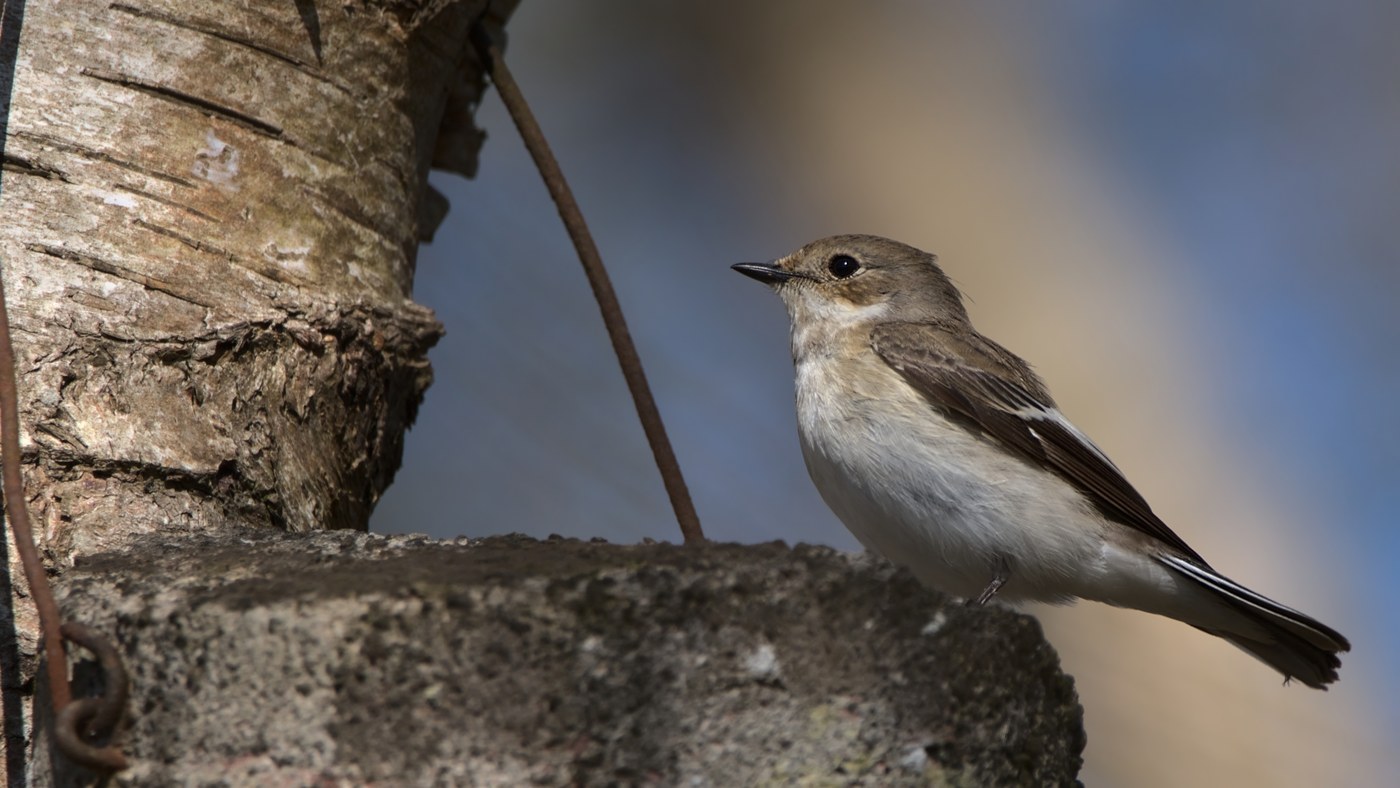
Key Field Marks
- Size & shape: Small, compact flycatcher around 12–13 cm, with a proportionately large head, short thin bill, and fairly upright perched posture.
- Male breeding plumage: Crisp black upperparts (or dark brown in some individuals) contrasting with a clean white underside, a bold white forehead patch, and a prominent white wing patch/panel visible at rest and in flight.
- Female & non-breeding male: Plumage is grey-brown above and whitish below rather than black-and-white, but retains the diagnostic white wing patch and white outer tail feathers, which remain useful at all times of year.
- Behavior: Classic "sit-and-sally" flycatching — perches upright on a low-to-mid branch, then darts out to snatch flying insects before returning to the same or a nearby perch. Frequently flicks wings and tail while perched.
Separating from Similar Species
- Collared Flycatcher: Male Collared Flycatcher shows a complete white collar around the hindneck and a larger white forehead/rump patch; male Pied Flycatcher lacks the full collar and has a smaller white patch confined to the forehead. Females and juveniles of the two are very similar and often best separated by range/song or in the hand.
- Female/juvenile plumages: The combination of grey-brown upperparts, whitish underparts, and a clean white wing patch separates female pied-type flycatchers from other small brownish woodland birds like warblers, which lack the bold wing patch.
- Overall shape (large head, short bill, upright stance) and flycatching behavior help rule out warblers even before plumage details are assessed.
Where & When to See It
- Breeds in deciduous and mixed woodland, particularly old oak woods, across much of Europe, favoring areas with natural tree cavities or readily using nest boxes.
- A long-distance migrant wintering in West Africa; present on breeding grounds roughly April–August, with passage migrants seen more widely (including scrub and coastal habitats) in spring and especially autumn.
- Absent from Europe in winter entirely.
Voice
- Song is a short, sweet, somewhat monotonous series of clear whistled phrases, often rendered "tree-tree-tree, chip-chip-chooee"; call is a sharp, plaintive "whit" or "peet," often given while flicking wings.
Frequently asked questions
How do I tell male European Pied Flycatcher from Collared Flycatcher?
Male Pied Flycatcher has a small white forehead patch and no full neck collar, while male Collared Flycatcher shows a complete white collar around the hindneck and a larger white rump/forehead patch.
What does a female European Pied Flycatcher look like?
Grey-brown above and whitish below, lacking the male's black-and-white contrast, but still showing a clear white wing patch and white outer tail feathers.
Where does European Pied Flycatcher nest?
In natural tree cavities or nest boxes within deciduous and mixed woodland, especially mature oak woods, across much of Europe.
When can I see European Pied Flycatchers in Europe?
They are present only during the breeding season and migration, roughly April to September, wintering entirely in West Africa.