
European Greenfinch Identification Guide
A chunky, olive-green finch with bright yellow flashes in the wings and tail, common in gardens, parks, and farmland hedgerows across Europe.
Read the full European Greenfinch encyclopedia entry →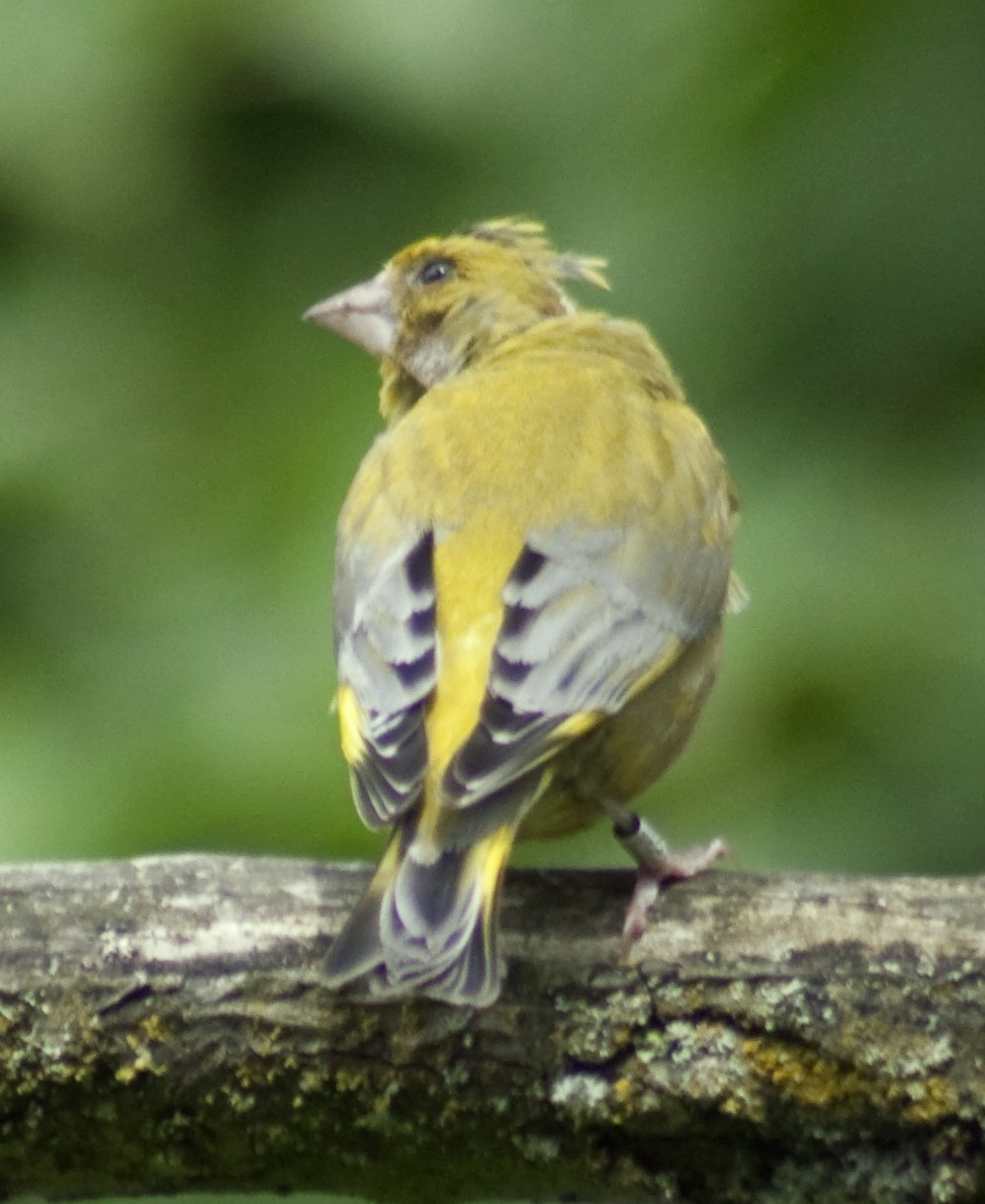
Key Field Marks
- Size & shape: A stocky, big-headed finch about 14–16 cm long, noticeably bulkier than a European Goldfinch, with a thick, pale conical bill suited to cracking larger seeds.
- Plumage: Males are olive-green overall, brightest on the head and rump, with a distinctive bright yellow patch at the base of the primaries and yellow edges to the black tail visible both perched and especially in flight. Females and juveniles are duller, more grey-brown and streaky, but retain the yellow wing and tail flashes, though less vivid.
- Bill: Large, pale pinkish-horn, conical, and heavier than most other European finches — an important clue alongside the greenish body color.
- Behavior: Often perches prominently at treetops during the breeding season, delivering a nasal, wheezy song, sometimes in a slow, exaggerated butterfly-like display flight. Forms flocks in winter, often with other finches and buntings, at stubble fields and feeders.
Separating from Similar Species
- European Goldfinch: Much more boldly patterned with red/white/black head; Greenfinch is plainer olive-green with a heavier bill and lacks any red on the face.
- Female/juvenile finches in general: The combination of a heavy pale bill, olive-grey streaked body, and yellow flash in the wing/tail separates Greenfinch from female House Sparrows or juvenile buntings, which lack the yellow flash.
- Serin: Much smaller and daintier with a tiny stubby bill and a more contrasting yellow head/breast in males; Greenfinch is bulkier with a plain, unmarked green head.
Where & When to See It
- Resident across most of Europe in gardens, parks, farmland edges, orchards, and open woodland with clearings; also breeds in conifer plantations and shelterbelts.
- Some northern and eastern populations are partial migrants, moving south in winter, but many populations are present year-round.
- A regular and often dominant visitor to garden bird feeders, particularly for sunflower hearts and mixed seed.
Voice
- Song is a distinctive nasal, buzzy "dzweee" wheeze interspersed with trills and twitters, often given from a high perch or during a slow circling display flight; calls include a sharp "chup-chup-chup" and a wheezy "tsweee".
Frequently asked questions
How do you tell a male European Greenfinch from a European Goldfinch?
Greenfinch is a plainer olive-green bird with a heavy pale bill and no red on the face, while Goldfinch has a bold red-white-black head pattern and a finer bill.
What is the diagnostic field mark of European Greenfinch in flight?
Bright yellow patches at the base of the primaries and along the tail edges, flashing conspicuously against the otherwise olive-green and black plumage.
What does the European Greenfinch song sound like?
A distinctive nasal, wheezy 'dzweee' buzz mixed with trills, often delivered from a treetop perch or during a slow, fluttering display flight.
Do European Greenfinches visit garden feeders?
Yes, they are frequent and often dominant visitors to feeders, especially for sunflower hearts and mixed seed, and are common in gardens year-round across much of their range.