
European Goldfinch Identification Guide
A small, brightly colored finch with a red-white-black face and golden wingbar, a familiar garden and thistle-patch bird across Europe.
Read the full European Goldfinch encyclopedia entry →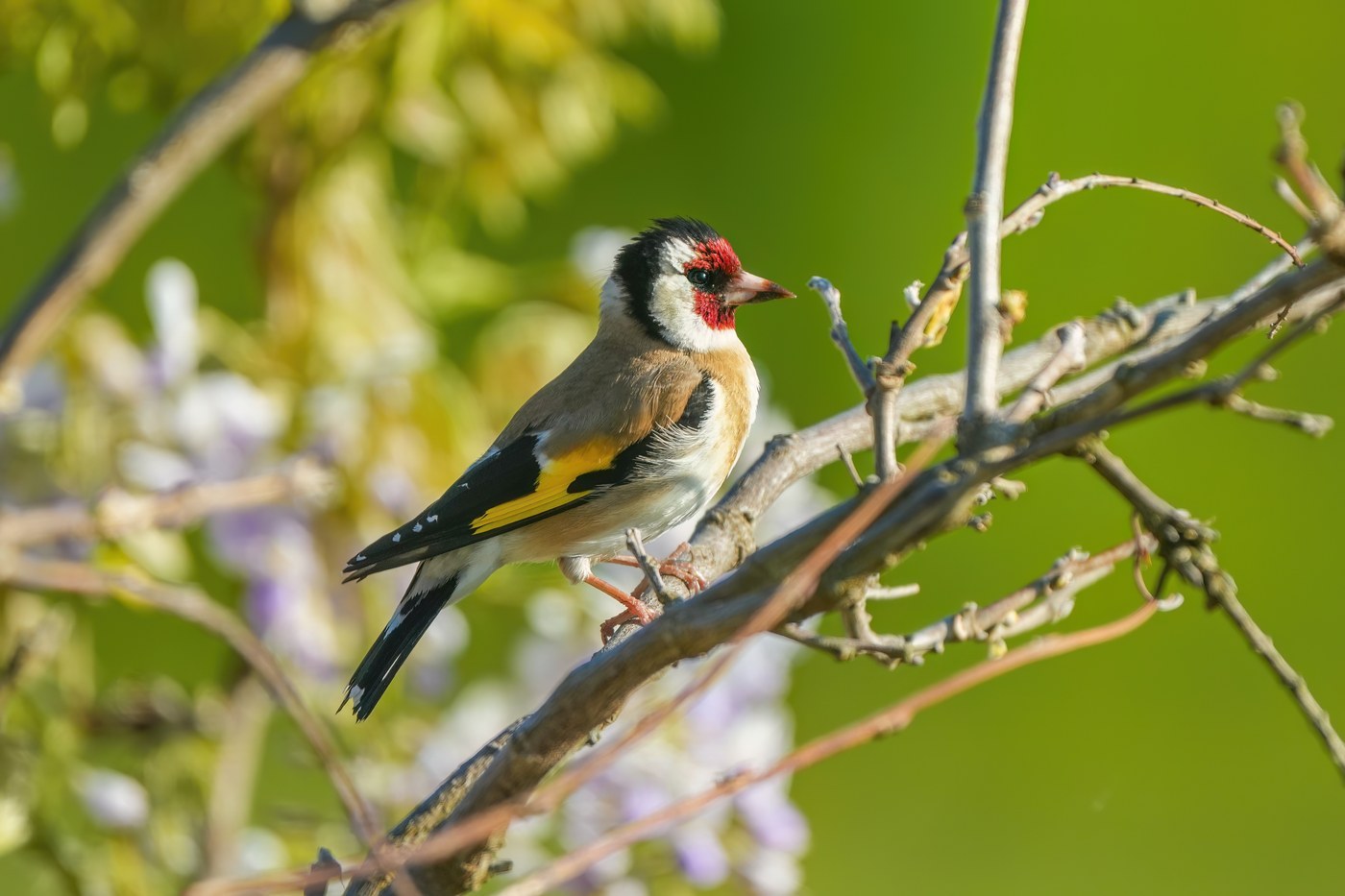
Key Field Marks
- Size & shape: Small finch, about 12–13 cm, with a slim build, notched tail, and a fine, pointed pinkish-white bill well suited to extracting seeds from thistles and teasels.
- Plumage: Adults show a bright red face patch surrounding the bill, bordered by white cheeks and a black-and-white patterned head/nape. Back is warm buffy-brown, underparts whitish with buff-brown flanks, and the black wings feature a bold golden-yellow wingbar that is diagnostic and visible both perched and in flight.
- Juveniles: Lack the red-white-black head pattern entirely, showing a plain streaky brown head and body, but retain the same bold yellow wingbar and black-and-white wings, which is the best way to confirm identity on young birds.
- Behavior: Highly social outside the breeding season, forming flocks ("charms") that feed acrobatically, often hanging upside-down, on thistle, teasel, and alder seed heads. Bounding, undulating flight typical of finches.
Separating from Similar Species
- The combination of red face, black-and-white head, and gold wingbar is unique among European finches — no other species is easily confused with an adult.
- Juveniles can suggest a plain brown finch at a glance, but the bold yellow-and-black wing pattern immediately separates them from young Greenfinches or sparrows, which lack this wing panel.
- In flight, the golden wing flash and light, tinkling flight calls are distinctive even at distance.
Where & When to See It
- Widespread and largely resident across most of Europe, found in gardens, orchards, hedgerows, weedy fields, woodland edges, and parks year-round.
- Numbers can be locally augmented by migrants from northern populations in autumn and winter; some northern and eastern birds move south for winter.
- Frequently visits garden feeders, especially those offering nyjer/thistle seed, making it one of the most familiar colorful finches in urban and suburban settings.
Voice
- A liquid, tinkling flight call often rendered "tswitt-witt-it" or "didelit," and a cheerful, twittering song combining trills and liquid notes, frequently delivered from treetops or overhead wires.
Frequently asked questions
How do you identify a juvenile European Goldfinch without the red face?
Look for the bold black-and-gold wingbar on otherwise plain streaky brown wings and body — juveniles lack the adult's red-white-black head pattern but always show this diagnostic wing panel.
What is the easiest way to identify an adult European Goldfinch?
The bright red face patch, white cheeks, black-and-white head, and golden-yellow wingbar on black wings are unique and unmistakable among European birds.
What do European Goldfinches eat and where will I find them feeding?
They specialize in small seeds, especially thistle, teasel, and alder, often feeding acrobatically while clinging to seed heads; they also readily visit feeders with nyjer seed.
Are European Goldfinches migratory?
Many populations are resident year-round, but northern and eastern breeders migrate south, so numbers often increase locally in autumn and winter.