
European Golden-Plover Identification Guide
A compact, gold-spangled upland and coastal shorebird best known for its haunting whistled calls and dramatic black-bellied breeding plumage.
Read the full European Golden-Plover encyclopedia entry →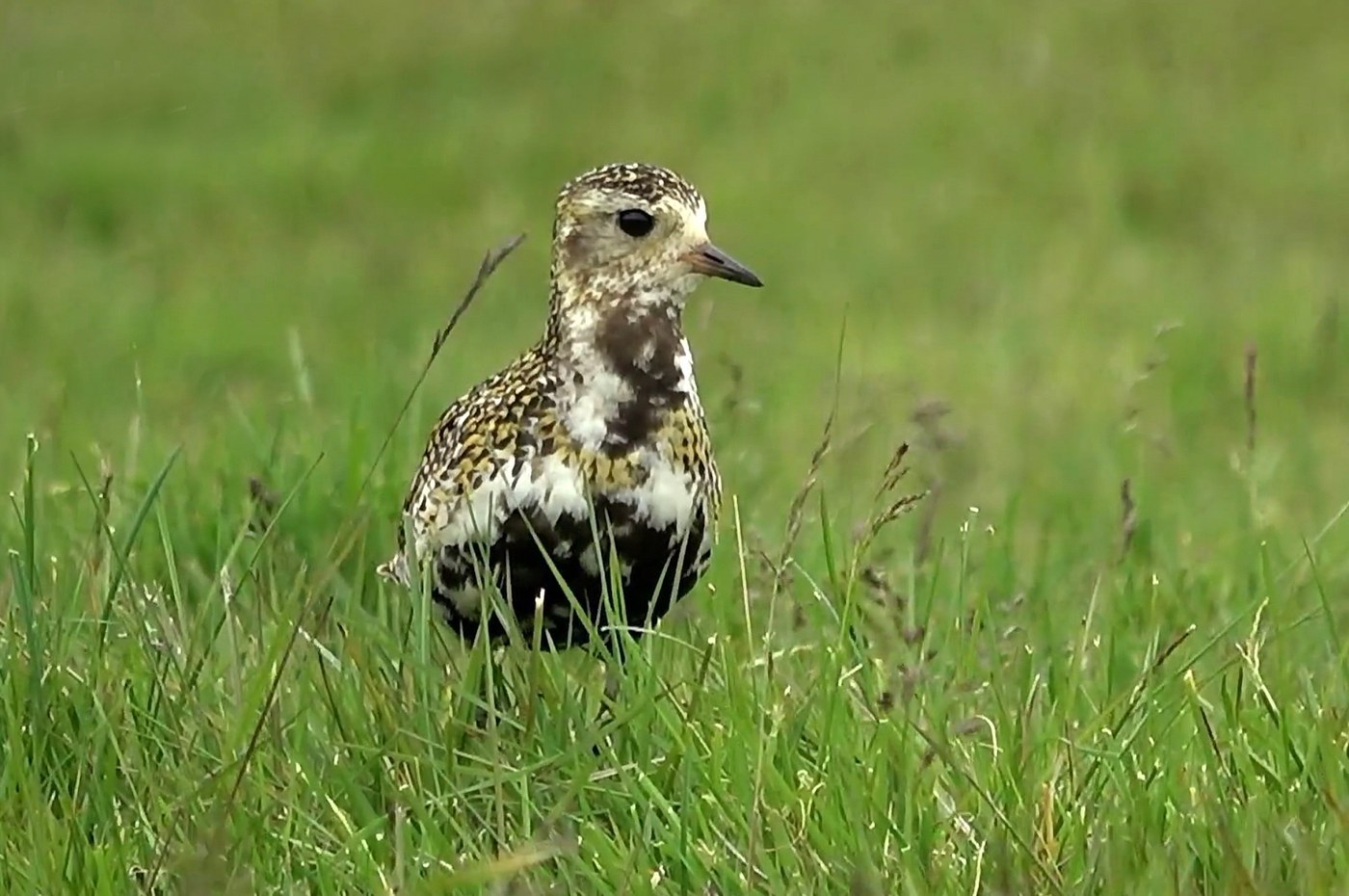
Key Field Marks
- Size & shape: A medium-sized plover, about 26–29 cm, with a round head, large dark eye, short stubby bill, and relatively long wings that give it a compact but elegant look, both standing and in flight.
- Breeding plumage: Upperparts richly spangled gold and black; face, throat, breast, and belly become solidly black bordered by a broad white stripe running from the forehead down the neck sides to the flanks (northern/Scottish birds show more extensive black than the paler southern race).
- Non-breeding/winter plumage: Gold-and-black spangled upperparts remain, but underparts turn pale buffy-yellow to whitish with fine mottling, lacking the bold black belly.
- In flight: Shows plain (unbarred) white underwings and axillaries — a key distinction from the similar Pacific Golden-Plover and American Golden-Plover — plus a faint pale wingbar and no obvious rump patch.
- Behavior: Forms large, tight flocks outside the breeding season, feeding in a characteristic run-stop-peck pattern on short grass, plowed fields, and mudflats; often associates with Northern Lapwings.
Separating from Similar Species
- Grey Plover (Black-bellied Plover): Larger and bulkier, with a heavier bill, grey (not gold) spangled upperparts, and black axillaries ("wingpits") visible in flight versus the golden-plover's white axillaries.
- Pacific Golden-Plover / American Golden-Plover: Both are rare vagrants in Europe with longer legs, a more attenuated shape, and grey (not white) underwing coverts/axillaries — a critical flight-view distinction from European Golden-Plover.
- Non-breeding birds vs. Grey Plover: Focus on overall gold vs. grey tone of the upperparts and the diagnostic white underwing in golden-plover.
Where & When to See It
- Breeds on upland moorland, blanket bog, and open tundra-like habitat across northern Britain, Ireland, Scandinavia, and Iceland, typically April–July.
- In winter, moves to lowland farmland, estuaries, and coastal grasslands across western and southern Europe, often in large mixed flocks with lapwings, from October through March.
Voice
- A clear, mournful, rising whistled "tlui" or "tlee-oo," often given by flocks in flight or when flushed, and by displaying birds on breeding moors with a longer, plaintive song.
Frequently asked questions
How do I tell European Golden-Plover from Grey Plover in winter?
Check the underwing in flight: European Golden-Plover has plain white axillaries and underwing coverts, while Grey Plover shows distinctive black axillaries ('wingpits').
What does breeding-plumage European Golden-Plover look like?
Gold-and-black spangled upperparts with a solid black face, throat, and belly bordered by a bold white stripe from the forehead down the flanks.
Where can I see European Golden-Plovers in winter?
Look on lowland farmland, plowed fields, and coastal grasslands or estuaries, often in large flocks mixed with Northern Lapwings.
What is the call of the European Golden-Plover?
A clear, mournful, whistled 'tlui' with a rising inflection, often heard from flocks overhead or flushed birds.