
Eurasian Treecreeper Identification Guide
A small, cryptically camouflaged woodland bird that spirals up tree trunks probing bark with its thin, decurved bill, best distinguished from Short-toed Treecreeper by voice.
Read the full Eurasian Treecreeper encyclopedia entry →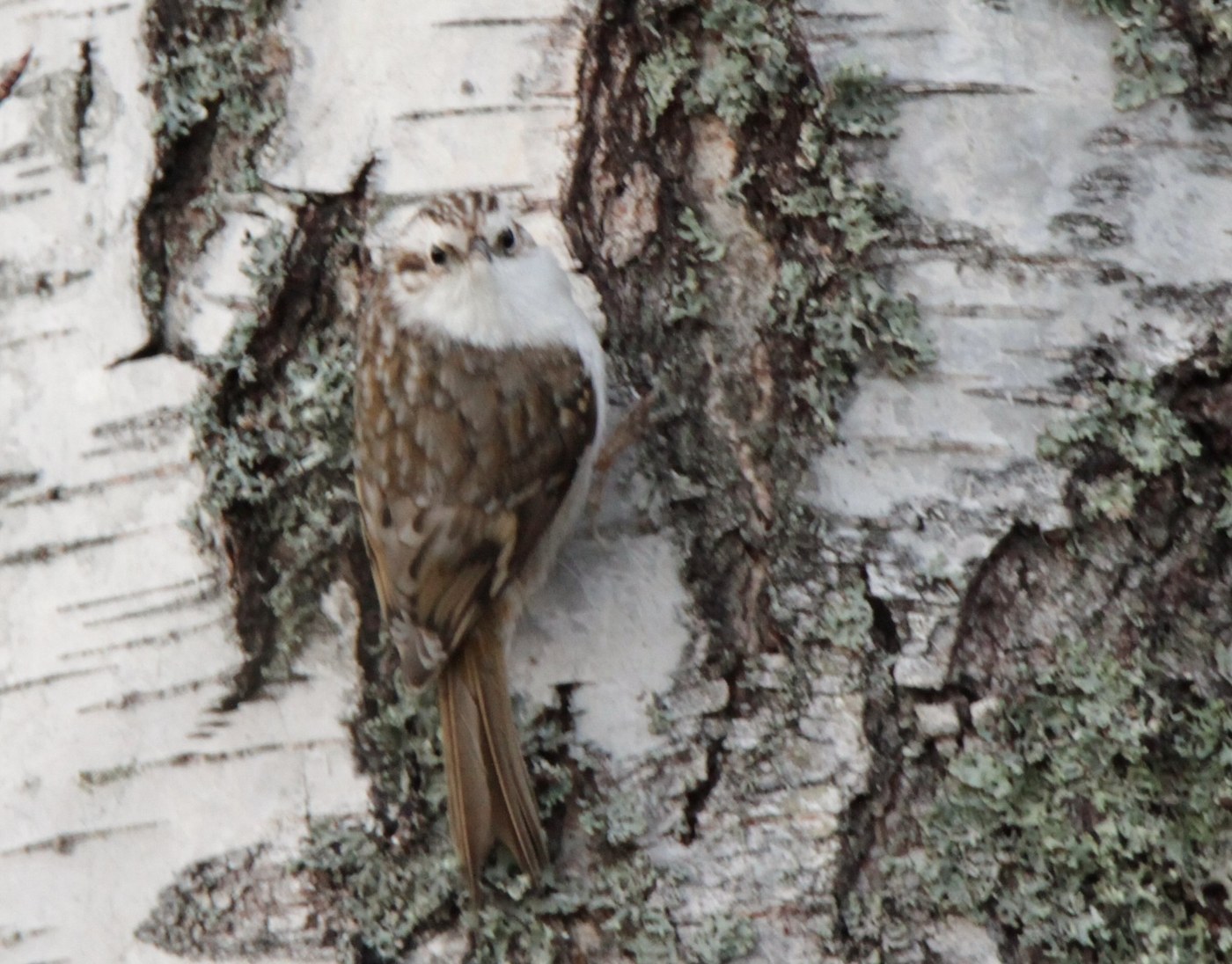
Key Field Marks
- Size & shape: A tiny, slender bird about 12.5-13.5 cm long including a stiff, pointed tail used as a prop (much like a woodpecker's), with a slim body and a thin, downcurved bill.
- Plumage: Intricately mottled and streaked brown, buff, and black above, resembling tree bark for excellent camouflage, with a clean white throat and underparts (though flanks can show a buffy wash).
- Bill: Thin, needle-like, and distinctly downcurved, used to probe bark crevices for insects and spiders.
- Face: A pale, whitish supercilium (eyebrow stripe) contrasting with the darker crown.
- Wing bar: A pale, buffy wing-bar crosses the closed wing, visible as a diagonal pale band in flight.
- Behavior: Characteristically climbs trees in a spiral from the base upward, using the stiff tail as a brace, then flies down to the base of the next tree to start again; forages by probing bark crevices rather than pecking like a woodpecker.
Separating It From Similar Species
- Short-toed Treecreeper: Nearly identical in plumage, with subtle differences (Short-toed tends to be slightly duller/browner with less contrast and a shorter, less distinct supercilium) that are unreliable in the field; voice is by far the most reliable distinction — the two species' calls and songs differ clearly, and where ranges overlap in parts of continental Europe, call is essential for certain identification.
- Nuthatch: Much stockier with a straight (not downcurved) bill, blue-gray upperparts, and the ability to climb down tree trunks head-first, which treecreepers cannot do.
- Wren: Superficially similar in small size and brownish coloring but has a stubby, straight bill, a cocked tail, and does not climb tree trunks in the spiraling treecreeper fashion.
- Range as a clue: In Britain and Ireland, only Eurasian Treecreeper occurs, removing identification difficulty entirely; care with Short-toed Treecreeper is only needed in continental Europe where both species can occur together.
Where & When to See It
- Habitat: Mature woodland, both coniferous and broadleaf, with large trees bearing rough or fissured bark for foraging and nesting behind loose bark or in bark crevices; also found in parks and large gardens with old trees.
- Range: Widespread resident across most of Europe and temperate Asia; largely sedentary, though northern populations may make short-distance movements in harsh winters.
- Season: Present year-round; often easiest to detect in winter when deciduous foliage is absent, joining mixed foraging flocks with tits, goldcrests, and nuthatches.
Voice & Song Cues
- Call is a very high-pitched, thin "tsree" or "srih," easily overlooked or mistaken for a Goldcrest's call, but slightly different in tone.
- Song is a short, high, cascading series of thin notes ending in a distinctive flourish, quite different from the song of Short-toed Treecreeper where both occur.
- Because the bird is so cryptically plumaged and often silent while foraging, its high-pitched contact call is frequently the first clue to its presence in a mixed-species flock.
Frequently asked questions
How do I tell Eurasian Treecreeper from Short-toed Treecreeper?
Plumage differences are subtle and unreliable; the safest method is voice — the two species have distinctly different calls and songs where their ranges overlap in continental Europe. In Britain and Ireland, only Eurasian Treecreeper occurs, so no confusion arises there.
What is distinctive about how a Eurasian Treecreeper forages?
It spirals up a tree trunk from the base, probing bark crevices with its thin downcurved bill and bracing itself with a stiff tail, then flies down to the base of the next tree to repeat the process.
How is Eurasian Treecreeper different from Nuthatch?
Treecreeper has a thin downcurved bill and can only climb upward on trunks, while Nuthatch has a straight bill, blue-gray upperparts, and is able to climb down tree trunks head-first.
What does a Eurasian Treecreeper sound like?
A very high-pitched, thin 'tsree' call, easily confused with a Goldcrest, and a short, high cascading song ending in a distinct flourish.
When is the best time to spot a Eurasian Treecreeper?
Winter, when bare deciduous trees make it easier to see, and when it often joins mixed foraging flocks of tits, goldcrests, and nuthatches.