
Eurasian Skylark Identification Guide
A streaky, ground-dwelling farmland lark famed for its prolonged, high-hovering song flight delivered from great heights over open fields.
Read the full Eurasian Skylark encyclopedia entry →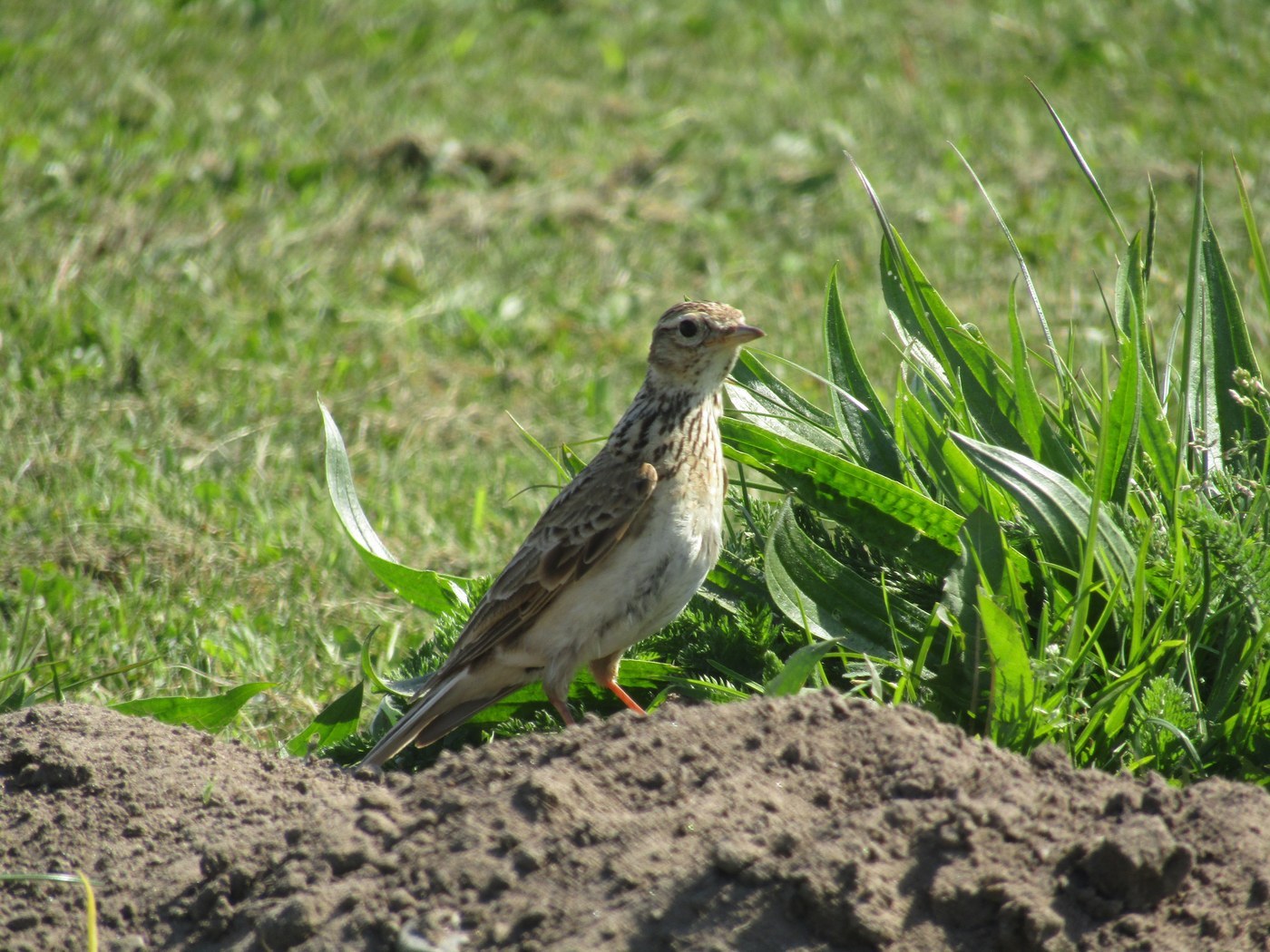
Key Field Marks
- Size & shape: A medium-sized lark, about 18-19 cm long, plump-bodied with a fairly short, stout bill and a small, often raised crest on the crown.
- Plumage: Heavily streaked brown above and on the breast, with a buffy-white belly; the streaking is coarse and gives excellent camouflage against bare or stubble fields.
- Wings: In flight, shows a pale trailing edge to the wing and white outer tail feathers, both useful flight-identification marks.
- Crest: A small, often subtle crest that can be raised when alert, giving a slightly peaked crown shape.
- Legs: Pale pinkish-brown with a notably long hind claw, an adaptation for life on the ground.
- Behavior: Almost entirely terrestrial, walking (not hopping) through short vegetation; famous for its song flight, rising vertically or spiraling to great heights (sometimes 50-100+ meters) and hovering while singing continuously, often for several minutes before parachuting back down.
Separating It From Similar Species
- Woodlark: Smaller, shorter-tailed, with a bold white-and-black mark at the bend of the wing and a more contrasting pale supercilium meeting at the nape; Skylark lacks this bold facial pattern and has a proportionally longer tail with white sides.
- Crested Lark: Shows a taller, more prominent spiky crest, shorter tail, and buffier, less streaked underparts; also has a longer, more curved bill and prefers drier, more barren ground.
- Meadow Pipit: Much slimmer and more finely built with a thin bill (vs. Skylark's stout bill), lacks a crest, and has a distinctly different, thinner flight call.
- Flight silhouette: Skylark's broader wings, white trailing wing edge, and white outer tail feathers combined with its characteristic undulating-then-hovering flight distinguish it from pipits and most other larks at a distance.
Where & When to See It
- Habitat: Open farmland, grassland, moorland, heath, and coastal dunes — needs open ground with low, sparse vegetation for nesting and foraging, avoiding hedgerows, trees, and tall crops.
- Range: Breeds very widely across Europe and temperate Asia; northern and eastern populations migrate south and west in winter, while southern and western populations are largely resident, sometimes joined by continental migrants forming large winter flocks on stubble fields.
- Season: Present year-round in much of Western Europe; song flights begin as early as late winter/early spring (February-March) and continue through summer, making spring through early summer the best time to encounter singing birds overhead.
Voice & Song Cues
- The song is a prolonged, continuous, high-pitched, bubbling and warbling outpouring of notes, delivered non-stop for minutes at a time while the bird hovers or circles high overhead — one of the most celebrated bird songs in European culture and literature.
- Flight/contact call is a liquid, rolling "chirrup" or "prrrit," quite different from the thin "tsip" calls of pipits.
- Song is typically given only in flight (rarely from the ground or a low perch), which itself is a strong identification clue.
Frequently asked questions
What is the most distinctive behavior of the Eurasian Skylark?
Its extended song flight — rising high into the air and hovering while singing continuously, sometimes for several minutes, before descending back to the ground.
How do I tell Eurasian Skylark from Woodlark?
Skylark is larger with a longer tail showing white outer feathers and lacks Woodlark's bold black-and-white mark at the wing bend and pale supercilium meeting at the nape.
What habitat does the Eurasian Skylark prefer?
Open farmland, grassland, heath, and dunes with short, sparse vegetation — it avoids hedgerows, woodland edges, and tall crops.
How can I distinguish a Skylark from a Meadow Pipit on the ground?
Skylark is bulkier with a stouter bill and a small crest, while Meadow Pipit is slimmer with a thin bill and no crest; their calls also differ, with Skylark giving a liquid rolling 'chirrup' versus the pipit's thin 'tsip'.
When is the best time to hear a singing Eurasian Skylark?
Song flights occur from late winter through summer, peaking in spring, and can be heard on almost any calm day over open farmland during that period.