
Eurasian Siskin Identification Guide
A small, acrobatic, yellow-green finch of conifer forests, easily told by its streaky body, black cap and chin in males, and preference for alder and birch seeds in winter.
Read the full Eurasian Siskin encyclopedia entry →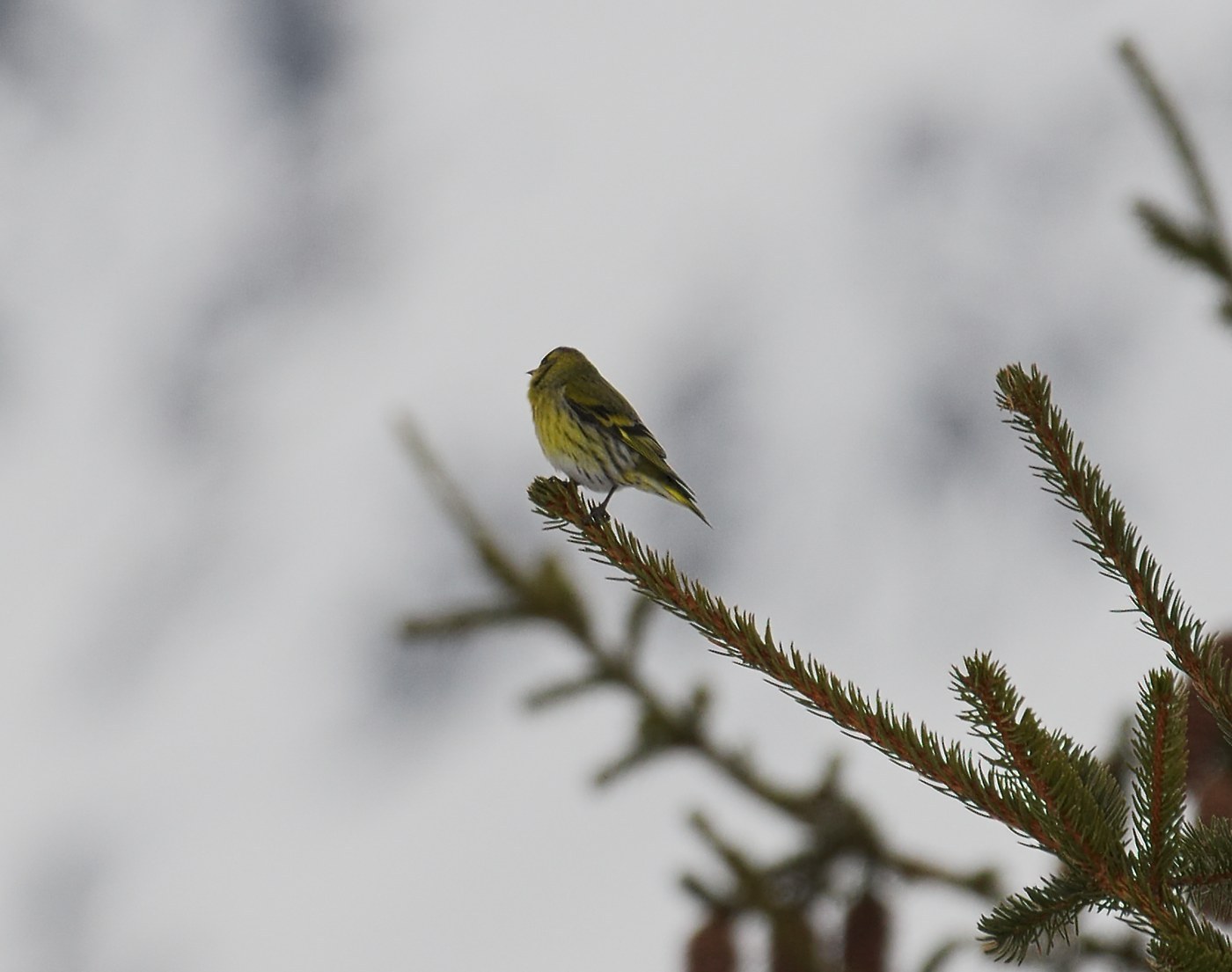
Key Field Marks
- Size & shape: A tiny finch, about 11-12 cm long, with a short, sharply pointed bill, a notched tail, and a compact, energetic build.
- Male plumage: Bright yellow-green overall with a black crown and black chin/bib, yellow rump, and bold yellow wing-bars and yellow patches at the base of the tail; flanks show dark streaking.
- Female/juvenile plumage: Duller olive-gray-green with heavier dark streaking above and below, less yellow overall, and no black cap or chin — can look confusingly plain but still shows the diagnostic yellow wing-bar and yellow-edged tail patches.
- Bill: Notably fine and pointed compared to most finches, an adaptation for extracting seeds from conifer cones and alder catkins.
- Behavior: Highly acrobatic, often feeding upside-down on cone tips, alder catkins, or birch seeds, much like a tit; usually in active, twittering flocks that move erratically between treetops.
Separating It From Similar Species
- European Greenfinch: Larger, bulkier, with a heavier bill, plainer (less streaked) plumage, and lacks the black cap of the male siskin.
- European Serin: Smaller-billed, yellower-headed overall with a stubbier bill and streaked rump (vs. Siskin's plain yellow rump); ranges overlap only marginally and habitat differs (Serin favors more open, sunny habitats).
- Female/juvenile confusion with other finches: The combination of fine pointed bill, bold yellow wing-bar, and yellow patches at the tail base separates female/juvenile Siskin from streaky female Greenfinches or redpolls, which show white (not yellow) wing-bars.
- Common Redpoll: Shows a red forecrown patch and black chin but is grayer-brown overall with white (not yellow) wing-bars, unlike Siskin's yellow-toned plumage.
Where & When to See It
- Habitat: Breeds in coniferous and mixed forest, especially spruce; in winter ranges widely into alder and birch stands along rivers, parks, and increasingly garden bird feeders (especially nyjer seed).
- Range: Breeds across northern and montane Europe and much of temperate Asia; northern and montane populations move south and to lower elevations in winter, with irruptive movements in years of poor cone crops bringing large numbers further south.
- Season: Present year-round in core range but numbers and locations fluctuate seasonally; most conspicuous at feeders and in alder/birch stands from autumn through early spring when flocks form.
Voice & Song Cues
- Flight call is a thin, wheezy, rising "tsy-zee" or twittering "tlu-eet," often given by flocks in undulating flight.
- Song is a long, varied, wheezy jumble of trills, twitters, and buzzy notes, often ending with a distinctive drawn-out wheezy note; frequently sung from a high perch or in flight.
- Feeding flocks in alders produce a constant soft, chattering twitter, useful for locating them at a distance.
Frequently asked questions
How do I identify a male Eurasian Siskin?
Look for a small yellow-green finch with a black cap, black chin, bright yellow wing-bars, and yellow patches at the base of the tail — no other common European finch shows this exact combination.
How can I tell a female Eurasian Siskin from other finches?
Females lack the black cap but retain the fine pointed bill, bold yellow (not white) wing-bars, and yellow-edged tail base, which separate them from streaky female Greenfinches or redpolls.
Where do Eurasian Siskins feed in winter?
They favor alder and birch seeds along waterways, as well as conifer cones, and readily visit garden feeders offering nyjer or sunflower hearts.
Why do Eurasian Siskin numbers vary so much from year to year?
Populations are irruptive — in years when conifer cone crops fail in the north, large numbers move south and to lower ground in search of food, causing dramatic yearly fluctuations in local abundance.
What does a Eurasian Siskin sound like?
A thin, wheezy 'tsy-zee' flight call and a long, twittering, wheezy song often ending in a drawn-out buzzy note, typically given from a treetop or in flight.