
Eurasian Nuthatch Identification Guide
A compact, blue-grey woodland bird famous for climbing down tree trunks head-first, identified by its black eye-stripe, rusty flanks, and loud, ringing calls.
Read the full Eurasian Nuthatch encyclopedia entry →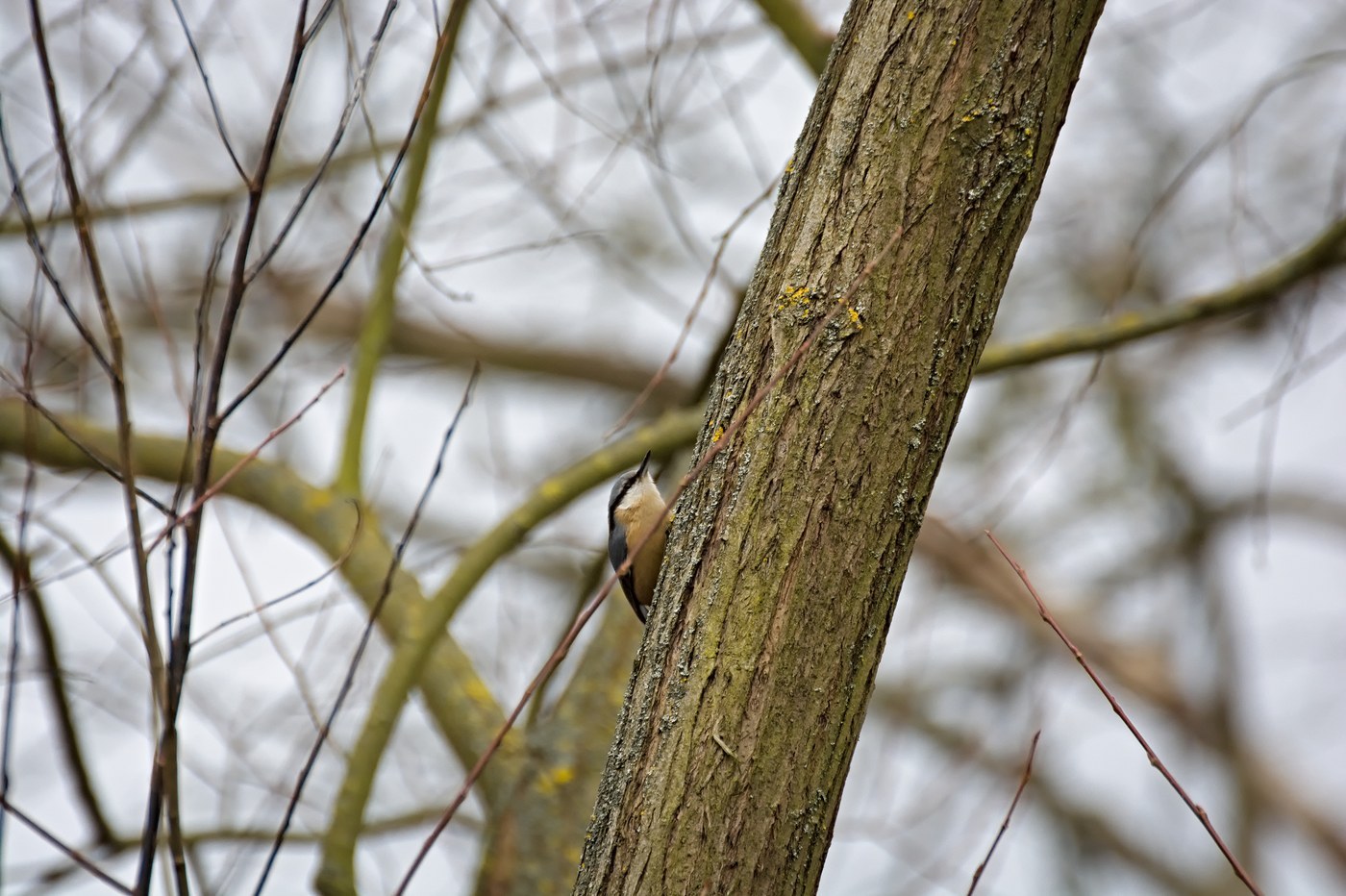
Key Field Marks
- Size & shape: A small, stocky, short-tailed bird (12–14.5 cm) with a large head, short neck, and a strong, straight, dagger-like bill; overall compact and "no-necked" in appearance.
- Plumage: Blue-grey upperparts contrast with warm buff-orange to rich chestnut underparts (deeper and more rufous on the flanks and undertail in most populations); a bold black stripe runs through the eye from the bill to the side of the neck.
- Bill & legs: Long, straight, pointed grey bill used to wedge and hammer open nuts and seeds; strong legs and sharp claws adapted for climbing.
- Behavior: The single most diagnostic behavior among European woodland birds — climbs both up and head-first down tree trunks and branches, unlike woodpeckers or treecreepers, which only climb upward using their tail as a prop.
- Feeding: Wedges nuts and large seeds into bark crevices and hammers them open with its bill; also caches food for later use and will visit garden feeders for nuts and seeds.
Similar Species
- Treecreepers (e.g., Eurasian Treecreeper): Slim, streaky brown above with a thin downcurved bill, and climb only upward using stiff tail feathers as a brace, spiraling up trunks before flying to the base of the next tree — behavior alone separates them from Nuthatch.
- Woodpeckers: All climb upward only, have stiffened tail feathers used as a prop, and (in most species) show black-and-white or green plumage very different from Nuthatch's plain blue-grey-and-buff pattern.
- Other regional nuthatch species (where ranges overlap): Differ in the extent of white on the face/throat and intensity of underpart color; Eurasian Nuthatch's combination of blue-grey back, black eye-stripe, and buff-to-rufous underparts with a whitish throat is distinctive within its core European range.
Where & When to Look
- Habitat: Mature deciduous and mixed woodland, especially with oak, beech, or other large, old trees offering bark crevices and nest holes; also parks, orchards, and wooded gardens with large trees.
- Range: Widespread resident across most of temperate Europe and a broad band of temperate Asia.
- Season: Present year-round and non-migratory across almost all of its range; pairs typically hold permanent territories and can be found in the same woodland patch throughout the year.
Voice
- Call: Loud, penetrating, and varied — a sharp, ringing "chwit" or "twit," a rapid, chattering "chip-chip-chip," and a loud, far-carrying whistled "peeu-peeu-peeu," all of which carry well through woodland and are often the first clue to its presence.
- Song: A loud, repeated, whistling series, often similar in tone to some of its calls, delivered from a high perch, especially in late winter and early spring.
Frequently asked questions
What is the most distinctive behavior of the Eurasian Nuthatch?
It is the only common European woodland bird that regularly climbs head-first down tree trunks, in addition to climbing up, which instantly separates it from treecreepers and woodpeckers.
How do I tell a Nuthatch from a Treecreeper?
Nuthatch is stocky with a straight bill, blue-grey back, and buff-orange underparts, and climbs both up and down trunks, while Treecreeper is slim and streaky brown with a thin downcurved bill and only climbs upward.
What does a Eurasian Nuthatch eat?
It feeds on nuts, seeds, and insects, famously wedging large nuts into bark crevices and hammering them open with its strong bill; it also caches food for later.
Where do Eurasian Nuthatches nest?
In tree cavities, often old woodpecker holes, which they characteristically plaster and narrow with mud around the entrance to deter predators and larger competitors.
Do Eurasian Nuthatches migrate?
No, they are essentially non-migratory and sedentary, with pairs holding the same territory year-round across most of their range.