
Eurasian Jay Identification Guide
A shy, colorful woodland crow relative with pinkish-brown plumage, a striking blue-and-black barred wing patch, and a white rump, usually detected first by its harsh, screeching alarm call.
Read the full Eurasian Jay encyclopedia entry →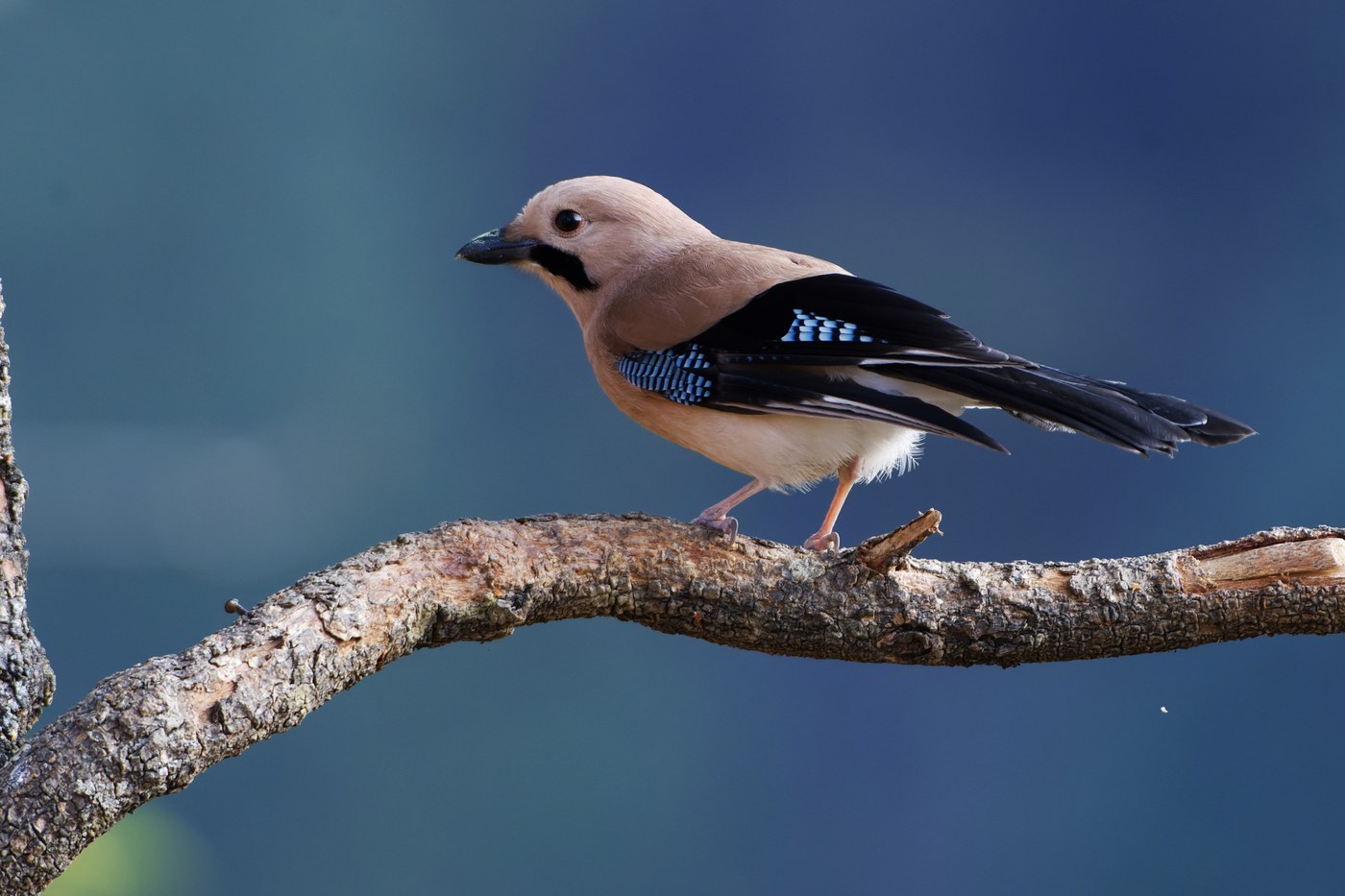
Key Field Marks
- Size & shape: A medium-sized corvid (32–35 cm) with a relatively stout body, rounded wings, and a somewhat hunched, alert posture; noticeably crow-like in shape but far more colorful.
- Plumage: Warm pinkish-brown body plumage overall, with a whitish throat bordered by a bold black mustache stripe; a streaked black-and-white crown that can be raised into a slight crest when alarmed.
- Wing patch: The most striking feature is a small but vivid patch of electric-blue feathers barred with black and white on the upperwing coverts, visible both at rest and conspicuously in flight.
- Rump & tail: Bright white rump contrasting with an otherwise black tail, very obvious in flight, along with black flight feathers.
- Behavior: Notoriously shy and wary, especially away from urban parks; strongly associated with oak woodland due to its habit of caching acorns (a key ecological role in oak dispersal); flight is somewhat labored and undulating with rounded wings.
Similar Species
- No close look-alikes: The combination of pinkish-brown body, black moustache stripe, white rump, and electric-blue-and-black wing patch is unique among European birds and unmistakable once seen well.
- In poor views: A fleeing Jay showing only its white rump and dark tail in flight might briefly suggest a woodpecker's undulating flight, but the overall shape, color, and harsh call quickly rule that out.
Where & When to Look
- Habitat: Primarily deciduous and mixed woodland, especially with oaks, but also found in parks, large gardens, and hedgerows with mature trees; increasingly common in wooded suburban and urban parks in parts of its range.
- Range: Widespread resident across nearly all of Europe, North Africa, and a broad swath of temperate to subtropical Asia.
- Season: Present year-round; most conspicuous in autumn when actively gathering and caching acorns, sometimes in loose, semi-visible flocks or streams of birds moving between feeding and caching sites.
Voice
- Call: A harsh, grating, far-carrying screech, often rendered "skaaak" or "schaay," typically given in alarm and frequently the first indication of a Jay's presence in dense woodland.
- Other sounds: Capable of excellent mimicry, including imitating the calls of raptors such as Common Buzzard, as well as other birds and even mechanical sounds.
Frequently asked questions
How do I identify a Eurasian Jay?
Look for a pinkish-brown crow-relative with a black moustache stripe, a bright white rump, and a small but vivid blue-and-black barred patch on the wing.
Why is the Eurasian Jay hard to see even though it's colorful?
It is naturally shy and wary, especially outside urban parks, and tends to stay within cover in woodland, often being detected first by its harsh screeching call.
What is the Jay's ecological role with oak trees?
Jays cache thousands of acorns each autumn, burying them for later use, and the ones left unretrieved often germinate, making Jays an important natural disperser of oak trees.
Can Eurasian Jays mimic other sounds?
Yes, they are accomplished mimics and can imitate the calls of birds of prey like Common Buzzard as well as other birds and even some man-made sounds.
What does a Eurasian Jay sound like?
Its most common call is a harsh, grating screech, often given as an alarm call when disturbed in woodland.