
Eurasian Jackdaw Identification Guide
A small, compact black crow with a distinctive pale grey nape and piercing whitish-grey eyes, easily told from larger crows by its size and sharp, repeated 'chack' calls.
Read the full Eurasian Jackdaw encyclopedia entry →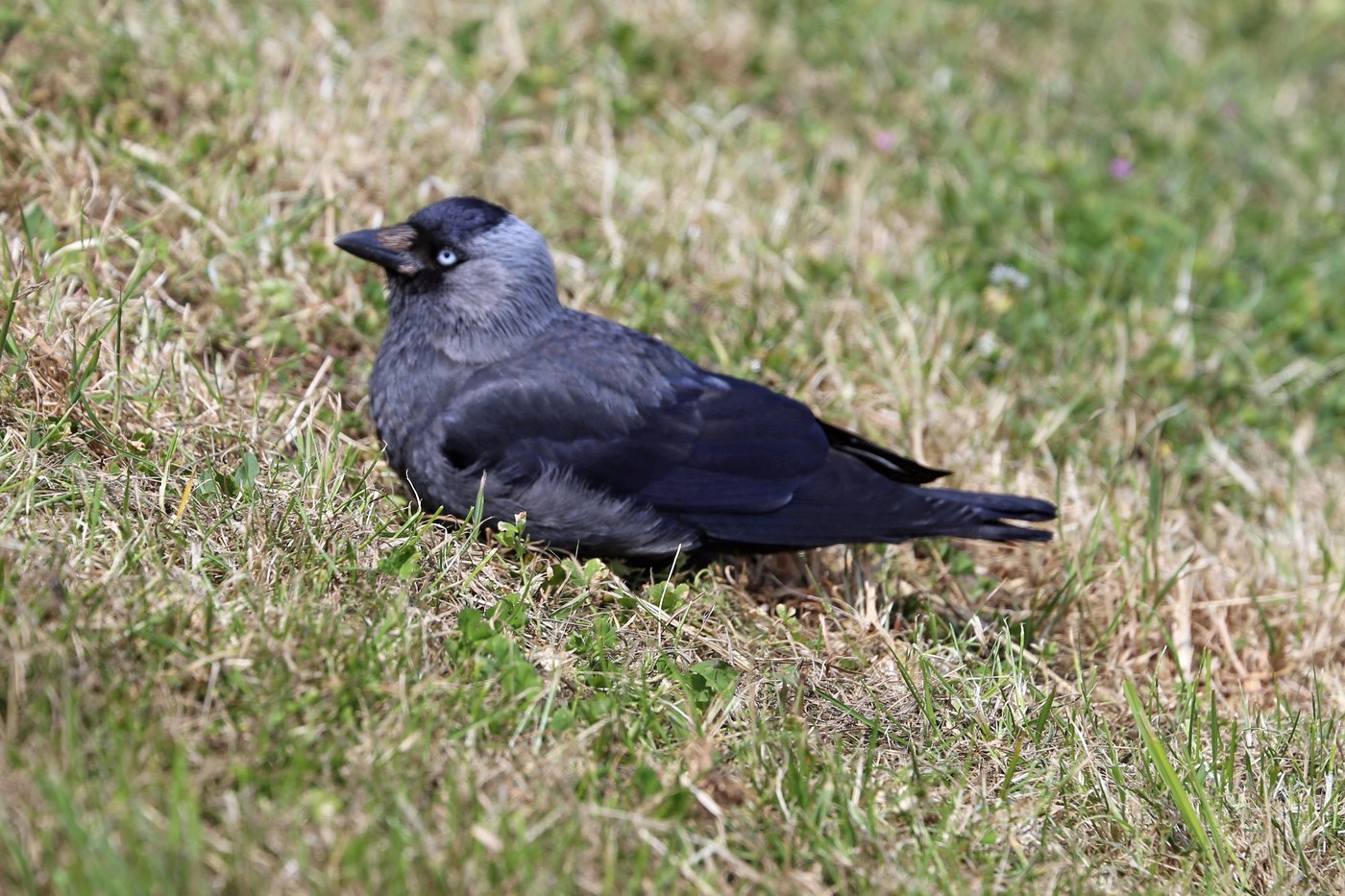
Key Field Marks
- Size & shape: The smallest and most compact of the common Eurasian crows (30–34 cm), with a proportionately short bill, rounded head, and quick, jaunty gait.
- Plumage: Mostly glossy black overall, but with a distinctive pale silvery-grey nape and hindneck extending onto the ear coverts, contrasting with a black cap, face, and throat.
- Eyes: Pale, silvery-white to bluish-grey eyes stand out strikingly against the black head, visible even at moderate distance — a key diagnostic feature.
- In flight: Wings are relatively short and rounded with quick, buoyant wingbeats, quite different from the slower, more deliberate flight of larger crows; often flies in tight, chattering flocks.
- Behavior: Highly social, usually seen in flocks, often mixed with Rooks; forages on open ground, walks briskly, and nests colonially in cavities such as chimneys, cliff holes, tree hollows, and old buildings.
Similar Species
- Carrion Crow / Rook: Both are substantially larger and entirely black without the pale grey nape or pale eye of Jackdaw; Rook additionally has a bare greyish-white face patch at the base of a longer, more pointed bill.
- Common Raven: Much larger still, with a heavy bill, wedge-shaped tail, and deep, croaking call, easily separated by size alone.
- Juvenile Jackdaw: Duller and browner-black with a less contrasting grey nape and darker eyes than adults, but still noticeably smaller and shorter-billed than any other crow.
Where & When to Look
- Habitat: Highly adaptable — found in farmland, parkland, cliffs, quarries, villages, and urban areas with old buildings, church towers, or large trees offering nest cavities.
- Range: Widespread resident across most of Europe, North Africa, and temperate western Asia.
- Season: Present year-round; flocks are often largest and most conspicuous in autumn and winter, when Jackdaws frequently join mixed foraging flocks with Rooks and Starlings on farmland.
Voice
- Call: A sharp, high-pitched, metallic "chack" or "tchak," often repeated and given constantly within flocks, quite different from the deeper caws of Carrion Crow or Rook.
Frequently asked questions
What is the easiest way to tell a Jackdaw from a Carrion Crow?
Jackdaw is notably smaller with a pale silvery-grey nape and striking pale eyes, while Carrion Crow is larger, entirely black, and has dark eyes.
Why does a Jackdaw have pale eyes?
Adult Jackdaws have naturally pale, silvery-white to bluish-grey irises, a distinctive feature that helps separate them from all other similarly-sized black corvids, which have dark eyes.
Do Jackdaws flock with other birds?
Yes, they are highly social and commonly form large mixed flocks with Rooks, especially on farmland in autumn and winter.
Where do Eurasian Jackdaws nest?
In cavities such as chimneys, church towers, cliff crevices, tree hollows, and old buildings, often nesting colonially.
What does a Jackdaw sound like?
A short, sharp, metallic 'chack' call, repeated frequently, distinct from the harsher caw of larger crows.