
Eurasian Golden Oriole Identification Guide
A strikingly bright yellow-and-black songbird that stays hidden high in leafy canopy, most easily located by its fluty, whistled song rather than by sight.
Read the full Eurasian Golden Oriole encyclopedia entry →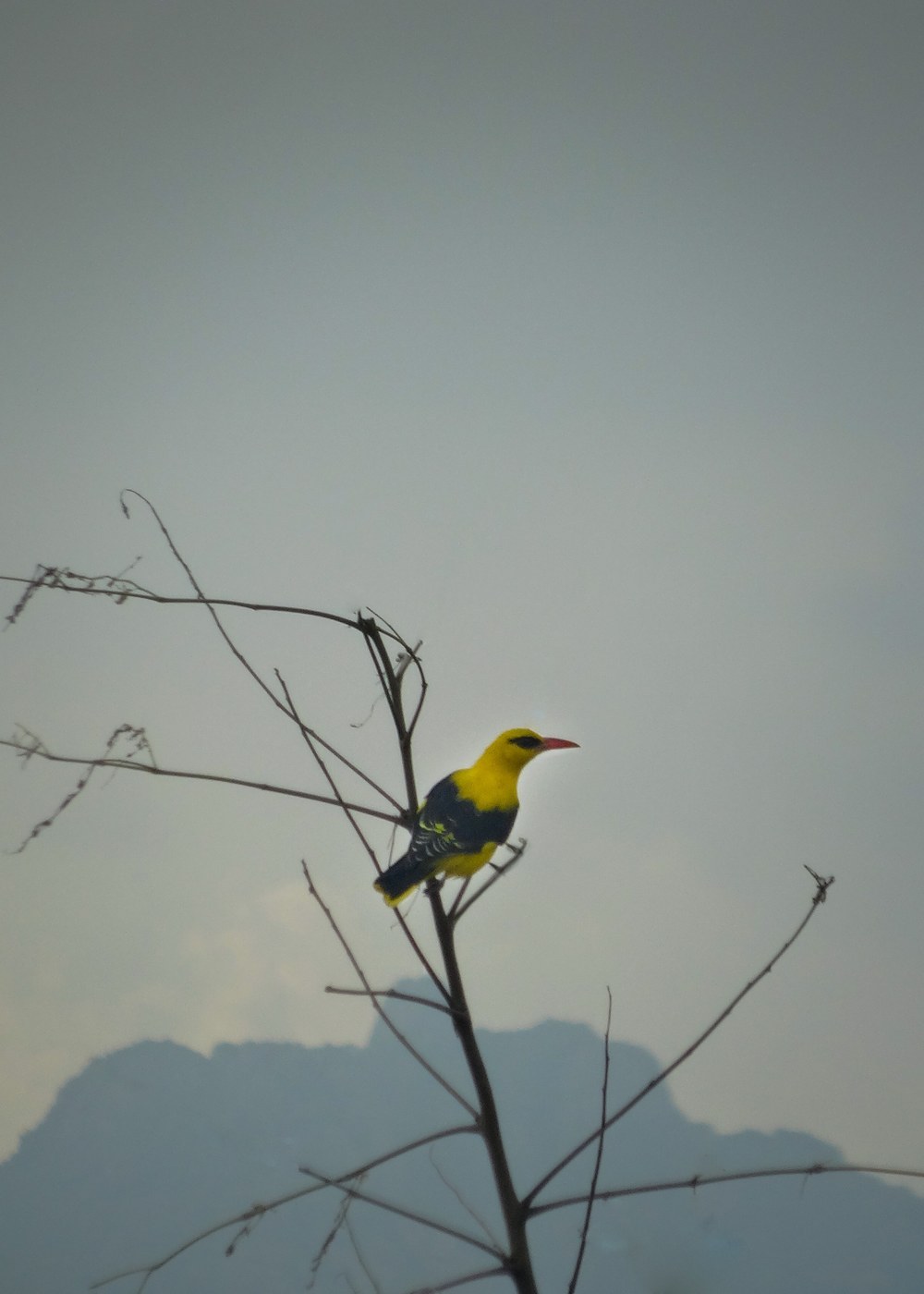
Key Field Marks
- Size & shape: A thrush-sized songbird (22–25 cm) with a fairly stout, slightly downcurved, pinkish-red bill and a moderately long tail.
- Plumage (male): Brilliant golden-yellow body with contrasting jet-black wings and a black stripe through the eye (lores); the tail is black with yellow corners visible in flight.
- Plumage (female/immature): Much duller and greener above, yellowish-green with dusky streaking on whitish underparts — far less conspicuous than the male and easily overlooked or misidentified.
- Bill & eye: Distinctive coral-pink to reddish bill in adults, contrasting with a dark reddish eye.
- Behavior: Extremely shy and elusive despite its brilliant color, spending nearly all its time high in dense leafy canopy; more often heard than seen; flight between trees is fast, direct, and slightly undulating, showing bold yellow-and-black flashes.
Similar Species
- Eurasian Golden Oriole female vs. Green Woodpecker or other green birds: The streaked underparts and slim, oriole-shaped bill separate a dull female oriole from other green/yellow birds like Green Woodpecker, which is much larger and has a different shape entirely.
- Male Golden Oriole vs. other yellow birds (e.g., yellow warblers, buntings): No other European bird combines such extensive, pure golden-yellow body plumage with solid black wings; the combination is unmistakable once a male is seen well.
- Confusion by voice: The fluty song can superficially recall a Blackbird's song but is more whistled, simpler, and often rendered as "weela-wee-oo"; the harsh, jay-like scolding call is also distinctive once learned.
Where & When to Look
- Habitat: Mature broadleaf woodland, especially with tall poplars, willows, or oaks, also large parkland, orchards, and riverine forest; prefers a dense, high canopy for cover.
- Range: Breeds across much of Europe (more local and northerly in the west, e.g., parts of the UK historically) east into western and central Asia; a long-distance migrant, wintering in sub-Saharan Africa.
- Season: A summer visitor to its breeding range, typically arriving in late April or May and departing again by August or September; essentially absent from Europe outside the breeding season.
Voice
- Song: A rich, far-carrying, fluty whistle often transcribed as "weela-wee-oo" or "or-iii-ole," one of the most beautiful and recognizable sounds of European broadleaf woodland in late spring and early summer.
- Call: A harsh, cat-like or jay-like scream/scold, quite unlike the melodious song, often given when alarmed.
Frequently asked questions
Why is the Eurasian Golden Oriole so hard to see despite its bright colors?
It stays almost exclusively high in dense leafy canopy and is very shy, so despite brilliant yellow-and-black plumage it blends in with dappled sunlight and is usually detected by its fluty song rather than sight.
What does a female Golden Oriole look like compared to a male?
Females are much duller, greenish-yellow above with streaked whitish underparts, lacking the male's solid black wings and pure golden body.
What does the Golden Oriole's song sound like?
A rich, fluty, whistled phrase often rendered as 'weela-wee-oo', considered one of the most distinctive songs of European woodland in spring.
When can I see Eurasian Golden Orioles in Europe?
They are summer migrants, present roughly from late April/May through August/September, and winter in sub-Saharan Africa.
What habitat should I search for Golden Orioles?
Mature broadleaf woodland with a tall, dense canopy, especially poplar or willow stands, large parks, and orchards.