
Eurasian Curlew Identification Guide
Europe's largest wading bird, told by its very long, evenly down-curved bill, streaky brown plumage, and haunting bubbling call across moors and estuaries.
Read the full Eurasian Curlew encyclopedia entry →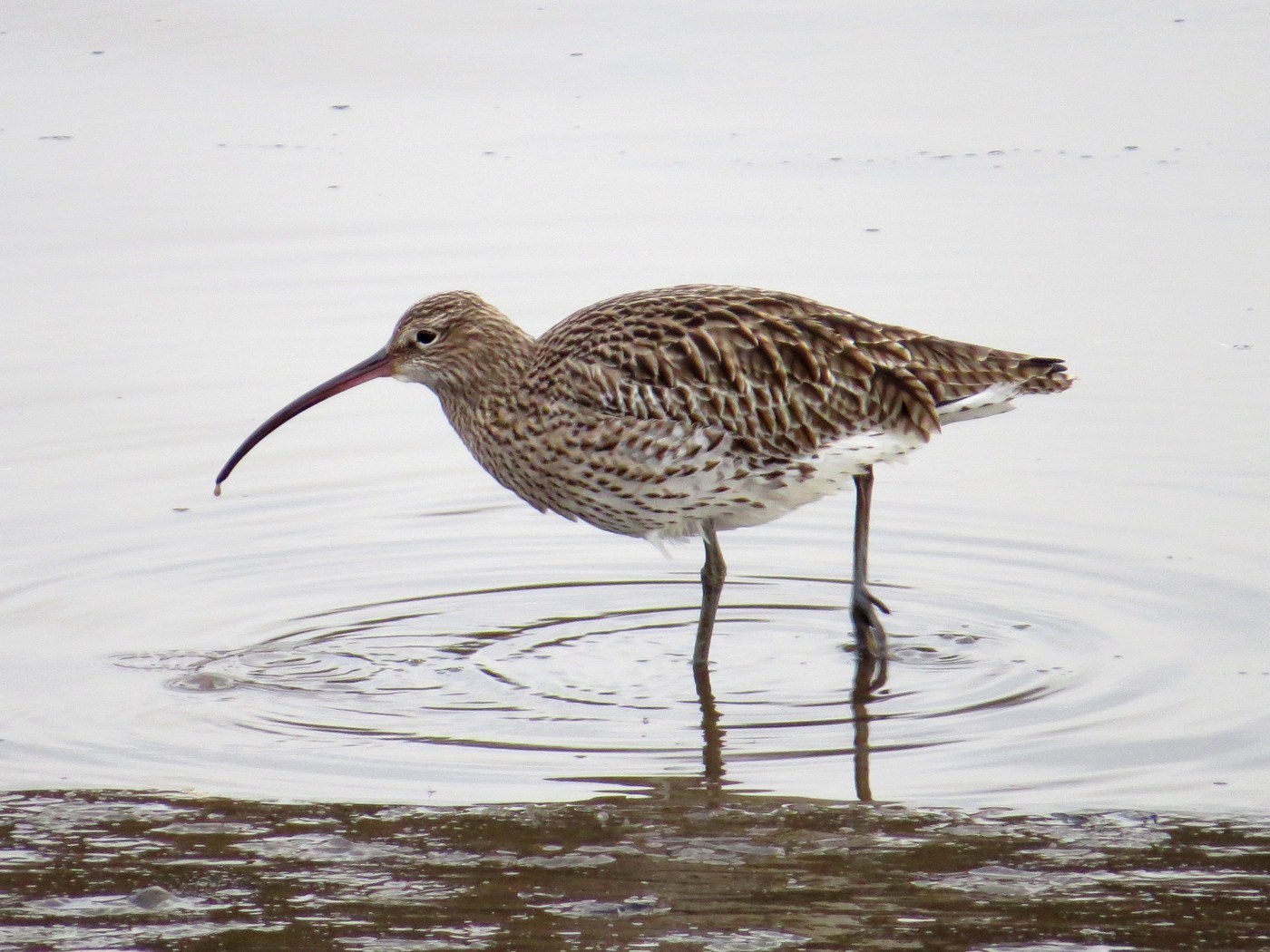
Key Field Marks
- Size & shape: A large, long-legged shorebird (50–60 cm, one of the largest waders in the world) with a plump, brownish body and a long neck.
- Bill: The defining feature — an extremely long, slender bill that curves evenly downward along its whole length, longest in females and used to probe deep into mud for prey.
- Plumage: Overall warm brown, heavily streaked and mottled with darker brown on the upperparts and streaked on the neck and breast, fading to whiter, less-marked belly and undertail.
- In flight: Shows a contrasting white rump and lower back extending in a wedge up the back, with plain brown wings lacking a strong wing bar.
- Behavior: Walks steadily while probing deeply in mud or soft ground; forms large, loose flocks on estuaries and mudflats outside the breeding season; flight is strong and direct on fairly broad wings.
Similar Species
- Whimbrel: Noticeably smaller, with a shorter, more sharply kinked (rather than evenly curved) bill and a bold dark crown stripe bordered by pale supercilium stripes; Whimbrel's call is a rapid, tittering series of whistled notes, quite different from Curlew's bubbling call.
- Bar-tailed Godwit: Has a long, straight or very slightly upturned bill (not decurved), a more streamlined shape, and different flight pattern without the curlew's wedge of white on the rump extending up the back in the same way.
- Black-tailed Godwit: Straight bill and bold black-and-white wing bar and tail pattern in flight, easily separating it from Curlew's plain wings and curved bill.
Where & When to Look
- Habitat: Breeds on upland moorland, rough pasture, bogs, and damp grassland; winters mainly on coastal estuaries, mudflats, and salt marshes, though some also use inland wet fields.
- Range: Breeds across northern and temperate Europe and Asia; northern and inland breeders move to milder coastal areas for winter, with major wintering populations on estuaries around the UK, Ireland, and continental European and African coasts.
- Season: Look for breeding birds on moorland from spring through mid-summer; from late summer through winter, search estuaries and coastal mudflats where flocks gather to feed on the tideline, especially around low tide.
Voice
- Call: The classic, evocative rising "cur-lee" whistle from which the bird gets its name, often given in flight or when disturbed.
- Song: A rich, bubbling, accelerating trill delivered during display flights over breeding territory in spring, one of the most atmospheric sounds of northern moorlands.
Frequently asked questions
What is the single best field mark for Eurasian Curlew?
Its very long bill that curves smoothly downward along its entire length, the longest and most evenly decurved bill of any European wader.
How do I separate Eurasian Curlew from Whimbrel?
Curlew is larger with a longer, evenly curved bill and no head striping, while Whimbrel is smaller with a shorter, more sharply angled bill and a bold dark crown stripe bordered by pale lines.
Where do Eurasian Curlews breed?
They breed on upland moorland, rough pasture, and boggy grassland, moving to coastal estuaries and mudflats to winter.
What does the Eurasian Curlew's call sound like?
A distinctive rising, whistled 'cur-lee' call, which gives the species its name, along with a bubbling trill song during display flights.
Is the Eurasian Curlew a bird of conservation concern?
Yes, in much of its range, especially the UK and Ireland, populations have declined sharply due to loss of breeding moorland and wet grassland habitat.