
Eurasian Blackcap Identification Guide
A plain gray-brown warbler of European woodland and gardens, easily sexed by cap color — glossy black in males, warm reddish-brown in females — and prized for its rich, musical song.
Read the full Eurasian Blackcap encyclopedia entry →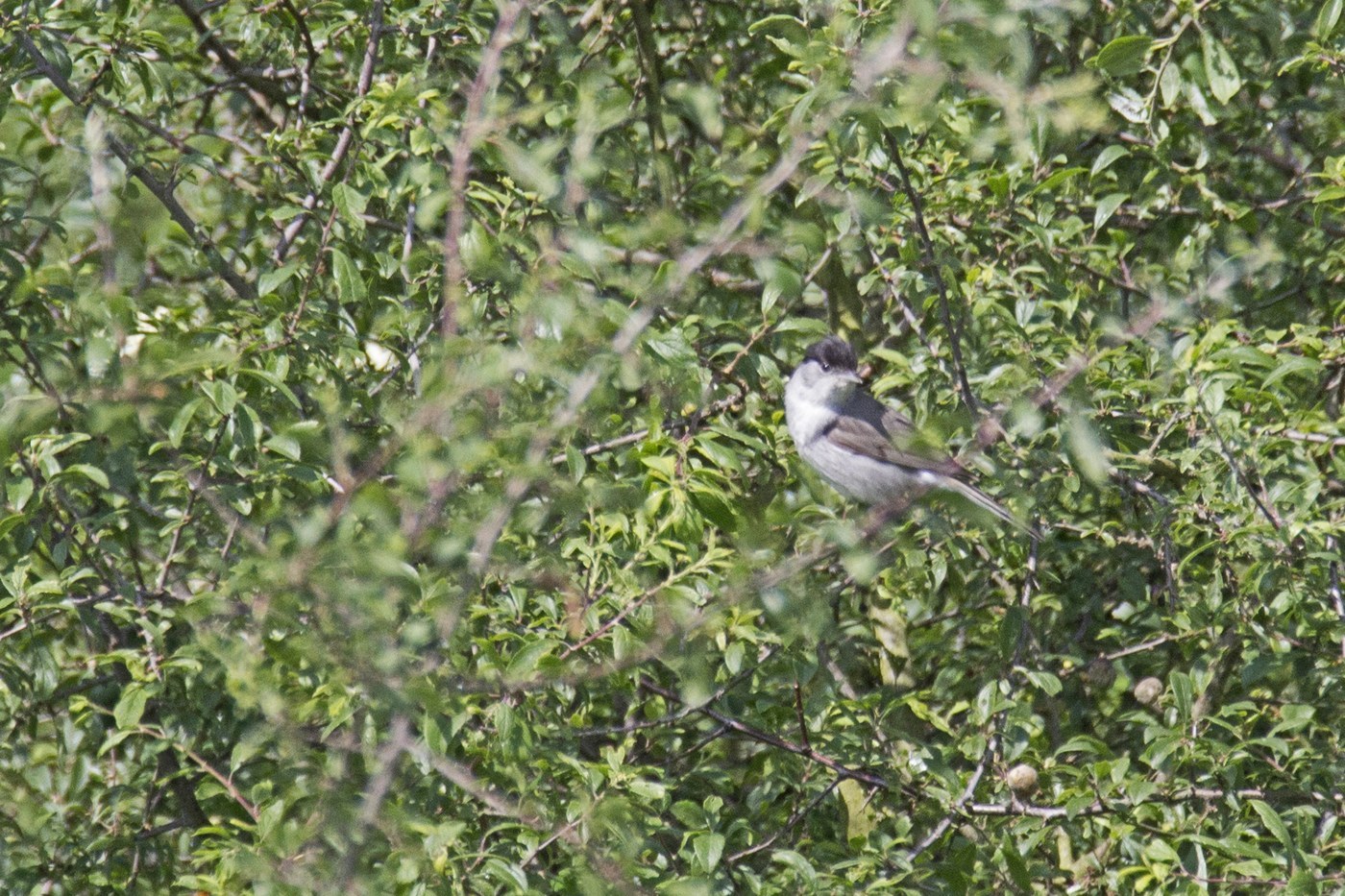
Overview
The Eurasian Blackcap (Sylvia atricapilla) is a common warbler breeding across much of Europe and western Asia, wintering mainly in the Mediterranean region and sub-Saharan Africa, with a growing number of birds now wintering in the milder parts of northwestern Europe, including at garden feeders in Britain. Its song is so admired that it has earned the nickname "northern nightingale" in parts of its range.
Key Field Marks
- Size and shape: A medium-sized warbler, about 13-15 cm (5-6 in) long, with a fairly plain, unstreaked, rounded body and a relatively short, fine bill typical of Sylvia warblers.
- Plumage: Overall plain gray-brown to olive-gray above and paler gray below, with no wing bars, tail spots, or obvious streaking — the cap color is the key mark.
- Male cap: Glossy, neat black cap extending from the forehead to just below the eye, sharply defined against the gray face and nape.
- Female (and juvenile) cap: Warm reddish-brown to rufous-chestnut cap in the same position — a reliable and easy way to sex birds in the field, unusual among warblers for being this straightforward.
- Legs and bill: Dark gray legs and a fine, dark, pointed bill.
Separating Eurasian Blackcap from Similar Species
Garden Warbler, a close relative, shares the plain unmarked body but entirely lacks any cap pattern, appearing uniformly plain-faced — a useful negative field mark when a bird shows no cap at all. Marsh Tit and Coal Tit both show black caps but are chunkier, shorter-tailed tits with wing bars or pale cheek patches and very different behavior (acrobatic, often upside-down foraging) compared to the more warbler-like, less acrobatic movements of Blackcap. Within the Sylvia warblers, the combination of plain body plus a solid black (male) or rufous (female) cap confined to the crown, without any other facial markings, is diagnostic for Blackcap.
Where and When to See One
Eurasian Blackcaps breed in deciduous and mixed woodland with a dense shrub layer, scrub, parks, and large gardens with good cover, across most of Europe and parts of western Asia. The majority of the breeding population is migratory, wintering in the Mediterranean basin and sub-Saharan Africa, with spring arrival typically in April and departure in September-October in northern parts of the range; however, an increasing number of Blackcaps (largely originating from central European populations) now overwinter in the British Isles and other parts of northwest Europe, regularly visiting garden feeders for suet and fruit in winter — a notable and well-studied case of a shifting migratory strategy.
Behavior
Blackcaps forage actively but not particularly acrobatically through foliage and shrubbery for insects and spiders during the breeding season, switching to a diet rich in berries and soft fruit in autumn and winter, which helps sustain the wintering birds now remaining in northern Europe. Males are strongly territorial and vocal in the breeding season, singing from cover within dense shrubs or low trees.
Voice
The song is a rich, varied, fluty warble that typically starts with a subdued, scratchy warbling passage and builds into a loud, clear, musical crescendo of fluty notes — often compared favorably to the nightingale's song in quality, if shorter. The call is a hard, sharp "tack" or "tchack," often repeated, used as a contact or alarm note.
Quick Reference
- Plain gray-brown warbler, no wing bars or streaking
- Males: glossy black cap; Females/juveniles: reddish-brown cap
- Breeds in woodland/scrub across Europe; most migratory but increasingly wintering in NW Europe gardens
- Rich, fluty, musical song, often compared to the nightingale
Frequently asked questions
How do you tell a male from a female Eurasian Blackcap?
Cap color is the reliable clue: males have a glossy black cap, while females and juveniles have a warm reddish-brown or rufous cap in the same position on the crown.
How is Blackcap different from Garden Warbler?
Garden Warbler is very similarly plain and unmarked in body plumage but lacks any cap pattern altogether, appearing completely plain-faced, whereas Blackcap always shows a solid black or rufous cap.
Why are Blackcaps increasingly seen at British bird feeders in winter?
A growing number of Blackcaps, largely from central European breeding populations, have shifted to wintering in the milder British Isles rather than migrating to the Mediterranean or Africa, taking advantage of garden food sources such as suet and fruit.
What does a Eurasian Blackcap's song sound like?
It is a rich, fluty, musical warble that often begins with quieter, scratchy notes before building into a loud, clear, melodious phrase, sometimes likened to a shortened version of the nightingale's song.