
Emu Identification Guide
Australia's giant flightless bird, the second-tallest living bird in the world, told by its shaggy gray-brown plumage, long neck, and powerful legs.
Read the full Emu encyclopedia entry →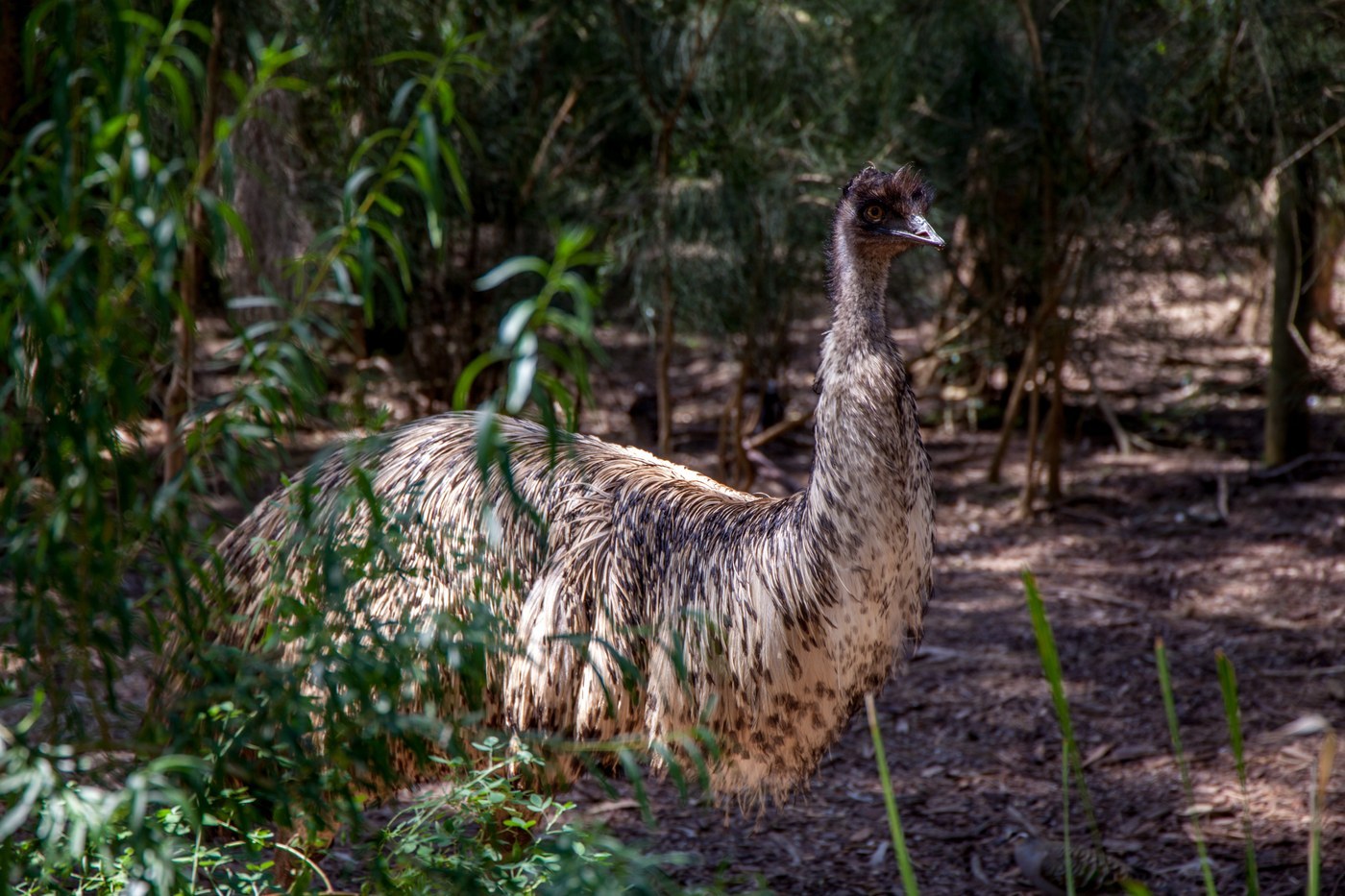
Overview
The Emu (Dromaius novaehollandiae) is a large, flightless, ratite bird endemic to Australia, where it is the country's largest native bird and an iconic symbol appearing on the national coat of arms. It is the second-tallest living bird after the Ostrich and is widespread across mainland Australia in a variety of open habitats.
Key Field Marks
- Size and shape: Very large and tall, standing 1.5-1.9 m (5-6.25 ft), with a long neck, small head, and long, powerful bare legs built for fast running rather than flight.
- Plumage: Shaggy, loose, double-shafted feathers give the body a soft, almost fur-like or grass-like texture, ranging from grayish-brown to dark brown, providing effective camouflage in dry, open country.
- Head and neck: Small head with a bluish-gray bare patch of skin on the neck and face, visible especially in breeding season; neck feathering is sparser than body feathering.
- Wings: Vestigial and essentially invisible, tucked against the body; Emus cannot fly and instead rely on their long, muscular legs for locomotion, capable of running up to 50 km/h (31 mph).
- Feet: Three forward-pointing toes, unlike the two-toed foot of the Ostrich.
Separating Emu from Similar Species
Within Australia, the Emu is essentially unmistakable due to its enormous size and shaggy brown plumage — no other native bird approaches it in size. Southern Cassowary, found in tropical northeastern Queensland rainforest, is superficially similar in being a large flightless ratite but has glossy black plumage, a prominent bony helmet-like casque on the head, and bright blue and red skin on the head and neck, plus a very different rainforest habitat compared to the Emu's open country preference.
Where and When to See One
Emus are found across most of mainland Australia in a wide range of habitats including savanna woodland, open forest, scrubland, and grassland, generally avoiding dense rainforest, heavily urbanized areas, and true desert. They are non-migratory but nomadic, moving considerable distances in search of food and water, particularly in dry inland regions, and can be seen year-round, though breeding activity peaks in the Australian winter (roughly May-June).
Behavior
Emus are omnivorous, foraging on the ground for seeds, fruits, growing shoots, insects, and other small animals, and can travel long distances in search of food and water. Breeding roles are reversed from most birds: after the female lays a clutch of large, dark green eggs, the male alone incubates them for about 8 weeks and then raises the chicks, during which time he eats and drinks very little. Emus are usually seen singly, in pairs, or in loose family groups, though larger aggregations can form where food is abundant.
Voice
Emus produce a range of low, resonant, drumming or booming sounds and grunts produced by an inflatable neck sac, most often from females, along with softer grunting notes; the deep booming call can carry a considerable distance across open country.
Quick Reference
- Huge flightless ratite, 1.5-1.9 m tall, shaggy grayish-brown plumage
- Small head, long neck with bare bluish-gray skin, powerful running legs
- Found across mainland Australia in open woodland, scrub, and grassland
- Male alone incubates eggs and raises chicks; distinctive deep booming call from females
Frequently asked questions
How does an Emu differ from a Cassowary?
Emus have shaggy grayish-brown plumage, no head casque, and prefer open country, while Cassowaries have glossy black plumage, a prominent horny casque on the head, brightly colored bare skin, and live in tropical rainforest of northeastern Australia and New Guinea.
Can Emus fly?
No, Emus are flightless; their wings are vestigial and hidden within the body plumage, and they rely entirely on their long, powerful legs, which allow them to run at speeds up to about 50 km/h.
Which parent incubates Emu eggs?
The male incubates the eggs alone for roughly eight weeks and continues to care for the chicks afterward, a reversal of typical avian parental roles.
Where in Australia are Emus most commonly found?
They occur across most of the mainland in open woodland, savanna, and grassland habitats, generally avoiding dense rainforest, heavily built-up urban areas, and the driest desert interior.