
Emperor Penguin Identification Guide
The largest and tallest of all penguins, an Antarctic specialist recognized by its great size, yellow-orange ear patches, and famous ability to breed through the polar winter.
Read the full Emperor Penguin encyclopedia entry →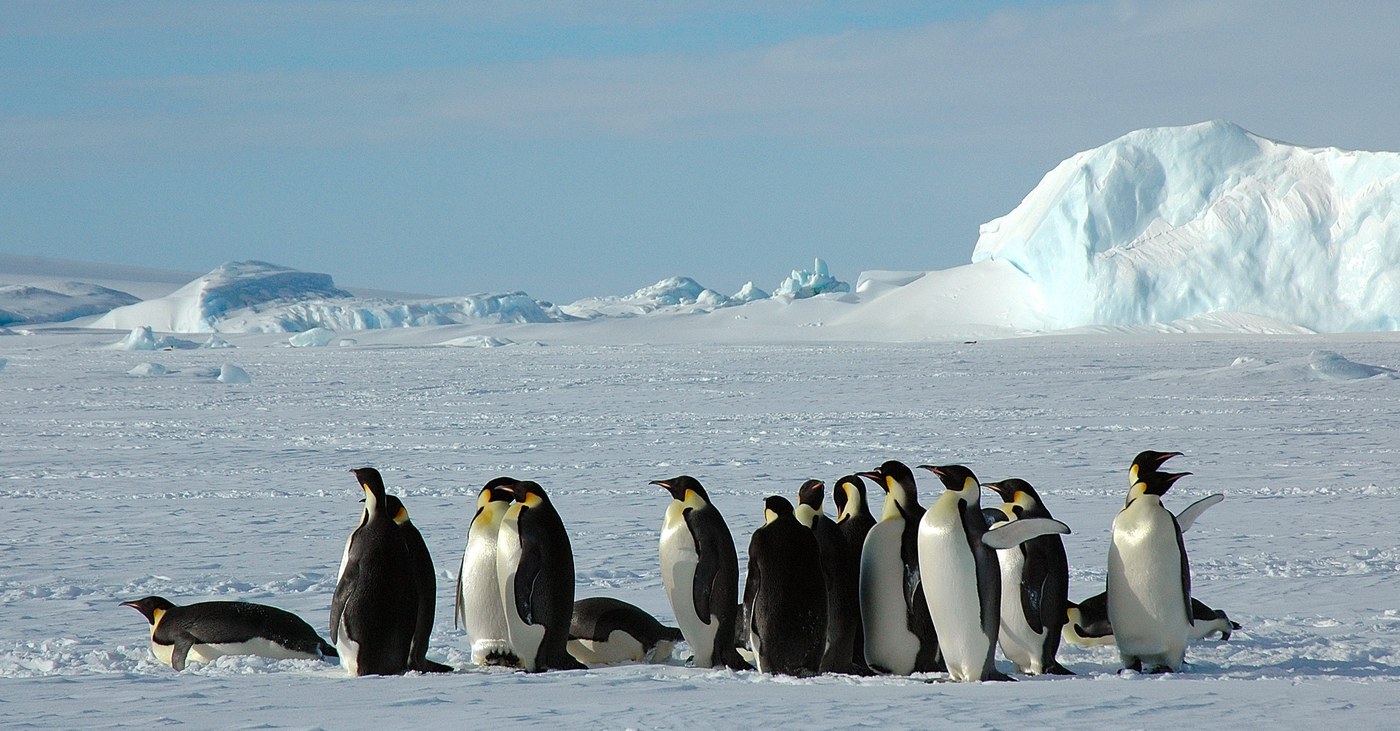
Overview
The Emperor Penguin (Aptenodytes forsteri) is the largest living penguin species and one of the most extreme breeders on Earth, nesting on sea ice around the Antarctic continent during the depths of the austral winter. Its size, striking head pattern, and unique breeding biology make it unmistakable among the world's 18 penguin species.
Key Field Marks
- Size: The tallest and heaviest penguin species, standing up to about 115 cm (45 in) and weighing 22-45 kg, dwarfing all other penguins including the closely related King Penguin.
- Head pattern: Black head and throat with bold, bright yellow-orange patches on the sides of the neck/ear region fading to pale yellow on the upper breast — the color transition is more gradual and the patches larger than in King Penguin.
- Bill: Long, slightly decurved bill with a pink, orange, or lilac stripe along the lower mandible.
- Body: Blue-gray to black back and flippers, white belly, with the black-and-white boundary running in a relatively smooth line.
- Chicks: Covered in soft silver-gray down with a distinctive black-and-white face pattern (white face mask, black cap), quite different from adult plumage and unmistakable when seen in a colony.
Separating Emperor Penguin from Similar Species
The only species regularly confused with Emperor Penguin is the King Penguin, which is significantly smaller, has brighter orange (rather than yellow-orange) ear patches with a sharper, more contrasting boundary against the black head, and breeds on subantarctic islands rather than Antarctic sea ice. Range and habitat are strong clues on their own: Emperor Penguins breed exclusively on Antarctic pack ice, while King Penguins breed on ice-free subantarctic islands like South Georgia and the Falklands.
Where and When to See One
Emperor Penguins breed at around 50-60 known colonies on stable, land-fast sea ice around the Antarctic continent, arriving at colonies in March-April (austral autumn) and incubating eggs through the Antarctic winter (May-August) in extreme cold and darkness, with chicks fledging around December-January (austral summer) as the ice breaks up. Outside the breeding season they range widely at sea and around pack ice, foraging far from colonies. Most sightings by visitors occur via specialized Antarctic expedition cruises or research stations, typically in the austral summer months (November-February) when colonies still hold chicks or when birds are encountered on ice floes and open water.
Behavior
Emperor Penguins are famous for their winter breeding strategy: males alone incubate a single egg balanced on their feet under a brood pouch for around two months through the harshest part of the Antarctic winter, huddling together in dense groups that rotate positions to share warmth and conserve energy, while females return to sea to feed. They are accomplished divers, capable of diving deeper and longer than any other bird, regularly reaching 400-500 m and staying submerged over 20 minutes while hunting fish, squid, and krill under the sea ice.
Voice
Calls include loud, trumpeting, and braying vocalizations used for individual recognition between mates and between parents and chicks amid the noise of a large, crowded colony; each bird's call is thought to be individually distinctive, critical for reuniting pairs and family members.
Quick Reference
- Largest penguin species, up to 115 cm tall
- Black head/throat, yellow-orange ear patches fading onto the breast
- Breeds exclusively on Antarctic sea ice through the polar winter
- Deepest and longest diver of all birds; males incubate the egg alone
Frequently asked questions
How can you tell an Emperor Penguin from a King Penguin?
Emperor Penguins are considerably larger, have more muted yellow-orange (rather than bright orange) ear patches that blend gradually into the breast, and breed on Antarctic sea ice, while King Penguins are smaller, more sharply and brightly marked, and breed on subantarctic islands.
Why do Emperor Penguins breed in the Antarctic winter?
Timing the roughly seven-to-eight month breeding cycle so that chicks fledge in the relatively food-rich austral summer means incubation and early chick-rearing must occur during the harsh winter, a strategy unique among penguins.
How deep can Emperor Penguins dive?
They are the deepest-diving birds known, regularly reaching depths of 400-500 meters and occasionally deeper, with dives lasting up to 20 minutes or more while hunting under the sea ice.
Where can you see wild Emperor Penguins?
They breed only around the Antarctic continent on stable sea ice; most people see them via specialized Antarctic cruises, overflights, or research expeditions, typically in the austral summer.