
Elf Owl Identification Guide
The world's smallest owl, a sparrow-sized desert species that nests in old woodpecker holes in saguaro cacti and is far more often heard than seen.
Read the full Elf Owl encyclopedia entry →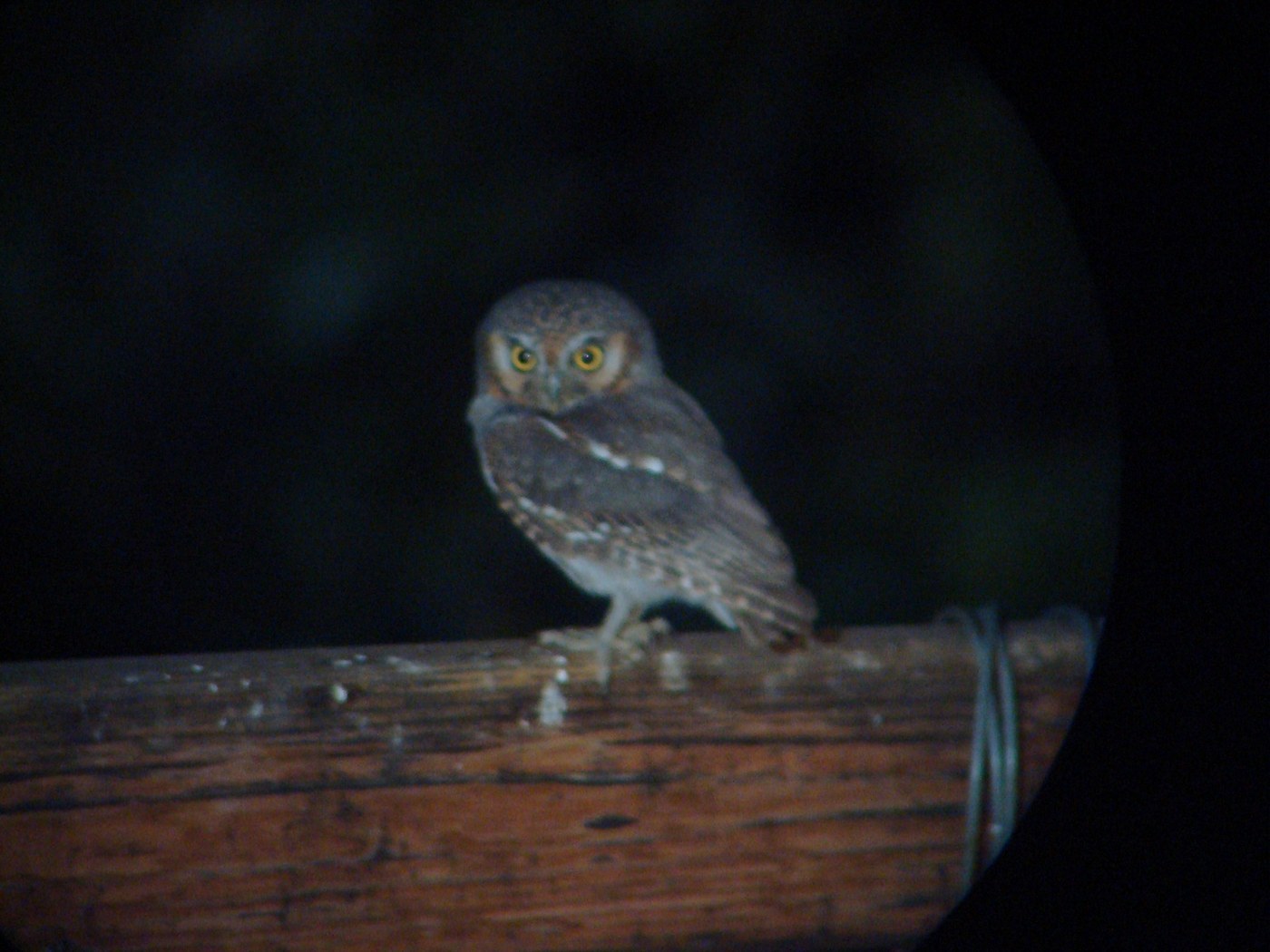
Overview
The Elf Owl (Micrathene whitneyi) is the smallest owl in the world, roughly the size and weight of a sparrow. It breeds in arid and semi-arid habitats of the southwestern United States and Mexico, most famously nesting in old woodpecker cavities within saguaro cacti in the Sonoran Desert.
Key Field Marks
- Size: Tiny — about 12-14 cm (5-5.5 in) long, weighing only around 40 g, noticeably smaller than any other North American owl and easily mistaken at a glance for a large moth or bat in flight.
- Shape: Compact, essentially tailless-looking with a rounded head that lacks obvious ear tufts.
- Plumage: Grayish-brown overall with fine pale spotting and streaking, a pale facial disc, and pale eyebrows that give a somewhat surprised expression.
- Eyes: Yellow, relatively large for the tiny head, but proportionally smaller than in many other small owls.
- Behavior in view: Often bobs and pumps its body and tail when alert, and can appear almost bird-like/wren-like in its movements compared to other owls.
Separating Elf Owl from Similar Species
The tiny size alone eliminates most other owls, but the similarly small Northern Pygmy-Owl and Ferruginous Pygmy-Owl are both larger, longer-tailed, and lack the earless, round-headed, near-tailless look of Elf Owl; pygmy-owls are also active by day, whereas Elf Owl is strictly nocturnal. Western Screech-Owl is much larger with obvious ear tufts. Voice is often the most practical means of identification since Elf Owls are rarely seen well in the dark.
Where and When to See One
Elf Owls breed in desert scrub, saguaro cactus stands, riparian woodland, and oak-sycamore canyons of the southwestern US (Arizona, New Mexico, west Texas) and much of Mexico, typically at low to middle elevations. They are summer breeders in the US, arriving in spring (March-April) and departing by early fall to winter in Mexico; most US birds are essentially absent in winter. They nest almost exclusively in pre-existing cavities, especially old Gila Woodpecker or Northern Flicker holes in saguaros, as well as in sycamores, oaks, and utility poles.
Behavior
Strictly nocturnal, Elf Owls emerge at dusk to hunt mostly large insects — moths, beetles, crickets, and scorpions (which they de-sting before eating) — captured in flight or picked from vegetation and the ground. They roost by day hidden in dense foliage or cavities and are almost never seen during daylight hours.
Voice
The primary song is a rapid, high-pitched, chattering series of yipping notes, often rendered as a puppy-like "chatter" or "chew-chew-chew," quite different from the mellow hoots of larger owls; listening at dusk near saguaro stands or desert washes in the breeding season is the most reliable way to detect this species.
Quick Reference
- World's smallest owl, sparrow-sized, essentially tailless appearance
- Grayish-brown with pale spotting, yellow eyes, no ear tufts
- Nests in old woodpecker holes, especially in saguaro cacti
- Strictly nocturnal; best located by its yipping, chattering call at dusk
Frequently asked questions
How small is an Elf Owl compared to other owls?
It is the smallest owl species in the world, about the size of a sparrow at roughly 12-14 cm long and weighing about 40 grams, dwarfed by every other North American owl.
Where do Elf Owls nest?
They nest in pre-existing cavities, most famously old woodpecker holes drilled into saguaro cacti in the Sonoran Desert, as well as cavities in sycamores, oaks, and utility poles elsewhere in their range.
Are Elf Owls active during the day?
No, they are strictly nocturnal, hiding in dense cover or cavities by day and emerging at dusk to hunt insects, unlike day-active pygmy-owls.
What does an Elf Owl sound like?
Its song is a rapid, high-pitched, yipping chatter reminiscent of a small puppy, quite unlike the hooting calls of larger owl species, and is the best way to detect one after dark.