
Eastern Whip-poor-will Identification Guide
A cryptically mottled, nocturnal nightjar of eastern woodlands, virtually invisible by day and identified almost entirely by its emphatic, endlessly repeated whistled call after dark.
Read the full Eastern Whip-poor-will encyclopedia entry →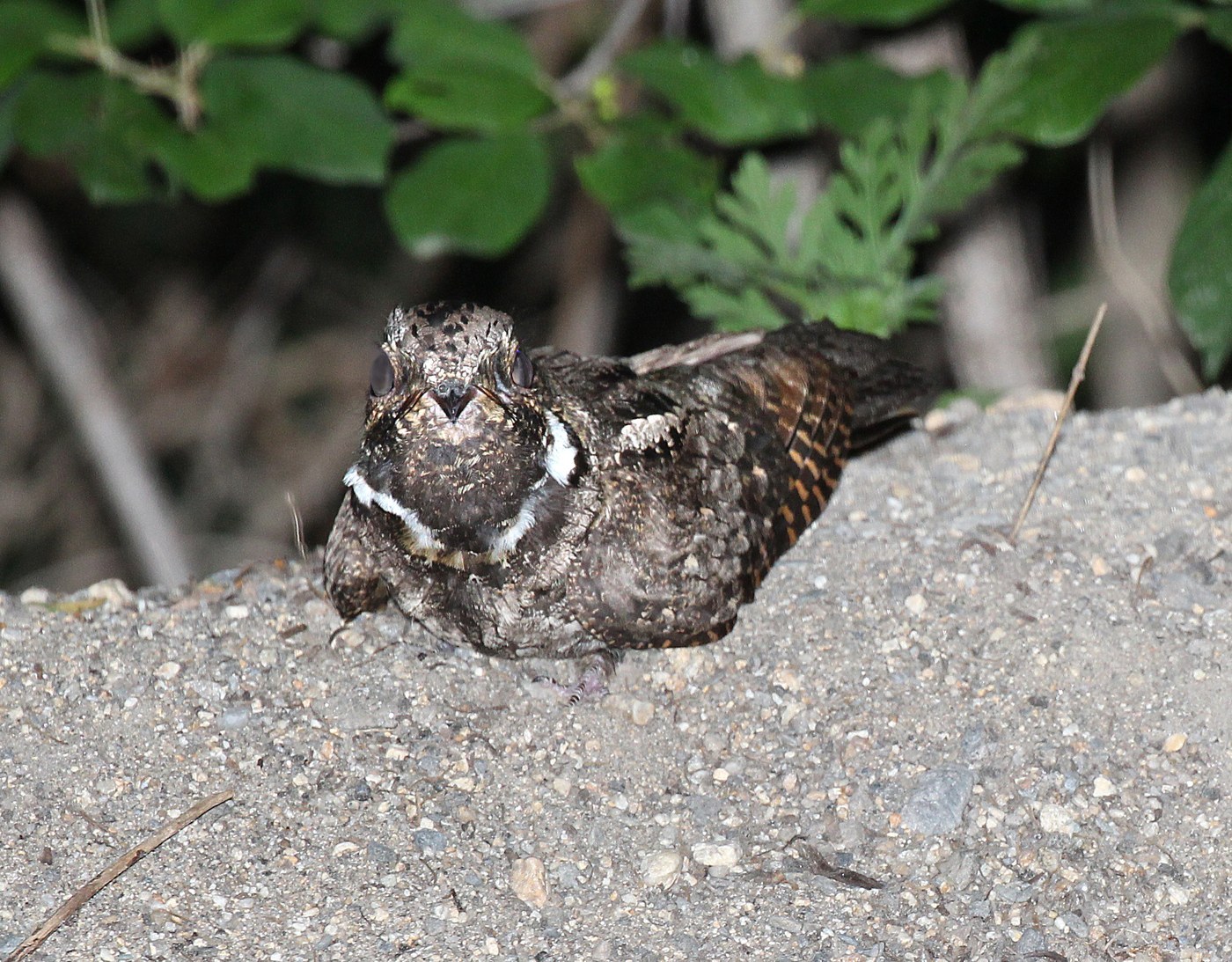
Key Field Marks
- Size & shape: A medium-sized nightjar (9-10 in / 23-25 cm) with a large, flat head, huge dark eyes, a tiny bill concealing an enormous gape, short legs, and long, rounded wings; body appears mottled and bark-like.
- Plumage: Intricately patterned mottled gray, brown, and black (in "gray" birds) or warmer rufous-brown tones (in "rufous" birds, more frequent in the southern Appalachians), providing exceptional camouflage against leaf litter and bark when roosting motionless on the ground or a horizontal branch by day.
- Tail: Males show extensive white in the outer tail feathers, conspicuous in flight and display; females show buffy tan tail corners instead of white.
- Behavior: Almost entirely nocturnal/crepuscular; spends the day roosting silently and cryptically on the forest floor or low perch, becoming active at dusk to hawk moths and other flying insects low over woodland clearings and edges.
Separating from Similar Species
- Chuck-will's-widow: Larger and more rufous-toned overall, with a deeper, throatier "chuck-will's-WID-ow" song (vs. the crisper "whip-poor-WILL"); ranges overlap broadly in the Southeast.
- Common Nighthawk: Has long, pointed wings with a bold white wing bar, is more often seen in flight at dusk over open areas and cities (not woodland floor-dwelling), and gives a nasal "peent" call rather than a whistled song.
- Mexican Whip-poor-will (western counterpart, now a separate species): Very similar in appearance; ranges are essentially separated (Eastern in the East, Mexican Whip-poor-will in the Southwest/Mexican highlands), and songs differ subtly in cadence and quality.
Habitat & Range
Breeds in dry, open deciduous and mixed woodlands, especially in areas with a sparse understory allowing easy ground movement, across the eastern United States and southern Canada, generally avoiding dense, unbroken forest interiors and heavily developed areas. Winters from the Gulf Coast states south through Mexico and Central America. Has declined significantly across much of its range, likely linked to forest maturation/loss of open woodland structure, moth/insect declines, and possibly pesticide impacts on prey.
Seasonal Notes
Highly vocal on warm spring and early summer nights, particularly around dusk, dawn, and moonlit nights, when males may repeat their song hundreds or even over a thousand times without pause. Largely silent and extremely difficult to detect outside the breeding season; migrates at night.
Voice
An emphatic, rhythmic, endlessly repeated whistled "whip-poor-WILL, whip-poor-WILL, whip-poor-WILL," often continuing for extended, tireless bouts after dark — the source of both its common name and its onomatopoeic identification.
Frequently asked questions
How do most people identify an Eastern Whip-poor-will?
Almost always by ear — its unmistakable, tirelessly repeated whistled song, 'whip-poor-WILL,' given after dusk and before dawn, since the bird itself is extremely hard to see thanks to its cryptic camouflage.
How can you tell Eastern Whip-poor-will from Chuck-will's-widow?
Song is the clearest difference: Eastern Whip-poor-will gives a crisp 'whip-poor-WILL,' while Chuck-will's-widow gives a slower, deeper, four-syllable 'chuck-will's-WID-ow.' Chuck-will's-widow is also noticeably larger and more rufous.
Why is it so hard to see an Eastern Whip-poor-will during the day?
It roosts motionless on the leaf-littered forest floor or a horizontal branch, and its intricately mottled gray-brown-black plumage blends almost perfectly with bark and dead leaves, making it nearly invisible unless flushed.
Why does the Eastern Whip-poor-will call so much on moonlit nights?
Its nocturnal insect-hunting and singing activity is closely tied to moonlight, since brighter nights make it easier to spot and catch flying insects and to be heard/seen by potential mates.