
Eastern Phoebe Identification Guide
A plain, dusky-gray-and-white flycatcher with no wingbars or eye-ring to speak of, best recognized by its habit of persistently pumping its tail while perched.
Read the full Eastern Phoebe encyclopedia entry →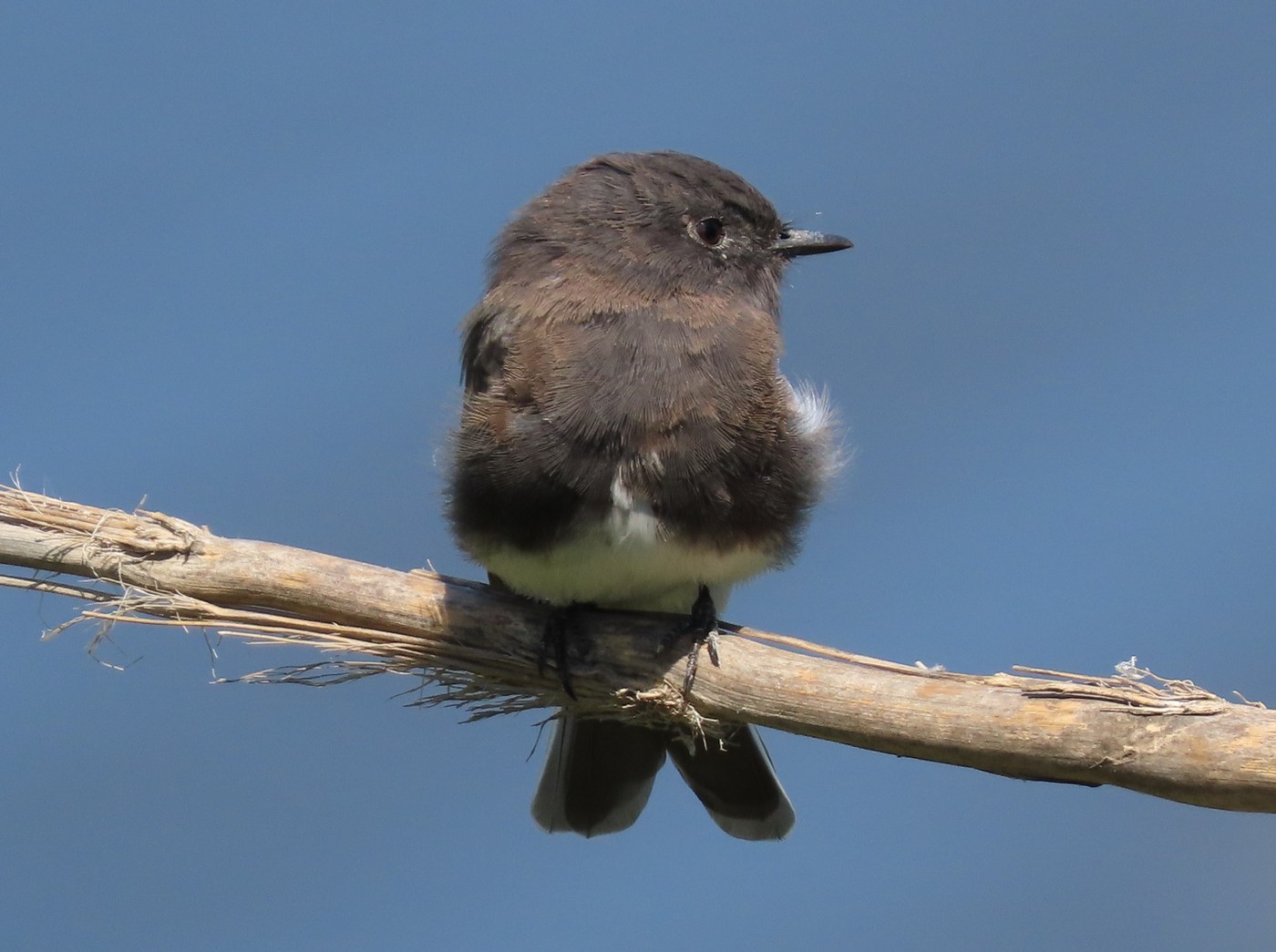
Key Field Marks
- Size & shape: A small flycatcher (6.5-7 in / 16-18 cm) with a fairly large head, thin black bill, and medium-length tail; sits upright on low, exposed perches.
- Plumage: Dusky olive-gray to blackish-gray above, including a darker cap, with dingy whitish underparts sometimes washed pale yellow on the belly in fresh fall plumage. Notably plain-faced — lacks a bold eye-ring and shows only faint, indistinct wingbars (unlike most other small flycatchers).
- Signature behavior: Persistently dips and pumps its tail downward while perched, a habit shared by few other flycatchers and one of the best field marks for the species.
- Bill: All-dark (no pale lower mandible), a helpful mark versus many Empidonax flycatchers.
Separating from Similar Species
- Empidonax flycatchers (Least, Willow, etc.): Phoebes lack a conspicuous white eye-ring and bold wingbars, have an all-dark bill, and pump their tails — Empids typically have a pale lower mandible, more prominent wingbars/eye-ring, and don't habitually pump their tails the same way.
- Eastern Wood-Pewee: Has crisper white wingbars, a paler lower mandible, and a more upright, longer-winged look; doesn't pump its tail.
- Black Phoebe (range does not overlap much): All-black above and white below with a sharp contrast, found in the West.
Habitat & Range
Breeds across eastern and central North America from the Canadian Maritimes and Great Plains south to the Gulf Coast and Texas, strongly tied to water — streams, ponds, and bridges — and to human structures, where it commonly builds its mud-and-moss nest under eaves, bridges, culverts, and porch overhangs. One of the very earliest spring migrants to return to northern breeding areas and one of the last flycatchers to depart in fall; a few individuals overwinter as far north as the mid-Atlantic in mild years, while most winter in the southeastern and south-central U.S. and Mexico.
Seasonal Notes
Returns north remarkably early (often March) compared to other flycatchers, which mostly arrive weeks later, because it can subsist on some fruit and cold-tolerant insects. Often reuses the same nest site under a bridge or eave year after year.
Voice
A rough, two-parted, whistled "fee-bee" (rising then falling, sometimes rendered "FEE-b-bee") that gives the bird its name; also a sharp "chip" call note.
Frequently asked questions
What is the single best way to identify an Eastern Phoebe?
Watch its tail — Eastern Phoebes persistently pump and dip their tail while perched, a habit that instantly separates them from similar small flycatchers like Empidonax species.
Does Eastern Phoebe have wingbars?
Only very faint, indistinct wingbars — much less obvious than the crisp white wingbars of pewees and most Empidonax flycatchers, which helps confirm its plain-faced identity.
Where do Eastern Phoebes build their nests?
Typically a cup of mud and moss placed on a ledge, under a bridge, culvert, or building eave, often very close to water, and frequently reused in following years.
How early do Eastern Phoebes arrive in spring?
They are among the earliest returning flycatchers, often showing up in northern breeding areas by March, well before insect-dependent flycatchers that must wait for warmer weather.