
Dunnock Identification Guide
A quiet, sparrow-sized European hedgerow bird with a slender insect-eating bill and gray head and breast, easily overlooked as it shuffles unobtrusively through low cover.
Read the full Dunnock encyclopedia entry →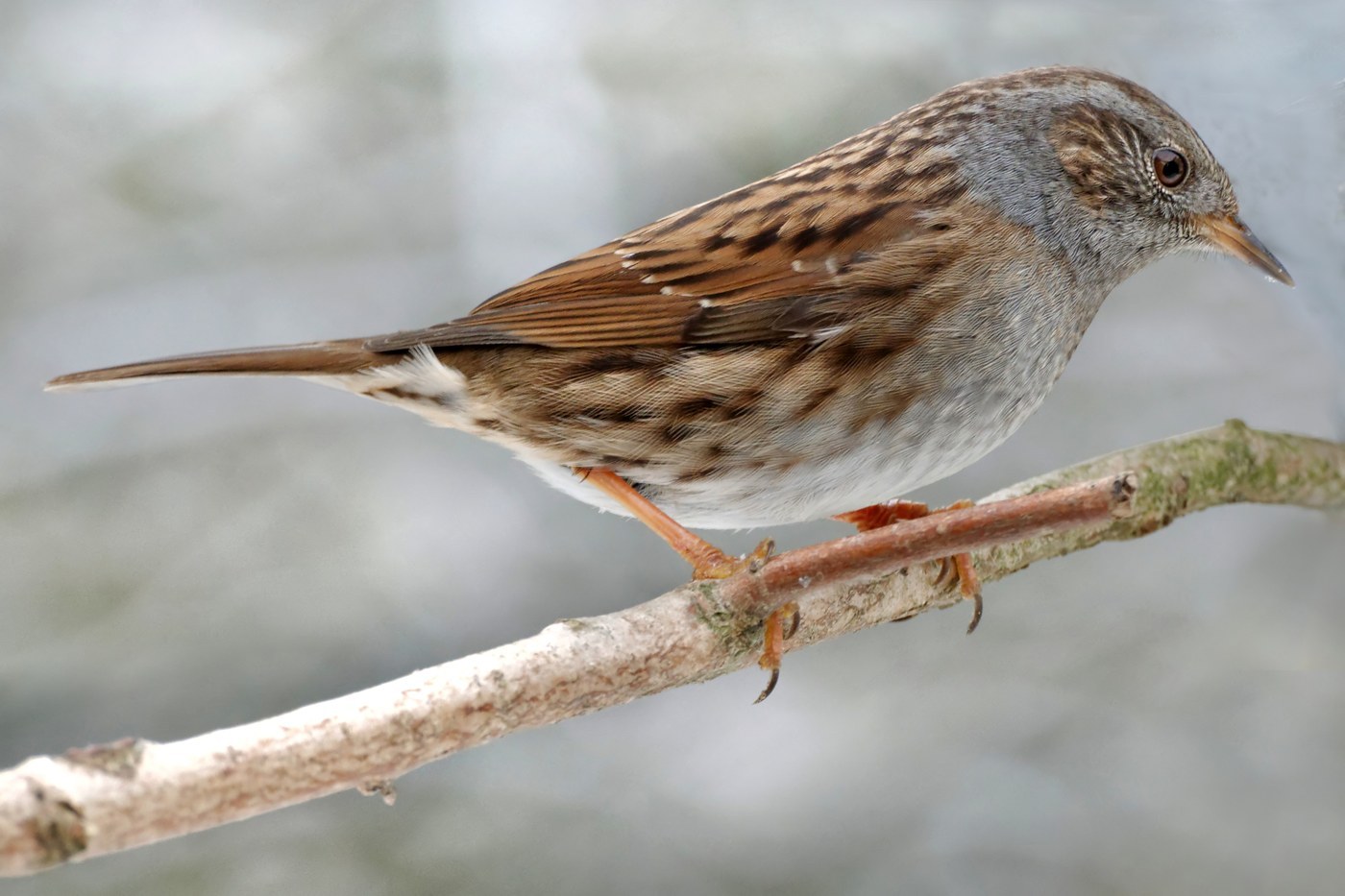
Key Field Marks
- Size & shape: Sparrow-sized but slimmer, with a notably thin, pointed bill unlike the thick, conical, seed-cracking bill of true sparrows — a reflection of its largely insectivorous diet.
- Plumage: Streaky brown back, gray head, face, and breast, streaked brown flanks, and a reddish-brown eye that can be seen at close range.
- Legs: Pinkish-brown legs and feet.
- Behavior: Shy and skulking, typically shuffling and creeping along the ground or low in hedges and shrubbery rather than perching in the open; often flicks its wings nervously while foraging, and moves with a distinctive crouched, mouse-like gait.
Separating It From Similar Species
- House Sparrow: Has a much thicker, conical bill for cracking seeds, a browner and more patterned head (especially in males, with a gray crown and chestnut nape), and is far more social, usually seen in noisy flocks rather than singly or in pairs.
- Other accentors (rare elsewhere): Similar overall shape but different range; the Dunnock is the only accentor widespread across the UK and much of Europe.
Habitat, Range & Season
A common resident (with some short-distance migration in the northern part of its range) across the United Kingdom and much of continental Europe, found in hedgerows, gardens, woodland edges, scrubby thickets, and parks. It typically remains near dense low cover and rarely ventures far into open ground, unlike more conspicuous garden birds.
Voice
The song is a high-pitched, thin, hurried warbling or jingling series of notes, often delivered from a low perch within cover. The call is a sharp, penetrating "tseep" or "tsee," frequently the first clue to its presence since the bird itself can be easy to overlook.
Frequently asked questions
How do I tell a Dunnock from a House Sparrow?
The Dunnock has a thin, pointed, insect-eating bill and a grayer head and breast, while the House Sparrow has a thick, conical, seed-cracking bill and is typically seen in noisy social flocks rather than singly.
Why is the Dunnock easy to overlook?
It is a shy, skulking bird that shuffles along the ground or low in hedges rather than perching in the open, so it is often detected first by its thin, sharp call note.
What does a Dunnock eat, and how does that affect its bill shape?
It feeds mainly on small insects, spiders, and some seeds, which is why it has a slender, pointed bill rather than the thick, conical bill of seed-specialist finches and sparrows.
Is the Dunnock found in North America?
No, it is a Eurasian species resident across the UK and much of Europe and would only be an extreme rarity elsewhere.