
Dunlin Identification Guide
A common medium-sized sandpiper with a distinctive slightly drooped bill tip, rufous-backed and black-bellied in breeding plumage, forming dense flocks on coastal mudflats in winter.
Read the full Dunlin encyclopedia entry →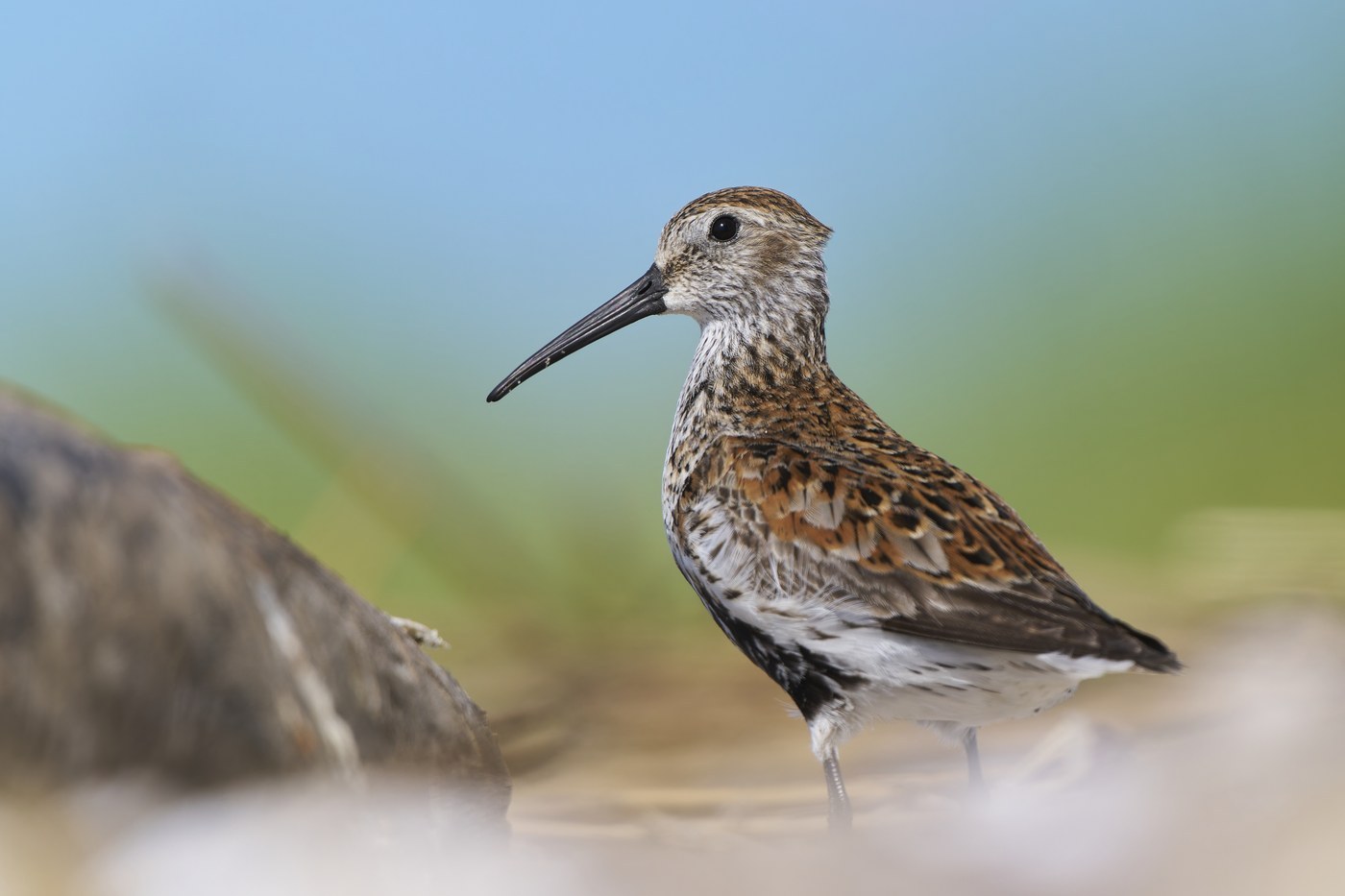
Key Field Marks
- Size & shape: A medium-small sandpiper, about 8-8.5 in (21 cm), with a moderately long bill that droops noticeably at the tip — the single most useful field mark across all plumages.
- Breeding plumage: Bright rufous-red cap and back with dark streaking, and a bold black patch covering the belly — a pattern unique among similarly sized "peep" sandpipers.
- Nonbreeding plumage: Plain gray-brown above and white below with a soft grayish wash across the breast; the drooped bill remains the key identifier when the distinctive breeding pattern is absent.
- Juvenile: Upperparts fringed with rufous, with dark streaks and spots along the flanks, molting toward the plainer nonbreeding look through fall.
Separating It From Similar Species
- Curlew Sandpiper: Bill is longer and more evenly decurved along its whole length (versus Dunlin's mostly straight bill that droops only near the tip), legs are longer, and it shows a clean white rump in flight versus the Dunlin's dark-centered rump.
- Western Sandpiper / Least Sandpiper: Both are noticeably smaller "peeps" with straighter, shorter bills and lack the strong bill droop of Dunlin.
- Overall rule: Dunlin is larger than the true peeps, with a longer, heavier, tip-drooped bill as the most consistent mark in every plumage.
Habitat, Range & Season
Dunlin breed on Arctic tundra in Alaska and northern Canada, then migrate to spend the winter in enormous flocks on coastal mudflats, tidal estuaries, and sandy beaches along both US coasts, as well as smaller numbers along major interior wetlands during migration. Peak winter and migration counts occur from late fall through early spring along the Atlantic, Gulf, and Pacific coasts.
Voice
A distinctive reedy, buzzy flight call, often transcribed as a rough "treeep" or "kreep," frequently given by flocks wheeling in tight, synchronized formation over mudflats, flashing alternately dark and light as they turn.
Frequently asked questions
What is the single best field mark for identifying a Dunlin?
The bill, which is fairly long and droops noticeably at the tip — a shape not shared by most similarly sized sandpipers.
How does a Dunlin differ from a Curlew Sandpiper?
The Curlew Sandpiper has a longer, more evenly curved bill along its entire length, longer legs, and a clean white rump in flight, whereas the Dunlin's bill droops mainly near the tip and its rump is dark-centered.
When do Dunlin show their black belly patch?
Only in breeding plumage, typically seen on birds heading to or returning briefly through temperate areas in spring, or on the Arctic breeding grounds in summer; winter birds are plain gray-brown above and white below.
Where and when is the best time to see large Dunlin flocks?
Coastal mudflats and tidal estuaries along the Atlantic, Gulf, and Pacific coasts of the US hold the largest flocks from late fall through winter into early spring.