
Dalmatian Pelican Identification Guide
The world's largest pelican and one of the heaviest flying birds, distinguished from the Great White Pelican by its curly nape feathers, grayish-white plumage, and orange-red pouch.
Read the full Dalmatian Pelican encyclopedia entry →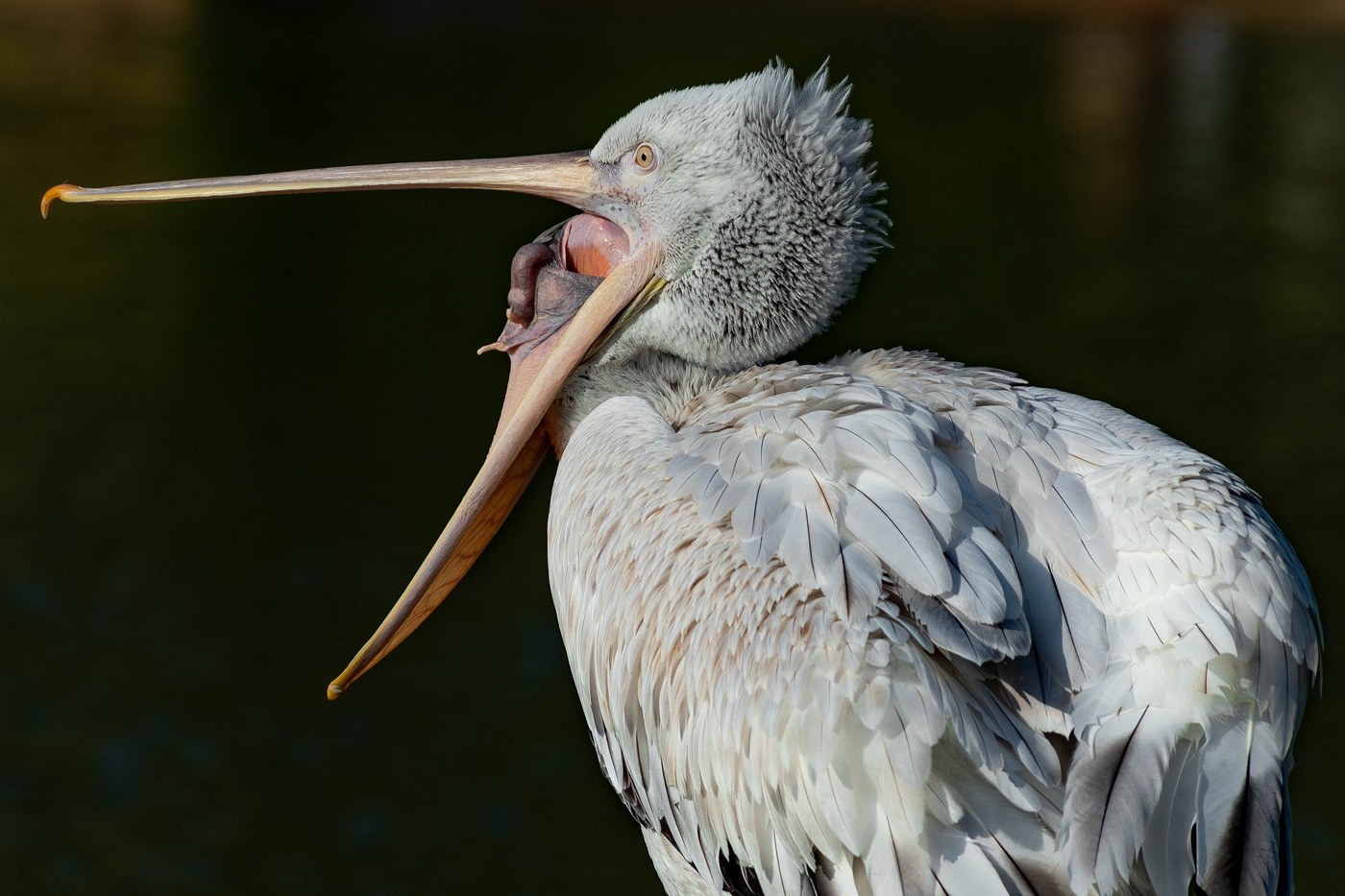
Overview
The Dalmatian Pelican (Pelecanus crispus) is a massive waterbird of Eurasian lakes and wetlands, and the largest of the world's pelican species. It can be confused with the Great White Pelican where ranges overlap, but several reliable field marks separate them.
Key Field Marks
- Size: Enormous, up to 160–183 cm (63–72 in) long with a wingspan that can exceed 3 m (10 ft) — among the largest flying birds in the world, slightly bulkier than the Great White Pelican on average.
- Plumage: Grayish-white overall (rather than pure white), giving a slightly dingy or silvery look compared to the crisper white of Great White Pelican.
- Nape: Curly, shaggy crest of feathers on the back of the head and nape — the source of the species name and a key field mark at close range.
- Bill and pouch: Grayish upper mandible with a yellow-orange to orange-red pouch, less brightly pink/yellow than the Great White Pelican's pouch, though color can vary seasonally.
- Eye: Pale eye, contributing to a paler-faced look overall.
- Legs: Dark grayish legs and feet, versus the pinkish legs of Great White Pelican.
- In flight: Wings show blackish flight feathers against pale grayish-white coverts, generally with less contrast than the crisp black-and-white pattern of Great White Pelican; wingbeats are slow and powerful, and flocks often soar on thermals.
Similar Species
- Great White Pelican: Cleaner white plumage, pink-based bill with a bright yellow/orange pouch, pink legs, and a black patch at the base of the bill; lacks the shaggy nape crest.
- Structural size difference is subtle in the field, so plumage tone (grayish vs. clean white), leg color, and nape shape are the most useful marks.
Habitat & Range
Breeds locally around large freshwater and brackish lakes, deltas, and marshes from southeastern Europe (e.g., Balkans, Greece) across the Black Sea region and Central Asia to Mongolia and China, with a scattered, declining distribution. Some populations are resident; others migrate to wintering areas around the Mediterranean, Middle East, and parts of South/East Asia.
Behavior
Feeds primarily on fish, caught by scooping with the pouch while swimming, sometimes cooperatively with groups herding fish into shallow water. Often seen soaring in flocks at height on migration, using thermals to cover long distances with minimal flapping. Breeds colonially, building large nest platforms of reeds and sticks.
Voice
Generally silent away from breeding colonies; at nesting sites, gives low grunting, growling, and croaking calls that are deeper and rougher than the Great White Pelican's calls.
Best Viewing Tips
Look for large pelican flocks soaring together over wetlands in southeastern Europe or Central Asia; check for grayish (not pure white) body plumage, dark legs, and a curly, unkempt nape to confirm Dalmatian over Great White Pelican.
Frequently asked questions
How do I tell a Dalmatian Pelican from a Great White Pelican?
Dalmatian Pelican has grayish-white (not pure white) plumage, dark legs, a curly shaggy nape crest, and a duller orange pouch, while Great White Pelican has cleaner white plumage, pink legs, and a brighter yellow/orange pouch with a black bill-base patch.
Is the Dalmatian Pelican the largest pelican species?
Yes, it is the largest of all pelican species and one of the heaviest flying birds in the world.
Where does the Dalmatian Pelican breed?
It breeds locally around large lakes and wetlands from southeastern Europe across Central Asia to Mongolia and China.
Is the Dalmatian Pelican endangered?
It is classified as Near Threatened, having declined due to wetland drainage, disturbance, and historical persecution, though conservation efforts have helped some populations recover.